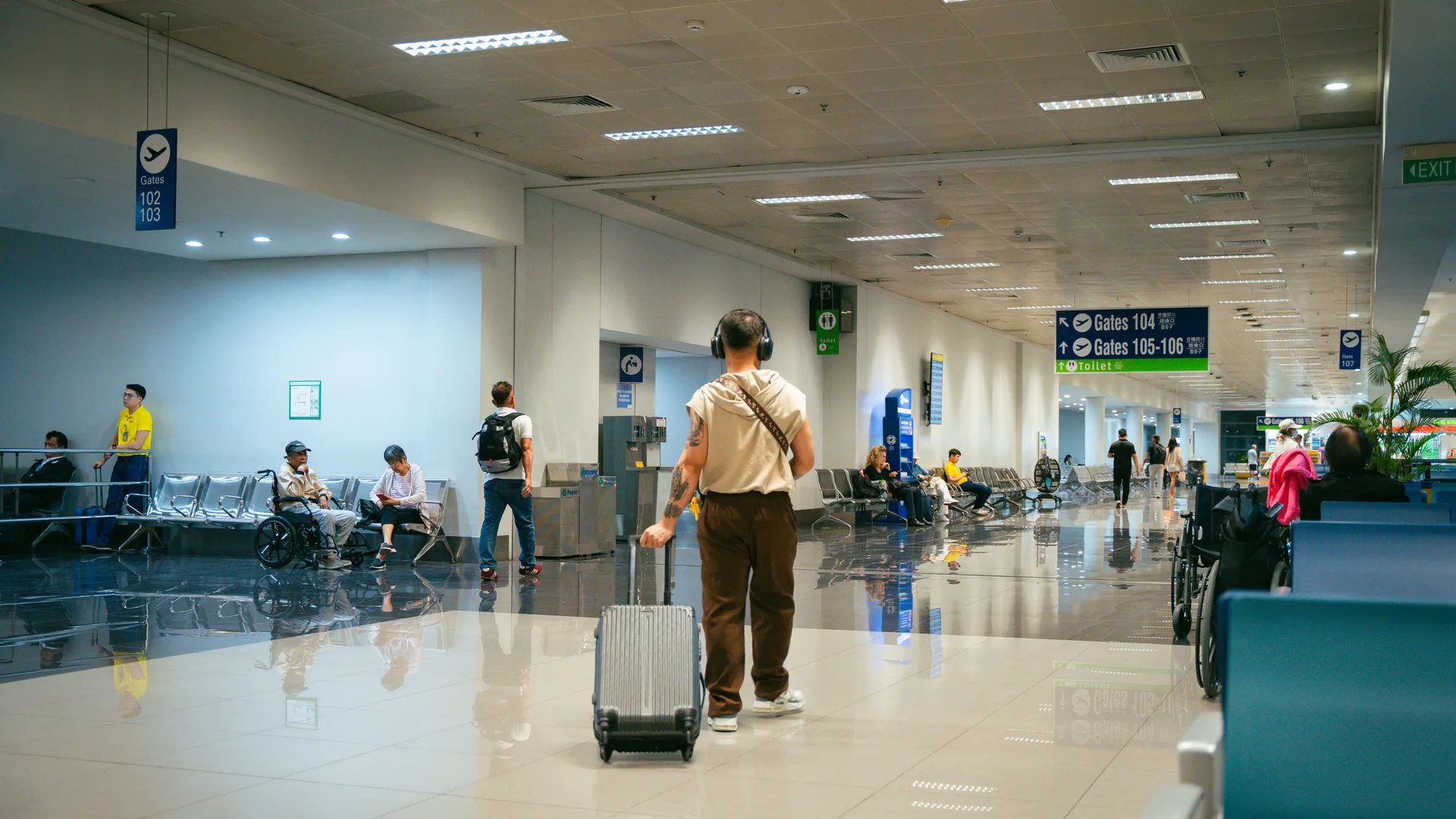
Flights, airport assistance, transfers, the hotel room, mobility equipment, medication and the cruise line's own requests all have to work in sequence. Each is a different provider, and none of them can see the others' arrangements. One vague confirmation anywhere in that chain becomes a very long embarkation day.
Start by not using the guide most people are sent to. The US Department of Transportation's Fly Rights page is still the first result many travelers find. Read on September 11, 2026, its own banner says: "this webpage has been placed in archived status. Some or all of the information may have been superseded by statute or rulemaking. Continued reliance on this page is not advised."
That is the issuing agency telling you not to use it. Use DOT's live Air Carrier Access Act guidance instead, and then confirm the specifics with your airline — because the rule tells you what you are entitled to, and only the airline can tell you what will happen to your chair on a connection.
Six handoffs, six different companies
The land side is not one journey. It is a relay, and things get dropped at the exchanges rather than in the middle of a leg.
| Handoff | Who owns it | The question that matters |
|---|---|---|
| Home → airport | Your own transport, or a booked accessible vehicle | Does the vehicle actually take your device, undisassembled? |
| Airport → aircraft | Airline and airport assistance — two different providers | Where is the device returned: gate, or baggage reclaim? |
| Aircraft → hotel | Arrivals assistance, then a transfer company | Where does the driver meet you if assistance changes your exit point? |
| Hotel stay | The property | Roll-in or tub? Measured, not labeled. Medication storage? |
| Hotel → terminal | Transfer company again, often a different vehicle | Is the assigned vehicle the one you were quoted? |
| Terminal → cabin | Cruise line and port staff | Is the accessibility form attached to the booking, not just filed? |
The hotel: book features, not labels
"Accessible room" is a category, not a description. The same two words cover a roll-in shower, an accessible tub with grab bars, wider doors, visual alerts, or some combination. Booking engines increasingly let you filter for these and some chains list roll-in and tub rooms as genuinely separate room types — useful, and not a substitute for asking the property directly, because the filter describes the category and you are sleeping in a specific room.
- What is the clear opening of the guest-room door, and of the bathroom door, in centimetres or inches?
- Are there thresholds at the room, the bathroom or the balcony?
- Is the route from the entrance to the room step-free — including any lobby level change?
- Is it a true roll-in shower or a tub with grab bars? What are the entry dimensions?
- Is there a fixed or fold-down seat, and are the controls and handheld reachable from it?
- Can you send current photographs of the room and bathroom?
- If there is a platform lift on the route: door width, interior depth, weight capacity, and is it staffed at my arrival hour?
"It should be fine" is not a specification. If a property cannot give you a number or a photograph for the thing that decides whether you can shower, that is itself the answer. And on medication: do not assume a minibar will do. Ask what temperature range the hotel can actually hold, whether a medical refrigerator exists, and whether there is a lockbox that fits what you are carrying — plus a reachable outlet by the bed for overnight charging.
The transfer: match the vehicle to the device
An accessible transfer has to be matched to your equipment, not merely flagged accessible. Send the company your device details before you pay — type, width, length, height, weight, battery type, whether it folds, and whether you can transfer into a vehicle seat.
- Which vehicle is assigned to this reservation?
- Ramp or lift — and what are the lift dimensions and weight capacity?
- Can it take the device without disassembly?
- How exactly will the device be secured in transit?
- Can the driver assist with luggage and ramp deployment?
- Can the driver assist with a transfer to a vehicle seat?
- What happens if the assigned vehicle is swapped?
- Where will the driver meet me if airport assistance changes my exit point?
- What is the after-hours number?
Most companies provide transport assistance within a defined scope. That scope usually excludes lifting a passenger, personal care, toileting and medication — and the time to discover the boundary is not curbside at midnight. Ask them to state the limits in writing, along with the vehicle type, equipment specification, reservation number and cancellation terms.
Flying with the equipment
Ask the airline, not the internet. What can travel in the cabin, what is gate-checked, and what goes in the hold; where the device is returned on a connection and at arrival; whether an aisle chair will be used; whether the aircraft type suits your equipment; what battery documentation is needed; whether advance notice or a medical form applies; and what the process is if the device arrives damaged or late.
Keep medication, identification, medical documentation, chargers and anything critical in your cabin bag where permitted. Nothing you need for the first evening should be in the hold. For screening, the TSA special procedures page covers what to expect, and TSA Cares can be requested in advance.
The cruise line's part, briefly
Submit the accessibility form the day you book, describe the need precisely, get it attached to the reservation rather than merely filed, and keep the email. The deadlines by line, what a vague request produces, how to build the paper trail and the escalation route nobody mentions are all set out properly in cruise accessibility requests, deadlines and the paper trail, and there is no reason to compress it badly here. If you are sailing from Tampa, the homeport specifics are in accessible cruising from Port Tampa Bay.
The 48-hour reconfirmation
Two days out, reconfirm every handoff. Hotel: exact room type, the bathroom feature you need, step-free route, lift operation, refrigerator and storage, late arrival. Transfer: vehicle type, ramp or lift, device dimensions and securement, pickup time and place, driver contact, and what happens if the vehicle changes. Cruise line: form received, cabin number and features, embarkation assistance, medical equipment, anything still pending with a third party.
Save it all offline. Then verify once more at the terminal, before you settle in.
The honest limit of all this
Calling every provider twice can turn a holiday into a project, and it does not buy certainty. Hotels reassign rooms. Companies swap vehicles. A lift that worked last week can be out of service on the morning you arrive, and no amount of reconfirming prevents any of it.
What the protocol actually buys is time and a record — you find out on Friday rather than at the pier on Sunday, and you have something in writing when you ask someone to fix it. So use it selectively. Verify the things that decide safety, independence, medication, whether the equipment physically fits, and whether you reach the ship. Let the rest go.
Frequently asked
Should I book a pre-cruise hotel night?
Almost always, and more so with equipment. A same-day flight delay stops being an inconvenience and starts being a missed sailing. The night before also gives you time to inspect the room, find out that the "roll-in shower" has a lip, and fix it while there are still options.
Is "accessible room" enough when booking a hotel?
No — it is a category, not a description. The same label covers a roll-in shower, an accessible tub, wider doors, visual alerts, or some combination. Ask which specific room type you are booked into, get the door and shower dimensions in numbers, and ask for current photographs.
Can a transfer driver lift me into the vehicle?
Do not plan on it. Most transport companies provide transport assistance within a defined scope, which usually excludes lifting a passenger, personal care, toileting and medication. Ask the company to state its limits in writing rather than asking a driver on the day.
Can I keep my wheelchair to the gate?
Usually, but the details vary by airline, aircraft and airport, and where the device is returned to you matters as much as whether you keep it. Ask specifically: gate-check or hold, returned at the gate or at reclaim, and what happens on a connection.
Is the DOT Fly Rights page still a good reference?
No. As of 11 September 2026 it carries an archive banner saying some or all of the information may have been superseded and that continued reliance on it is not advised. That is the agency telling you not to use it. Use DOT’s Air Carrier Access Act page and then confirm with your airline.
When should I submit the cruise accessibility form?
The day you book. Deadlines vary by line and by request type, and an accessible cabin is a small fixed inventory that goes long before the deadline does. A deadline is the last acceptable moment, not the right one.
Why reconfirm 48 hours out if everything is already confirmed?
Because a confirmation records an intention, not a guarantee. Vehicles get swapped, rooms get reassigned, lifts break. Reconfirmation will not prevent any of that — it just means you find out while you still have time to do something, and with a written record.
Verification notes and sources
Sources and facts checked: September 11, 2026 (America/New_York). The DOT Fly Rights archive banner is quoted verbatim from the page itself; DOT's Air Carrier Access Act page was checked the same day and carries no such banner. Airline procedures, hotel features, transport scope and cruise-line arrangements all change — reconfirm each with the provider before paying and again before departure.
Sources
- US DOT — Air Carrier Access Act (live guidance) ↗
- US DOT — Fly Rights (ARCHIVED; agency advises against reliance) ↗
- TSA — special procedures and TSA Cares ↗
- Off The Grid Getaways — cruise accessibility requests, deadlines and the paper trail ↗
- Off The Grid Getaways — accessible cruising from Port Tampa Bay ↗
Photographs. Airport terminal — Kenneth Surillo, Pexels Cropped and resized for the web; not otherwise altered. Neither the photographers nor the licensors endorse this article.
This guide does not guarantee access, equipment availability, room features, transport performance or embarkation assistance — no article can, which is the reason the reconfirmation step exists. Policies, specifications and procedures change; verify with the operator, hotel, airline, transport provider or an accredited advisor before paying and before departure. Nothing here is medical advice: consult a qualified professional about medication, mobility, air travel or any condition affecting your trip.
Want the chain documented rather than assumed?
Tell me the sailing, the equipment and what you can and cannot do unaided. I will put the questions to the hotel, the transfer company and the cruise line, get the answers in writing, and hand you the file — including the parts where the honest answer is that a provider will not commit.
Begin the Journey