An accessible excursion is not just an accessible attraction.
Sources and facts checked: September 18, 2026 (America/New_York). Lift operation, museum routes, vehicle configurations and request deadlines change. Nothing here guarantees access for a specific device — check and verify with the attraction, cruise line or operator in writing before you pay.
You need the complete chain to work: ship exit, port transfer, vehicle, entrance, interior route, restroom, heat exposure, return transfer, and reboarding. A tour can advertise “wheelchair accessible” while still requiring a manual transfer, several steps, a different chair, or a long stretch over uneven stone.
Use platform labels as search terms, not guarantees. Verify every handoff directly with the cruise line, attraction, port, transfer provider, equipment vendor, or excursion operator.
This guide focuses on three common Mediterranean calls:
- Athens/Piraeus: Acropolis lift access and adapted vans.
- Rome/Civitavecchia: adapted vehicles, Vatican and Sistine Chapel access, and the Colosseum.
- Barcelona: step-free urban routes, Park Güell limitations, and adapted transport.
Athens: plan around the Acropolis lift
The Acropolis has a panoramic lift serving visitors with mobility needs, along with an accessible route to the plateau. The official Acropolis information identifies the lift and accessible entrance on the western side of the site. The route is not the same as the standard visitor approach.
Start with the Greek Ministry of Culture’s Acropolis information, then contact the site before arrival. Confirm:
- Whether the lift is operating on your visit date.
- Where the accessible entrance is currently located.
- Whether your timed admission affects lift coordination.
- Whether your wheelchair, scooter, or power chair fits current operating limits.
- How much waiting or staff-assisted movement to expect.
- Whether weather, maintenance, or crowd controls could suspend service.
“Book ahead” should mean more than purchasing an entry ticket. Send your wheelchair’s width, length, height, weight, and turning requirements to the attraction or your confirmed tour operator. Ask for a written response.
NCL’s PIR_A2 listing
If you are sailing with Norwegian Cruise Line, you may see the Athens/Piraeus excursion code PIR_A2 in your booking path. Do not assume that the code itself means the tour is fully accessible.
NCL’s Accessible Cruising guidance says shore excursions and transportation should be discussed with the Access Desk. The public accessibility page does not independently establish that every detail of PIR_A2 — vehicle, route, lift, restroom or surface conditions — will meet your needs.
Ask NCL to confirm in writing:
- Whether the vehicle has a lift or ramp.
- Whether you remain in your wheelchair during travel.
- Whether the Acropolis lift is part of the arranged itinerary.
- Whether the tour includes slopes, cobblestones, stairs, or lengthy walking.
- Whether the vehicle can store your device if you transfer to a seat.
- What happens if the Acropolis lift is unavailable.
NCL lists the Access Desk at 866-584-9756. The company also provides an Accessibility & Medical Questionnaire. You may contact [email protected], but retain the form submission and written replies in your travel file.
Adapted Athens vans
An adapted van can make Athens substantially easier than a standard coach. Specialist providers, including Sage Traveling’s Athens accessible travel resources, may offer lift-equipped vehicles or tailored routes. Sage Traveling is a third-party resource, not an OTGG endorsement.
Confirm whether the van:
- Uses a rear lift, side ramp, or transfer-only arrangement.
- Has four-point tie-downs and a passenger restraint.
- Can accommodate your exact device without folding or disassembly.
- Permits a companion, caregiver, or service animal.
- Has air conditioning and enough time between stops.
- Can collect you at the cruise terminal rather than a distant meeting point.
Rome and Civitavecchia: reduce the handoffs
Civitavecchia is not Rome. The transfer between the port and central Rome can take significant time, and an accessible day needs a vehicle that works from the cruise dock, not merely from a city pickup address.
A private adapted van is often the most practical structure for a wheelchair user or traveler who cannot manage a standard coach step. Sage Traveling’s Vatican and Ancient Rome accessible driving tour describes a wheelchair-accessible van from the Civitavecchia cruise dock, accessible routing at the Vatican, and lift access at the Colosseum. Treat the details as supplier information to verify, not a promise from OTGG.
Rome and Italy Accessible is another third-party resource travelers may investigate. Ask any provider to describe the actual vehicle assigned to your date. “Accessible tour” does not tell you whether the vehicle is roll-on, transfer-only, or suitable for a large power chair.
Vatican Museums and Sistine Chapel
The Vatican Museums publish official accessibility information and a barrier-free itinerary map.
The official guidance confirms that:
- Most museum spaces are accessible to visitors with motor disabilities.
- Elevators and ramps connect key portions of the route.
- Wheelchair users can follow an accessible itinerary toward major galleries and the Sistine Chapel.
- Free wheelchair hire may be available from the cloakroom, subject to availability.
- Mobility scooters and electric wheelchairs may be restricted in some spaces because of dimensions.
- A visitor may be asked to transfer to a traditional wheelchair.
Do not rely on a general statement that the Vatican is “fully accessible.” Ask whether your planned route includes the Sistine Chapel, which lift or ramp is used, and whether your specific device can complete the route.
The Vatican’s official page also states that disabled visitors with certified invalidity of at least 67% may receive free entry. Companion admission is included only when the visitor is non-self-sufficient — the companion's free entry is tied to the visitor's care needs, not merely to traveling together. This free-entry arrangement cannot be booked online; it is issued at the Special Permits desk or Welcome Desk, and visitors using it receive skip-the-line priority. Documentation rules can vary by nationality and circumstance. Confirm ticket procedures directly with the Vatican Museums accessibility page.
Colosseum access
The Colosseum offers step-free entry and elevator access to portions of the monument. The most dependable plan generally focuses on the accessible lower route and the level reached by elevator.
The Colosseum accessibility information describes accessible entrances and lifts connecting principal visitor levels. It also makes clear why you should not promise “everywhere”: underground areas, uppermost levels, temporary closures, ancient surfaces, and special routes may have different restrictions.
Ask before paying:
- Which entrance will the group use?
- Does the elevator reach the level included in the ticket?
- Is the arena floor part of the accessible route?
- Are the Forum and Palatine Hill included, and what surfaces should you expect?
- Is a special all-terrain chair supplied?
- Are assistants included, or must your companion provide physical help?
The Colosseum, Vatican, and Roman Forum should not automatically be combined into one ambitious day. A shorter Vatican visit plus a vehicle-based exterior tour may be more enjoyable than collecting landmarks while running down the battery and the traveler.
Barcelona: build a step-free backbone
Barcelona is comparatively workable for an accessible shore day, but its hills, historic paving, crowds, and attraction-specific restrictions still matter.
Use the TMB journey planner to check accessible stations and current routing. Verify elevator status close to travel because a step-free route depends on every lift working, not just most of them.
A practical route may include:
- An adapted vehicle from the cruise terminal.
- A flat section of the Gothic Quarter.
- Plaça Reial or Plaça Sant Jaume.
- A controlled visit to a major attraction.
- A waterfront or promenade stop.
- Return to the port with a generous buffer.
Park Güell: accessible, but not universally accessible
Park Güell’s official accessibility guidance is refreshingly clear: the park’s terrain can make a complete visit difficult for people with specific needs.
The park recommends:
- Entering through Carretera del Carmel.
- Using its approximately 50-minute Architectural Route.
- Considering the shorter Other Visitable Sites Route, approximately 20 minutes.
- Downloading the official app for route information.
- Reserving one of the available wheelchairs in advance through Visitor Support.
Do not describe Park Güell as flat. The official route avoids major stair sections, but surfaces, slopes, crowds, and access to individual areas still require confirmation.
For adapted transport, ask whether your vehicle can drop you near the recommended entrance, wait during the visit, and safely load your device afterward. A standard taxi or sightseeing coach is not automatically equivalent to a wheelchair-accessible transfer.
Verify each port as a chain
Use this sequence for Athens, Rome, and Barcelona:
- Ship to terminal: Can you disembark using a ramp, gangway, or lift?
- Terminal to vehicle: Is the meeting point step-free and close enough for your endurance?
- Vehicle: Can you remain seated in your device, or must you transfer?
- Attraction entrance: Is there a separate accessible entrance or timed procedure?
- Interior route: Which elevators, ramps, galleries, or tiers are included?
- Restroom: Is an accessible restroom available before the return journey?
- Return transfer: Will the same vehicle and driver return you to the ship?
- Ship deadline: What is the independently verified all-aboard time?
Require written confirmation from the relevant cruise line, port, transfer provider, attraction, hotel, equipment vendor, or excursion operator. A phone call is useful. A written record is better.
Plan for mobility, sensory needs, heat, and crowds
Mediterranean accessibility is not only an engineering question.
Mobility and fatigue
Choose one major paid attraction, not three, unless your group has already tested the pace. Schedule seated breaks. Protect battery charging time. Carry a small repair kit, medication, water, and a backup communication method.
Heat
Stone sites can reflect heat for hours. Travel early when possible, confirm shaded waiting areas, and ask whether the vehicle can remain cool while parked. Heat tolerance varies, so follow your clinician’s advice rather than a generic temperature recommendation.
Sensory needs
Museums and ancient sites can be crowded, echoing, visually intense, and unpredictable. Ask about quieter entry times, waiting environments, guide microphones, and whether you can pause or leave the route without losing access to the vehicle.
Crowds
A route that is physically step-free may still be stressful during a ship-heavy port day. Ask operators whether they can change the order of visits to avoid peak congestion. Written confirmation should identify the agreed route, not just the tour’s marketing name.
Send dimensions before you pay
Give every provider the same equipment profile:
- Device type and model.
- Width, length, height, and weight.
- Combined guest-and-device weight.
- Turning radius, if relevant.
- Battery type.
- Whether the device folds.
- Whether you can transfer to a vehicle seat.
- Whether you can manage one or more steps.
- Whether you need a ramp, lift, tie-down, or companion assistance.
Do not assume a platform’s “wheelchair accessible” filter has captured these details.
If any excursion listing is from Carnival or another line that specifies lift capacity, ask about the maximum combined guest-and-device weight. Some Carnival listings, for example, specify a combined limit such as 450 pounds. The exact limit is excursion-specific and must be confirmed in writing for your sailing.
For NCL travelers, submit both the 14-day distilled-water request for CPAP and the 45-day general accessibility or medical request through the same Accessibility and Medical Request Form. Keep the submission confirmation, and recheck both deadlines when you book.
Solo, group, LGBTQ+, and multigenerational context
Solo travel can work well with a private accessible transfer, but it leaves less room for improvisation if a lift fails or a device breaks. Confirm who will help with luggage, boarding, and emergency communication. Do not treat a driver or guide as a personal-care attendant unless that service is explicitly contracted.
Groups should appoint one person to hold the accessibility file and one person to monitor time. Let each traveler choose between the full attraction, a shorter route, or a vehicle-based sightseeing option without making the accessible traveler “the reason” everyone changes plans.
For LGBTQ+ groups and multigenerational families, ask for inclusive, respectful communication and avoid assumptions about who is traveling with whom. A successful shore day gives people choices while protecting the shared return-to-ship plan.
Devil’s Advocate: nothing is guaranteed
Even excellent planning cannot guarantee access.
The Acropolis lift can be affected by maintenance, weather, or operational decisions. Vatican routes may change because of crowd controls or temporary closures. Colosseum elevators may be unavailable. Barcelona’s public-transport lifts can be out of service. A van may arrive with a different configuration if the supplier changes vehicles.
Therefore:
- Do not accept “guaranteed step-free access” unless the responsible operator puts a specific, enforceable guarantee in writing.
- Do not treat an icon, filter, or platform label as proof.
- Do not buy a nonrefundable ticket until the attraction and transport chain are confirmed.
- Do not assume a cruise line will wait for an independent tour.
- Do not promise that an accessible route will feel comfortable, quiet, cool, or uncrowded.
Ask what happens if access fails. A credible supplier should be able to explain the alternative.
When access fails: use a graceful fallback
Build the backup before departure.
Possible alternatives include:
- A panoramic adapted-van tour without interior entry.
- A museum, waterfront, or neighborhood with a confirmed step-free route.
- Viewing the Acropolis from an accessible lower viewpoint rather than forcing the lift.
- Visiting the Vatican Museums without adding St. Peter’s Basilica if the connection becomes impractical.
- Seeing the Colosseum exterior and using the saved time for an accessible café or vehicle-based city loop.
- Returning to the ship early for a quieter afternoon onboard.
A shorter successful shore day is not a failed shore day. It is often the smarter luxury.
Verify before you pay
- I supplied device width, length, height, weight, and battery details.
- I confirmed whether I remain in the device or transfer to a seat.
- I received written confirmation of the exact vehicle.
- I confirmed the ship-to-vehicle meeting point.
- I confirmed attraction entrances, elevators, ramps, and restrooms.
- I asked what happens if a lift or route is unavailable.
- I confirmed companion, caregiver, and service-animal policies.
- I checked cancellation terms for accessibility failure.
- I confirmed the independent return-to-ship buffer.
- I saved written replies from NCL, the attraction, and each local provider.
- I submitted required NCL accessibility and medical forms.
- I will reconfirm operating conditions before the shore day.
Frequently asked
Is PIR_A2 automatically an accessible Athens excursion?
No. Treat PIR_A2 as a listing code, not a guarantee. Ask NCL to confirm the vehicle, Acropolis route, lift coordination, terrain, and fallback plan in writing.
Can a power wheelchair enter the Vatican Museums?
The Vatican Museums state that electric wheelchairs and mobility scooters are permitted, but some areas may have space restrictions. You may be asked to transfer to a traditional wheelchair.
Is the Colosseum completely step-free?
No. Important visitor areas may be reached through accessible entrances and elevators, but underground, upper-level, temporary, and special routes can have separate limitations.
Is Barcelona’s Park Güell fully accessible?
No. Park Güell publishes specific accessible routes, but its terrain can make a complete visit difficult. Use the official recommended entrance and reserve equipment ahead.
Should I book through the cruise line or independently?
Compare both. Cruise-line excursions may simplify ship coordination, while a private adapted-van operator may provide better vehicle fit and pacing. Either way, verify the complete chain and written terms.
Sources and facts checked: September 18, 2026 (America/New_York). The Greek Ministry of Culture’s Acropolis information, Norwegian Cruise Line’s accessibility guidance and request form, the Vatican Museums’ accessibility page and barrier-free map, the Colosseum’s accessibility information, Park Güell’s accessibility guidance, TMB’s journey planner and Sage Traveling’s published tour descriptions were reviewed on the date shown. Third-party providers are named for research, not endorsed. Get written confirmation before booking.
Sources
- Greek Ministry of Culture — Greek Ministry of Culture’s Acropolis information, ↗
- Norwegian Cruise Line — Accessible Cruising guidance ↗
- Norwegian Cruise Line Holdings — Accessibility & Medical Questionnaire ↗
- Sage Traveling — Sage Traveling’s Athens accessible travel resources, ↗
- Sage Traveling — Sage Traveling’s Vatican and Ancient Rome accessible driving tour ↗
- Vatican Museums — Barrier-free itinerary map ↗
- Vatican Museums — Vatican Museums accessibility page ↗
- Colosseum — Colosseum accessibility information ↗
- TMB Barcelona — TMB journey planner ↗
- Park Güell — Accessibility guidance ↗
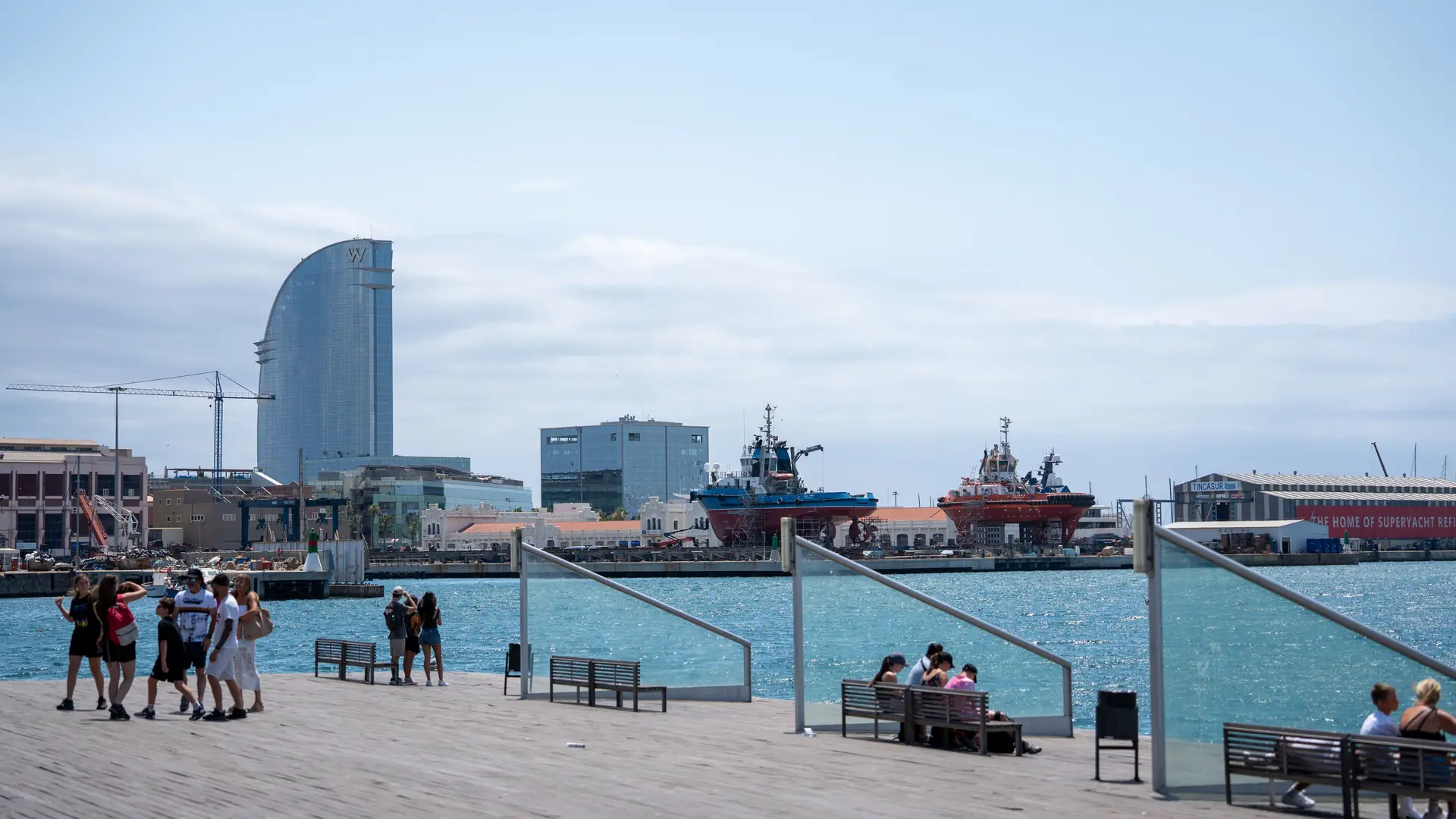
Photographs. People on Barcelona’s flat waterfront promenade — Grigore Scar, Pexels Cropped and resized for the web; not otherwise altered. Neither the photographers nor the licensors endorse this article.
This article is general information, not medical, physical-therapy, legal or safety advice. It does not determine whether a specific traveler can safely use a vehicle, lift or route. OTGG is an independent travel advisor; this article contains no affiliate links, and third-party providers are named for research only. Attraction access and supplier policies change — verify directly with the operator or an accredited travel advisor before booking or paying.
Planning a Mediterranean sailing around a wheelchair or scooter?
Send me the device profile and the ports. I will map each shore day as a chain from gangway to gallery to all-aboard, get the vehicle and route answers in writing, and build the fallback before you pay.
Begin the Journey