Athens is one of the rare cruise ports where the headline attraction is genuinely worth the effort. It is also a port where poor timing can turn eight hours ashore into three hours of queues, heat, and watching your train leave.
Sources and facts checked: September 20, 2026 (America/New_York). X80 service, metro operations, Acropolis ticketing and accessibility arrangements change seasonally and day to day. Check and verify with the cruise line, the site or the transport operator before you go ashore.
The winning strategy is simple: choose one major sight, protect your return buffer, and treat every transportation estimate as live information rather than ancient Greek law.
Port snapshot
Arrival and terminal logistics
Piraeus is a large commercial port with several cruise-terminal areas. Your ship’s berth may determine whether you walk directly toward public transportation or use a port shuttle or taxi first.
Most cruise calls are docked. Do not assume that means your ship will be adjacent to the same terminal entrance used by another vessel. Confirm the terminal, disembarkation process, and all-aboard time with the cruise line.
If your ship is unexpectedly tendered or assigned an unusual operating area, reassess the plan. A self-guided Acropolis visit becomes considerably less attractive when you must add tender queues.
Transit options
- Metro: The walk from the cruise-port area to Piraeus Metro station is commonly estimated at 10–15 minutes, depending on your terminal and walking pace. Verify the route on the day.
- Line 1, Green: Ride from Piraeus to Monastiraki, then walk approximately 15 minutes toward the Acropolis area. This is the straightforward route for travelers who want to combine Monastiraki with the historic center.
- Line 2, Red: Transfer through the network and continue to Akropoli station, the closest metro stop to the Acropolis Museum and the pedestrian route along Dionysiou Areopagitou Street.
- X80 express bus: The seasonal X80 connects the Piraeus cruise terminals with the Acropolis and Syntagma. Transport for Athens (OASA) lists service from May through October, with stops at both cruise-terminal exits and an Acropoli stop. The exact route, operating dates, frequency, and boarding point require a live check. See the official OASA X80 page and its 2026 service announcement.
- Taxi or pre-arranged transfer: Usually the simplest option for families, multigenerational groups, or travelers with mobility equipment. Obtain the pickup point, vehicle type, fare, and return plan in writing.
For planning purposes, allow approximately 90 minutes each way for transit, queues, and port movement. That is context, not a promise. Traffic, station access, security, and cruise-terminal congestion can change the day quickly.
The eight-hour strategy
This plan assumes approximately eight hours between practical disembarkation and your required return to the ship. Adjust it to your ship’s actual schedule.
Disembark and reach transport: 0:00–1:00
Disembark as early as your cruise line permits. Walk to the designated transport point, confirm the direction of travel, and check live service information before committing to the metro or X80.
If your Acropolis ticket is early and your ship is delayed, do not force the plan. A missed timed entry is an expensive way to prove that Athens has hills.
Travel toward the Acropolis: 1:00–2:30
Take Line 1 toward Monastiraki, Line 2 toward Akropoli, the X80 if operating, or a confirmed transfer.
The Hellenic Heritage Acropolis page lists Akropoli as the nearest metro station and Monastiraki as another access point. The official Acropolis Museum visitor page also identifies Akropoli station as the closest metro connection.
Visit the Acropolis: 2:30–4:30
The Acropolis requires a timed-entry e-ticket. Tickets can sell out, particularly during peak season, so purchase through the official Hellenic Heritage ticketing platform before leaving the ship.
Bring the exact ticket, identification or eligibility documentation if applicable, water, sun protection, and shoes with reliable traction. Expect uneven marble, exposed areas, crowds, and heat. The site is a working archaeological environment, not a polished theme-park walkway.
Use your ticket’s designated entrance and follow the time-slot instructions on the confirmation. Do not rely on arriving late and negotiating with staff. Cruise passengers have enough moving parts already.
Choose Plaka or the museum: 4:30–6:00
After the Acropolis, choose one:
- Plaka: Best for a relaxed neighborhood walk, small shops, and a meal or snack.
- Acropolis Museum: Better for travelers who want context, climate control, elevators, accessible restrooms, and a structured cultural visit. The museum requires a separate ticket from the Acropolis archaeological site.
Do not try to complete the Acropolis, Acropolis Museum, Ancient Agora, National Archaeological Museum, and a proper Greek lunch in the same eight-hour call. That is not an itinerary. It is a hostage situation with feta.
Lunch and return: 6:00–8:00
Eat close to your return route rather than choosing a restaurant across town because someone online called it “the most authentic.” Ask for a time-conscious meal, keep payment simple, and leave before the city begins negotiating with your schedule.
Protect a 60–90-minute return-to-ship buffer after reaching your departure-side transport area. If traffic, a metro disruption, or a missed X80 creates a problem, you want options rather than a dramatic farewell from the pier.
Athens by traveler type
First-timer
Prioritize the Acropolis and one nearby district. Use a timed ticket, then choose Plaka or the Acropolis Museum. Skip distant attractions unless your ship has a late departure or you have a private transfer.
History buff
Pair the Acropolis with the Acropolis Museum rather than trying to collect every archaeological site in central Athens. The museum provides essential context for the Parthenon, Caryatids, and the wider Acropolis complex.
If you want a guide, confirm the guide’s credentials, language, group size, walking distance, entry tickets, and return-to-ship policy in writing.
Food-focused traveler
Book lunch near the Acropolis or Plaka and keep the meal within your transport corridor. Look for a local taverna or modern Greek restaurant with clear timing, outdoor seating or air conditioning, and a menu that works for your group.
For dietary restrictions, carry a translated explanation and confirm ingredients directly. Do not assume “Mediterranean” automatically means allergy-safe.
Solo traveler
The metro and central Athens can work well solo, but stay alert in crowded stations and keep your return plan visible. A small-group walking tour can add connection without requiring you to coordinate an entire excursion.
Do not book a tour that returns “around” all-aboard time. Ask for the scheduled return, the actual drop-off location, and the operator’s missed-ship policy.
Family or multigenerational group
Give the group one anchor point and one optional split. For example, everyone visits the Acropolis, then some travelers choose the museum while others walk Plaka and meet for lunch.
Agree on a meeting location before separating. Older relatives, children, and travelers with different walking abilities should not be expected to maintain the same pace on marble slopes under midday sun.
Luxury-minded traveler
A private vehicle and licensed guide can make the day more comfortable, especially if your group values air conditioning, flexible pacing, and door-to-door transfers. Luxury does not eliminate traffic, timed entry, or archaeological-site rules, so require a realistic schedule rather than a long list of attractions.
Accessibility-conscious traveler
Treat accessibility as a specific route question, not a label.
Accessibility-conscious planning
The Acropolis has accessible routes, but it is not accurate to describe the entire site as fully accessible.
The official Hellenic Heritage information identifies an elevator for visitors with mobility impairments on the north side of the Acropolis, reached from the accessible entrance north of the main entrance on the west slope. The south slope also has an accessible route toward the Theatre of Dionysus. These are related but different access arrangements.
The European Commission’s AccessibleEU summary describes the lift’s 1,300-kilogram payload and accessible routes of approximately 500 meters. Public information does not provide a universal internal elevator-cabin dimension that will suit every large power wheelchair.
Before paying for tickets or an excursion:
- Contact the Acropolis Chief Guard's Office in advance to confirm elevator availability and coordinate arrival timing. Multiple sources advise contacting the office roughly 24 hours to as little as one hour before arrival. The lift is commonly referenced at phone number +30 213 131 7762, alternately listed as +30 210 321 4172 or +30 210 923 8470. The lift is suspended in strong winds or severe weather, so this advance call also confirms whether the elevator is expected to operate on your date. Phone numbers and lead times can change, so check and verify them with the site before you go.
- Send the wheelchair or scooter’s width, length, height, weight, turning needs, and battery type to the Acropolis access contact.
- Ask whether the lift is expected to operate on your date and whether weather or wind could suspend service.
- Confirm the accessible entrance, meeting point, route surface, restroom availability, and any required documentation.
- Obtain written confirmation from the archaeological site or your licensed tour operator.
- Ask whether the vehicle has a ramp or lift and whether the device remains with you during transport.
- Confirm that the excursion returns to the correct cruise terminal, not merely “Piraeus.”
- Treat cruise-line listings described as accessible, such as a listing like NCL’s PIR_A2, as a starting point. Request the actual vehicle, terrain, device, and timing details in writing through the line and operator.
The City of Athens accessible ancient-Athens guide notes that pedestrian surfaces vary, some approaches are steep or slippery, and assistance may be advisable. That is the useful level of honesty. An accessible route can still involve difficult paving, gradients, heat, and crowds.
The Acropolis Museum is often the more predictable accessible addition. Its official visitor information lists ramps, elevators, accessible restrooms, wheelchair loans at the visitor desk, and guide-dog access. Confirm current arrangements before arrival.
What to skip
Skip these on a standard eight-hour cruise call:
- Santorini-style island hopping or distant beaches.
- Cape Sounion unless you have a long call and a private, confirmed transfer.
- Multiple museums across Athens.
- An unconfirmed third-party excursion with no return-to-ship protection.
- A late Acropolis ticket that leaves no time for transportation delays.
- A self-guided route if your group includes travelers who cannot tolerate uneven marble, heat, or long queues.
- Any plan that assumes the X80 will operate without checking its current seasonal schedule and stops.
For broader 2026 Greek-port context, read OTGG’s Santorini’s 8,000 Cap and Greece’s Cruise Levies. That article covers Santorini’s capacity rules and Greek cruise levies; this guide focuses on Athens and Piraeus logistics.
Devil’s advocate: what can go wrong
Athens is a superb port day, but it is not low-risk.
Heat: The Acropolis offers limited shade. A hot day can reduce your practical sightseeing time before anyone says the words “I need to sit down.”
Crowds: Timed entry controls access, not the number of people who arrive during the same popular window. Expect congestion around the Propylaea, Parthenon viewpoints, and pedestrian approaches.
Ticket sellouts: A ship’s late arrival can leave you choosing between a poor ticket time and no ticket. Buy early, then monitor your ship’s schedule.
Transit delays: The metro is not immune to maintenance, crowding, strikes, or service changes. The X80 is subject to traffic and seasonal operation.
Tender days: If your vessel is tendered or faces a delayed clearance, cancel the ambitious version of the plan. A nearby Piraeus day is better than missing the ship.
Verify before you pay
- Confirm the ship’s terminal, dock status, clearance process, and all-aboard time.
- Check whether the X80 operates on your date, including current stops, boarding point, frequency, and ticket requirements.
- Confirm the metro route and any planned closures or service changes.
- Buy the official Acropolis timed-entry e-ticket and save the confirmation offline.
- Confirm whether the Acropolis Museum requires a separate ticket and whether its hours fit your call.
- Obtain written confirmation from the cruise line, port, transfer provider, ticket issuer, and tour operator as applicable.
- For accessibility needs, submit exact device dimensions and request written confirmation of the route, lift, vehicle, and restroom arrangements.
- Confirm the excursion’s return time, terminal drop-off point, cancellation terms, and missed-ship protection.
- Check and verify all operational details with the cruise line and operators immediately before sailing.
Frequently asked
Can I walk from Piraeus to the Acropolis?
Technically, yes. Practically, not for a normal eight-hour cruise call. Use public transportation or a confirmed transfer.
Is the Acropolis timed entry mandatory?
The Acropolis uses timed-entry e-tickets, and popular periods can sell out. Book through the official ticketing platform and follow the entry instructions on your ticket.
Is the X80 faster than the metro?
It can be convenient because it connects the cruise terminals directly with the Acropolis area, but it is seasonal and traffic-dependent. Check current OASA information before relying on it.
Should I visit the Acropolis Museum instead of the Acropolis?
For a first visit, most travelers should prioritize the Acropolis. The museum is an excellent alternative or addition for travelers who prefer indoor climate control, more predictable surfaces, and deeper interpretation.
Is the Acropolis fully accessible?
No. Accessible routes and an elevator exist, but conditions vary by route, weather, equipment, surface, and operational status. Confirm your specific needs directly with the site and obtain written confirmation.
How much return buffer should I leave?
OTGG recommends a 60–90-minute return-to-ship buffer after reaching the port-side transport area. Increase it for heavy traffic, accessibility equipment, tender operations, or a late departure process.
Sources and facts checked: September 20, 2026 (America/New_York). OASA X80 service information, Hellenic Heritage Acropolis ticketing and visitor pages, the Acropolis Museum visitor page and the City of Athens accessible-route guide were reviewed on the date shown. Timings in the eight-hour plan are planning context, not promises — check and verify terminal, all-aboard time, transit and ticket details before sailing.
Sources
- OASA (Transport for Athens) — Official OASA X80 page ↗
- OASA (Transport for Athens) — 2026 service announcement ↗
- Hellenic Heritage — Hellenic Heritage Acropolis page ↗
- Acropolis Museum — Official Acropolis Museum visitor page ↗
- Hellenic Heritage tickets — Hellenic Heritage ticketing platform ↗
- accessible-eu-centre.ec.europa.eu — European Commission’s AccessibleEU summary ↗
- City of Athens — City of Athens accessible ancient-Athens guide ↗
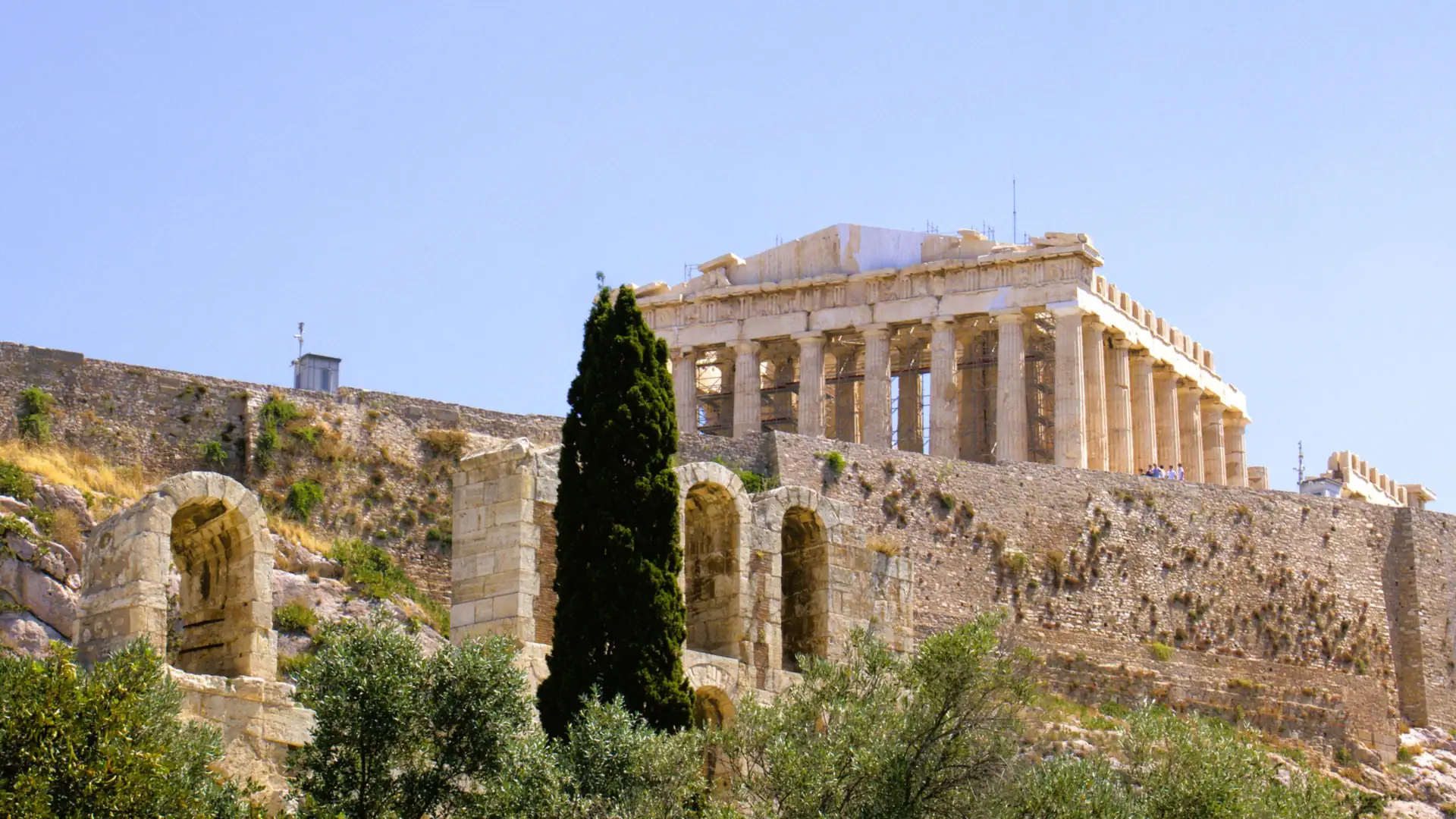
Photographs. The Parthenon on the Acropolis in Athens — José Barbosa, Pexels Cropped and resized for the web; not otherwise altered. Neither the photographers nor the licensors endorse this article.
This article is general information, not medical, legal, financial or safety advice. OTGG is an independent travel advisor; this article contains no affiliate links. Cruise line and supplier policies, rates, promotions, inclusions, accessibility procedures and deposit schedules change — verify all details with the operator or an accredited travel advisor before booking or payment.
Want Athens planned around your ship’s actual schedule?
Send me the ship, the date and who is going ashore. I will match the Acropolis ticket time to the all-aboard time, confirm a transfer or route that fits the group’s mobility, and build in a return buffer you will not have to argue with.
Begin the Journey