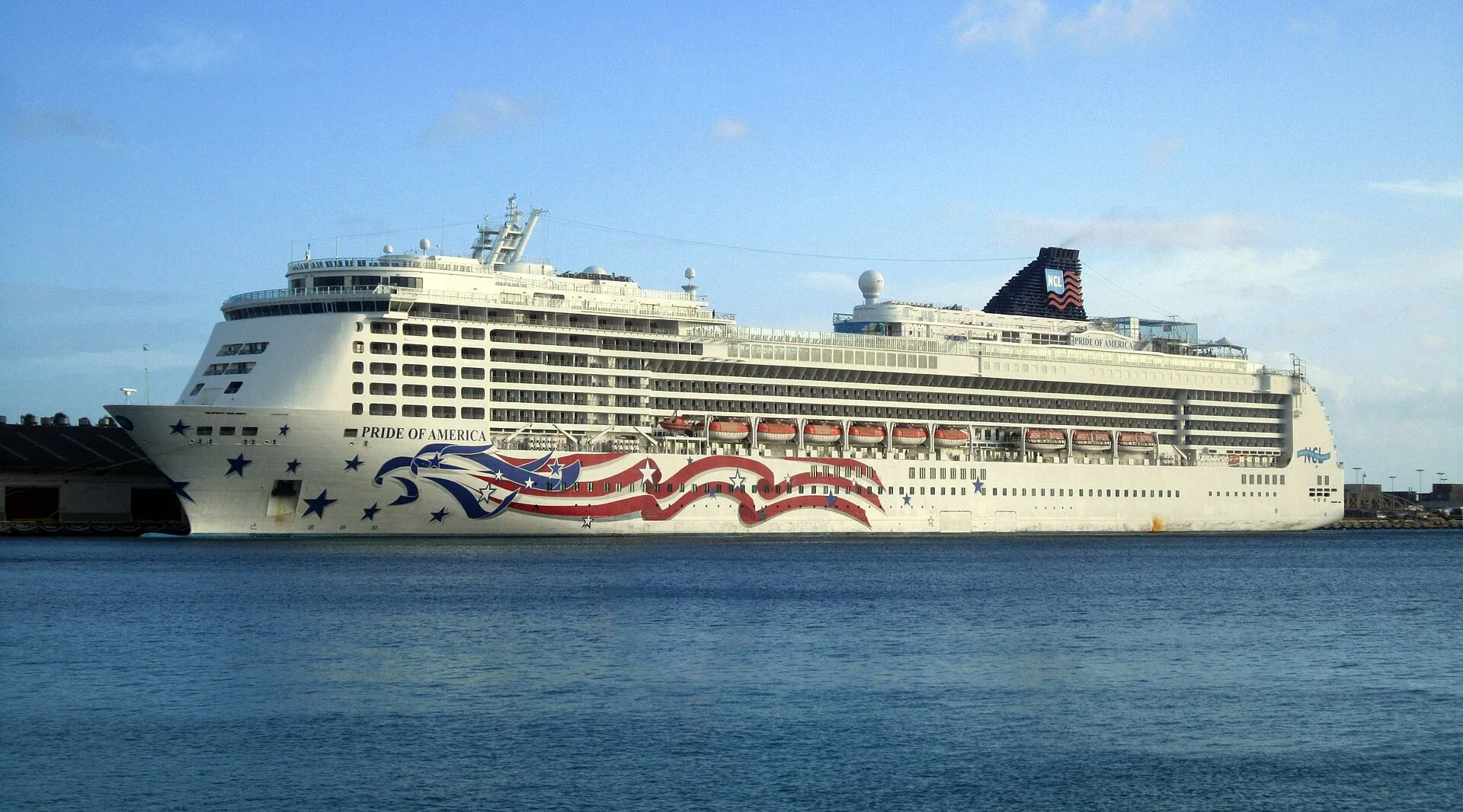
Book a cruise in hurricane season and you are agreeing, in writing, that the captain can change the plan. That is the correct trade — a ship that outruns a storm is doing exactly what you want it to do. What it usually is not is a payout.
As of 22 August 2026 Cruise contracts, refund practice, insurance wording and compensation offers all change, and storm-specific packages are decided sailing by sailing. Confirm current terms with your cruise line and your insurer before booking or making non-refundable plans.
1 · What you actually signed
Cruise contracts are blunt about this, and Norwegian's are a fair example of the industry
standard rather than an outlier. In the event of strikes, riots, weather conditions,
mechanical difficulties or any other reason whatsoever, the line reserves the right to
cancel, advance, postpone or substitute any scheduled sailing or itinerary without prior
notice — and states plainly that it is
not be responsible for failure to adhere to published arrival and departure times
.
The operative phrase is any other reason whatsoever. There is no weather carve-out to argue over, because weather is not being treated as an exception in the first place. Every major line carries some version of this clause. It is why "the itinerary changed" is not, on its own, a claim against anyone.
The itinerary is a plan, not a promise. What you bought was the passage.
2 · What a real disruption looked like
In mid-August 2026 a storm named Lala tracked past Hawaii. Before anything is said about cruise compensation, the ledger ashore is worth stating: at least one person died, more than 100 homes on the Big Island were damaged or destroyed, two were swept away entirely, rainfall was estimated at 30 to 40 inches in places, and roughly 100,000 homes and businesses lost power — some rural lines out for far longer than days.
That is the proportion to keep in view. Two ships changed course and several thousand people had an inconvenient week. It is a genuinely useful case study in how compensation works, and it is also the smallest thing that happened that weekend.
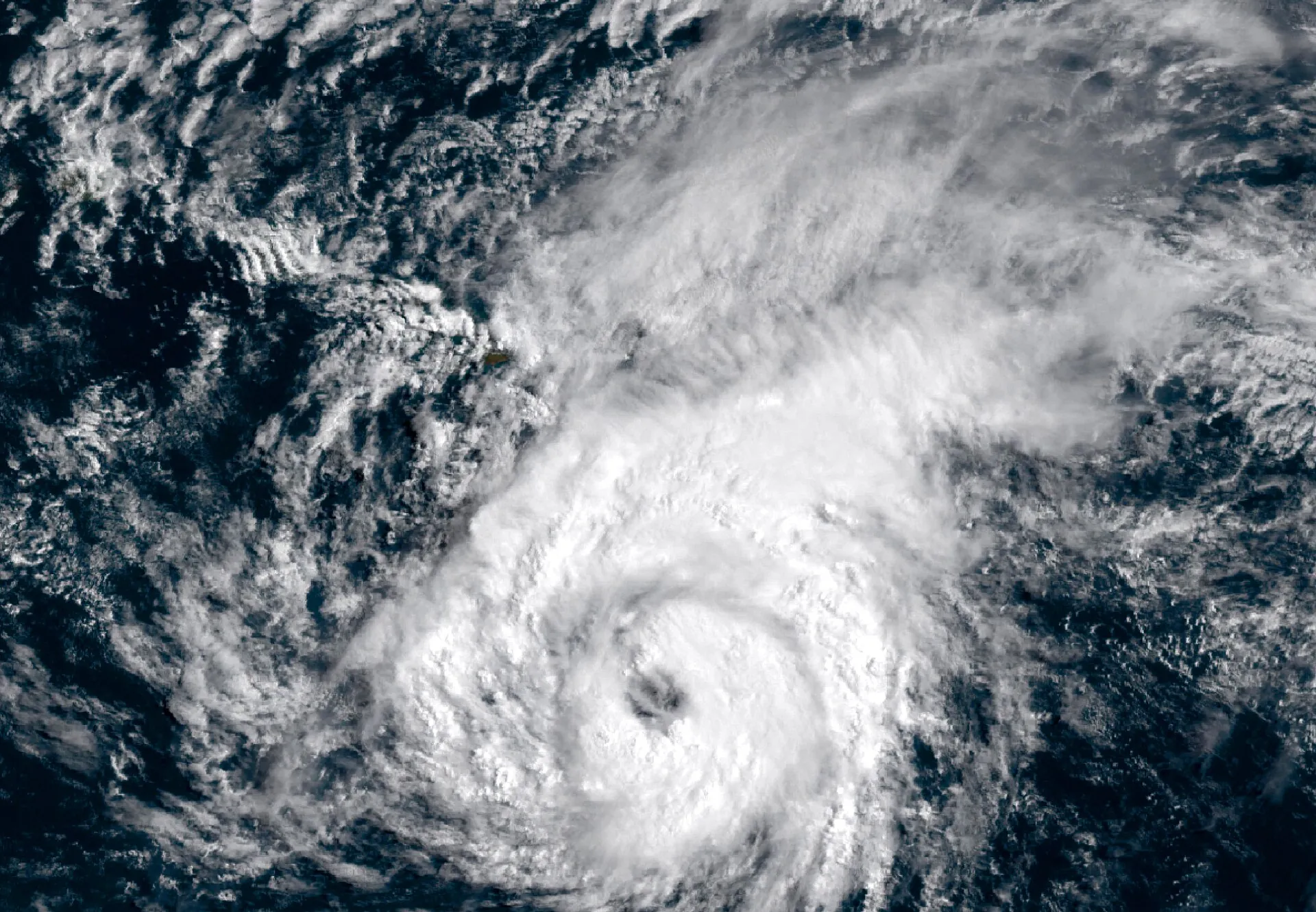
A note on the name, because coverage was inconsistent and it matters for what follows: Lala brushed the Big Island at hurricane strength and later peaked as a Category 2 well clear of land on 18 August, but it had weakened to a tropical storm by the 16th. Most reporting on the two ships refers to Tropical Storm Lala. The strength changed across the same week the ships were manoeuvring.
- Thu 13 AugNorwegian Spirit reaches Honolulu early, closing a Vancouver–Honolulu crossing. Guests may step off then or stay to the scheduled end.
- Thu 13 AugPride of America cuts its Kauai call short and runs for Honolulu ahead of the expected closure.
- Fri 14 AugSpirit drops Hilo and stands out to sea — away from the islands, not toward them.
- Fri–SatPride of America guests choose: disembark early, or ride it out in open water.
- Sat 15 AugKona is dropped. Lala is closing on the Big Island.
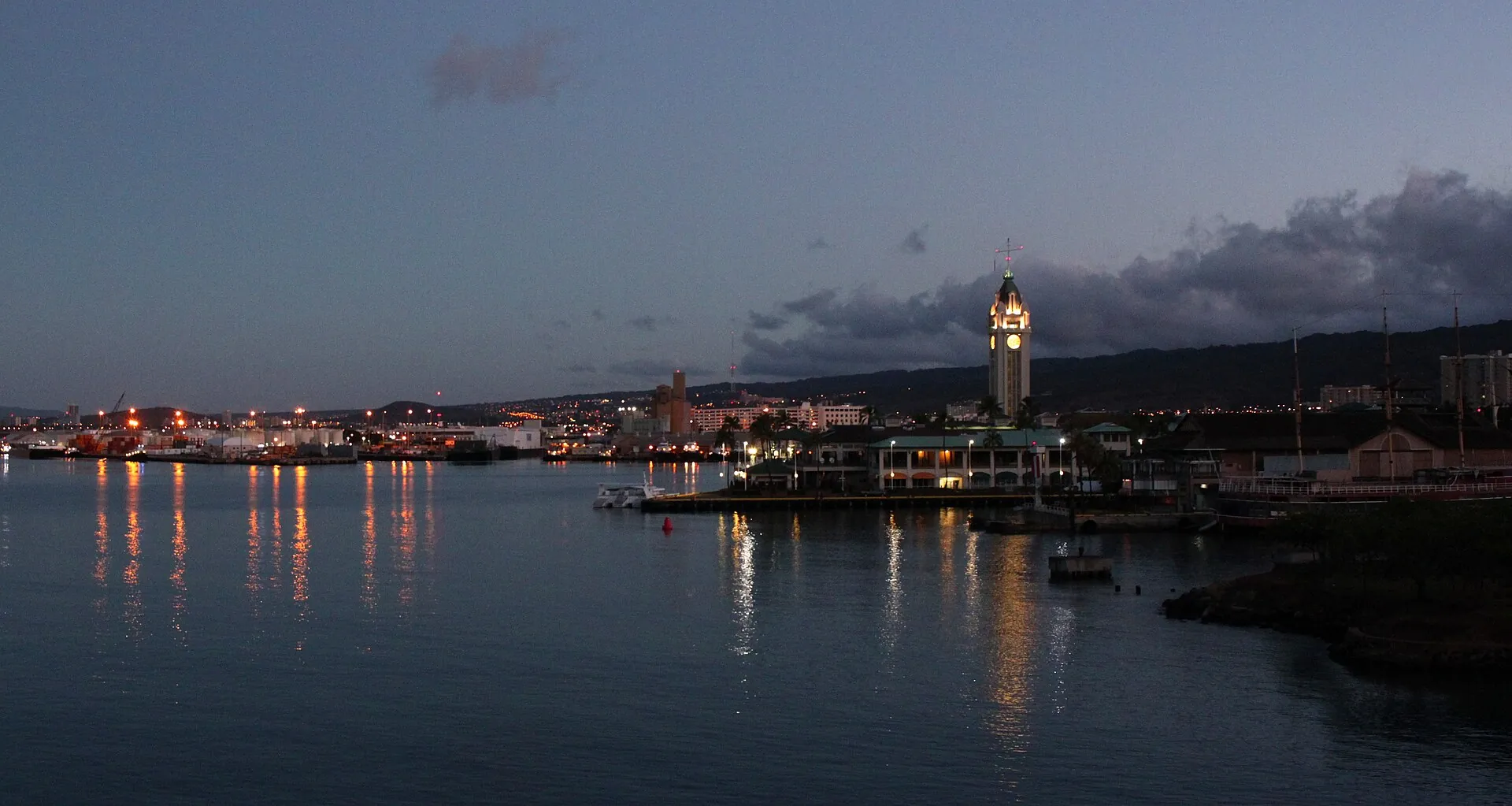
- Sun–MonHonolulu Harbour is shut. Spirit’s debarkation and the following embarkation slip to Monday 17 August.
Worth correcting a detail that circulates in summaries of this event: Norwegian Spirit did not run for Honolulu when it dropped Hilo and Kona. It stood out into open water, away from the islands, which is the standard and correct move. Sea room is the safest place to be. The port was the problem, not the ocean.
What Norwegian actually offered
- All guests on the affected Spirit sailing10% Future Cruise Credit, valid for travel through 31 December 2027
- Guests who chose to disembark earlyProrated refund equal to two days' cruise fare
- Guests who stayed aboardOnboard credit for the missed calls
That is a real package, and more than the contract obliged. It is also attached to a thoroughly broken voyage — a closed home port, cancelled calls, altered disembarkation and extra days at sea. Read it as goodwill proportional to a mess, not as a schedule of rates. A single skipped port on an otherwise normal sailing does not produce anything resembling this.
Royal Caribbean's response to Typhoon Dolphin out of Shanghai the same month took a similar shape — onboard credit, a matching Future Cruise Credit, a travel-expense allowance — and is broken down here. The pattern across both: the more operationally broken the voyage, the more appears. Neither was a formula.
3 · What a missed port actually pays
Here is the correction most worth carrying into your next booking. The common wisdom that port taxes and fees "usually come back" is not true, and which line you booked decides it.
Refunds
Carnival · MSC · Norwegian
Taxes and fees for the skipped call are returned. MSC issues it as refundable onboard credit on North American bookings rather than back to the card.
Case by case
Celebrity · Royal Caribbean
No fixed published rule. Worth asking at Guest Services during the sailing rather than after you disembark.
Does not refund
Holland America · Princess
Neither line refunds port taxes and fees when a scheduled call is skipped without a substitute port. This is the one most guests get wrong.
Two qualifiers sit on top of that table. If the line substitutes another port rather than cancelling the call outright, the fees are typically reallocated to the new port instead of refunded — your folio shows nothing, and nothing is owed. And the one thing a line is generally expected to return regardless is the money you paid it for a shore excursion in the port you missed.
The number nobody quotes correctly
Port taxes and fees on a seven-night Caribbean sailing commonly run $100 to $200 per person across the whole itinerary, spread over every call. So a single skipped port returns a slice of that — realistically tens of dollars a head, not hundreds. Alaska and transatlantic itineraries carry heavier per-person totals, but the arithmetic is the same: one call is one fraction.
Independent excursions are the real exposure. A tour booked directly with a local operator is between you and that operator. Many refund willingly. Some do not, and the cruise line has no standing and no obligation to intervene.
4 · Where insurance changes the maths
Travel insurance covers financial loss, not disappointment. If the ship reroutes safely, feeds you and gets you home, a missed port on its own is not a covered event under most policies — and that is the single most common misunderstanding at claim time.
- Trip delay Extra hotel nights, meals and ground transport when a storm holds you past your booked return.
- Missed connection You miss embarkation because weather grounded the inbound flight. This is the single most common real claim in hurricane season.
- Trip interruption You leave the voyage early — as hundreds did on Pride of America — and recover the unused portion.
- Missed port benefit Cruise-specific policies may pay a flat sum per skipped call, commonly $100 to $250 per person. Not standard; you have to buy it.
- Third-party excursion Reimburses a non-refundable independent tour lost to a reroute. Does not apply to line-booked tours, because the line refunds those itself.
- A missed port, by itself The ship sailed, fed you and got you home. Disappointment is not a financial loss, and no standard policy treats it as one.
- Anything after the name Once the National Hurricane Center names the system it is a known event. Cover bought afterwards will not respond to that storm.
The insurer's missed-port benefit can be ten times the cruise line's refund. That asymmetry is the whole argument for reading the policy.
Put the two halves of this article together. The line might return tens of dollars in port taxes for a skipped call — or nothing at all, if you sailed Holland America or Princess. A cruise-specific policy carrying a missed-port benefit may pay $100 to $250 per person for the same event. The money in a weather disruption is far more often on the insurance side than the cruise line side, and travellers spend their energy arguing with the wrong counterparty.
The timing rule that decides everything
Once the National Hurricane Center assigns a name to a tropical system, that storm is a known, foreseeable event — and insurers do not cover losses from known events. Cover purchased after the naming will not respond to that storm, however comprehensive it looks.
Which makes when you buy more consequential than what you buy. Purchasing at the moment of booking, rather than at final payment, is the cheapest risk reduction available in hurricane season. If you want the freedom to walk away from a forecast you simply dislike, that is a Cancel For Any Reason upgrade and nothing else — no standard policy provides it.
5 · Know which season you are actually in
"Hurricane season" is three different windows, and using the Atlantic dates for a Pacific sailing is a common planning error — Hawaii is in neither the Atlantic nor the eastern Pacific basin.
- Atlantic 1 June – 30 November Caribbean, Bahamas, Bermuda, Gulf, US east coast
- Eastern Pacific 15 May – 30 November Mexican Riviera, Central America to 140°W
- Central Pacific 1 June – 30 November Hawaii — 140°W to the International Date Line
The workarounds that actually earn their cost
Fly in a day early, at minimum. Missing embarkation because a connection cancelled is the most expensive and most preventable failure in cruise travel. It is also one of the few weather losses insurance reliably pays — which tells you how routinely it happens.
Buffer the return, not just the arrival. Storms hold ships out longer than planned; Spirit's guests lost a day getting back in. A tight, non-refundable connection on disembarkation morning is a stress test you have built for yourself.
Pay for flexibility where it is cheap, not everywhere. A changeable flight and a cancellable hotel on the two nights that bracket the sailing cost far less than rebooking at disruption prices. Flexibility on the shoulders of the trip is worth buying; flexibility on every component of it usually is not.
Reconsider independent tours in storm season specifically. A line-booked excursion is refunded automatically when the call is cancelled, and the ship waits for its own tours. In August in the Caribbean, that protection is worth more than the saving on a third-party operator. In February it usually is not.
6 · The hurricane-season checklist
Before you book
- Buy cover before anything in the basin is named — the naming, not the landfall, is the cut-off.
- Read for four phrases specifically: trip delay, missed connection, trip interruption, missed port. A policy without them is a cancellation policy.
- Price the Cancel For Any Reason upgrade. It is the only clause that pays when you simply do not like the forecast.
- Fly in at least one day early. Same-day connections in September are a bet, not a plan.
- Save reservations, excursion confirmations and policy documents offline. Ship wifi in a diversion is not a plan either.
During the disruption
- Screenshot every itinerary notice and cabin announcement as it arrives. They are rarely retrievable later.
- Ask Guest Services one precise question: is this refundable onboard credit, non-refundable onboard credit, or a Future Cruise Credit? The three are not interchangeable.
- Keep receipts for every unplanned hotel, meal and transfer — that is the claim, not the missed port.
- Do not rebook flights until the line confirms the revised schedule, unless leaving is the safer call.
After you are home
- Check the final folio: line-booked excursions for skipped calls should be off it, and taxes too if you sailed a line that refunds them.
- Chase an independent operator directly and in writing. Their refusal in writing is what your insurer will want.
- Read the expiry and the blackout terms on any Future Cruise Credit before you count it as money.
7 · The counter-argument
It is tempting to treat a storm reroute as a lottery ticket — book the cheap September sailing, hope for a diversion, collect the credit. As a strategy it fails on every leg.
A skipped port may return a modest tax refund, or nothing. Onboard credit can be non-refundable and awkward to spend in the final two days of a sailing. A Future Cruise Credit is only worth its face value if you were going to sail again anyway, before it expires. Insurance pays well, but only if you bought the right wording early enough and can document an actual loss. And the packages large enough to be worth wanting are attached to voyages nobody would choose to be on.
The better protection is unglamorous: build enough slack into the trip that an extra hotel night, a moved flight or a lost independent tour is an annoyance rather than a financial event. That is worth more than any credit you might be handed.
Frequently asked questions
Do I get a refund if my cruise skips a port because of a storm?
Which cruise lines refund port taxes and fees for a missed port?
How much money is a skipped port actually worth?
What compensation did Norwegian give for the Tropical Storm Lala reroutes?
Does travel insurance cover a hurricane if I buy it after the storm forms?
Should I book shore excursions through the cruise line during hurricane season?
Sources
- Norwegian Cruise Line — Terms and Conditions, "Itinerary Changes"
- Cruise Critic — Cruise Itinerary Changes: What You Need to Know
- Cruise Critic — Missed Ports: Cruise Lines That Don't Refund Taxes & Fees
- CNN — At least one dead, tens of thousands without power and over 100 homes damaged in the wake of Hurricane Lala
- Cruise Industry News — Pride of America Delays Return to Honolulu
- Cruise Hive — Norwegian Spirit Cuts Ports in Hawaii as Tropical Storm Closes In
- CruiseInsurance.com — Does Cruise Insurance Cover Itinerary Changes Due to Weather?
- LegalClarity — What Does Cruise Insurance Cover? Benefits and Exclusions
- NOAA National Hurricane Center — Tropical Cyclone Climatology
- NOAA — About the Central Pacific Hurricane Center
Photography
- Pride of America alongside in Honolulu — Christopher Doyle, CC BY-SA 2.0, via Wikimedia Commons.
- Lala approaching the Big Island, 15 August 2026 — NOAA GOES-18 / NASA Worldview, public domain, via Wikimedia Commons.
- Honolulu Harbour at dawn — Prayitno, CC BY 2.0, via Wikimedia Commons.
Subject to change. Cruise line policies, insurance benefits, storm forecasts, port conditions, compensation offers, schedules and itinerary terms can all change without notice. Verify current terms directly with your cruise line and insurer before booking and before making non-refundable travel decisions.
Informational only. This article is general information and is not legal, insurance, financial or medical advice. Consult an appropriately licensed professional about your own policy, rights or circumstances.