Grand Cayman gives you polished beaches, the Caribbean's most famous stingrays, and one gloriously strange field of black rock. What it does not give you is a gangway. Ships anchor offshore and tender ashore, so your usable day starts when you reach land and ends well before the ship leaves — and the gap between those two moments is smaller than the itinerary implies.
The tender is not temporary
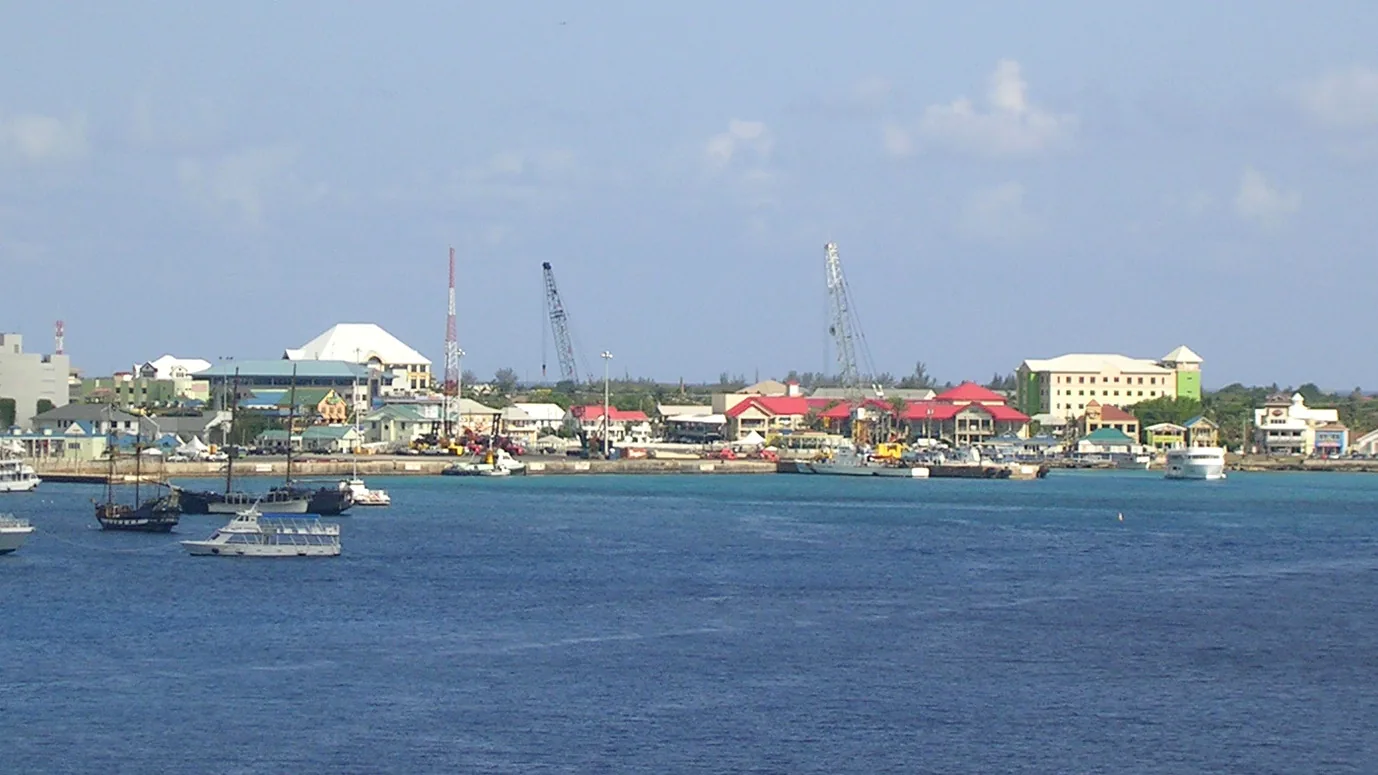
Most tender ports are tender ports because a pier has not been built yet. Grand Cayman is a tender port because the country decided against one. In a national referendum on 30 April 2025, 68.9% of voters rejected developing cruise berthing infrastructure. The vote was non-binding, but nothing has been commissioned since, and the question is politically settled for the foreseeable future.
Two things follow, and neither is obvious from a deck plan. First, do not plan future Cayman calls around a pier arriving — build the tender into the day permanently. Second, check that your itinerary still calls here at all. Some lines have quietly moved Grand Cayman off routes rather than tender ever-larger ships ashore, and a port swap is easier to absorb when you were expecting the possibility.
Three terminals, one rule
| Terminal | When it is used | What is there | What it means for you |
|---|---|---|---|
| Royal Watler Harbour Drive, central | The largest and busiest of the three | Open-air plaza, tour operator desks, taxi dispatch, duty-free | The easiest meeting point to describe to an independent operator |
| North Terminal Harbour Drive | Smaller, used when several ships are in | Little more than a waiting area and gates | You step off the tender essentially onto the street |
| South Terminal Harbour Drive | Smaller, used when several ships are in | Little more than a waiting area and gates | Same again — fine to arrive at, harder to describe to a driver |
The rule is simply that you go back to the one you came from. All three sit within an easy walk of each other and of central George Town, so arriving at the "wrong" one costs you nothing on the way in. It costs you on the way out, when a driver drops you at the waterfront generally rather than at your terminal specifically. Check your ship's daily programme or app for the assignment, and say the terminal name out loud to whoever is driving you back.
Request an early tender ticket at Guest Services, particularly if you have booked an independent tour. The crossing itself is about ten minutes; the queue at either end is the part that varies. Do not book anything that starts at the ship's published arrival time — you need slack to get ashore, find the meeting point, and resolve the inevitable question of where exactly the van is.
Getting around, cheapest first
This is where most Grand Cayman budgets are won or lost, and where most guides stop at "take a taxi". There are four ways to move, and the spread between the cheapest and the most expensive is roughly tenfold.
| Option | Cost | What it is | The detail that matters |
|---|---|---|---|
| Public bus, Route 1 | US$2.50 per person, each way | George Town depot → Seven Mile Beach → West Bay, roughly every 15 minutes | Flag it down from the roadside. Depot is beside the Public Library, a short walk from the terminals |
| Taxi | ~US$25 per vehicle to Seven Mile Beach | Government-regulated tariff, not metered. Base US$7.00 for up to four passengers | Per car, not per person. Four sharing pay about US$6 each |
| Cruise-line beach shuttle | US$25–35 per person, round trip | Coach transfer to Seven Mile Beach and back on the ship's clock | A couple pays more than a taxi would cost them both ways |
| Stingray excursion | Planning range — see cost table | Includes the land transfer to a North Sound marina, then the boat | You do not board at the cruise terminal. Budget the road time |
Taxi fares here are regulated and quoted per vehicle, not per person. The tariff is set in law, so there is nothing to haggle over — but four people sharing a US$25 car to Seven Mile Beach pay about US$6 each, which beats a cruise-line beach shuttle at US$25 to US$35 per person. For one or two travellers, the Route 1 bus at US$2.50 each way is the honest answer.
And know which dollar you are being quoted. The Cayman Islands dollar is pegged at CI$1 to US$1.25. US dollars are accepted everywhere, but a price of "twenty dollars" may mean CI$20, which is US$25 — and if you pay in USD your change usually comes back in KYD, which is worthless to you the moment you sail. Ask which currency a price is in, and keep cash payments small.
The Sandbar is not Stingray City
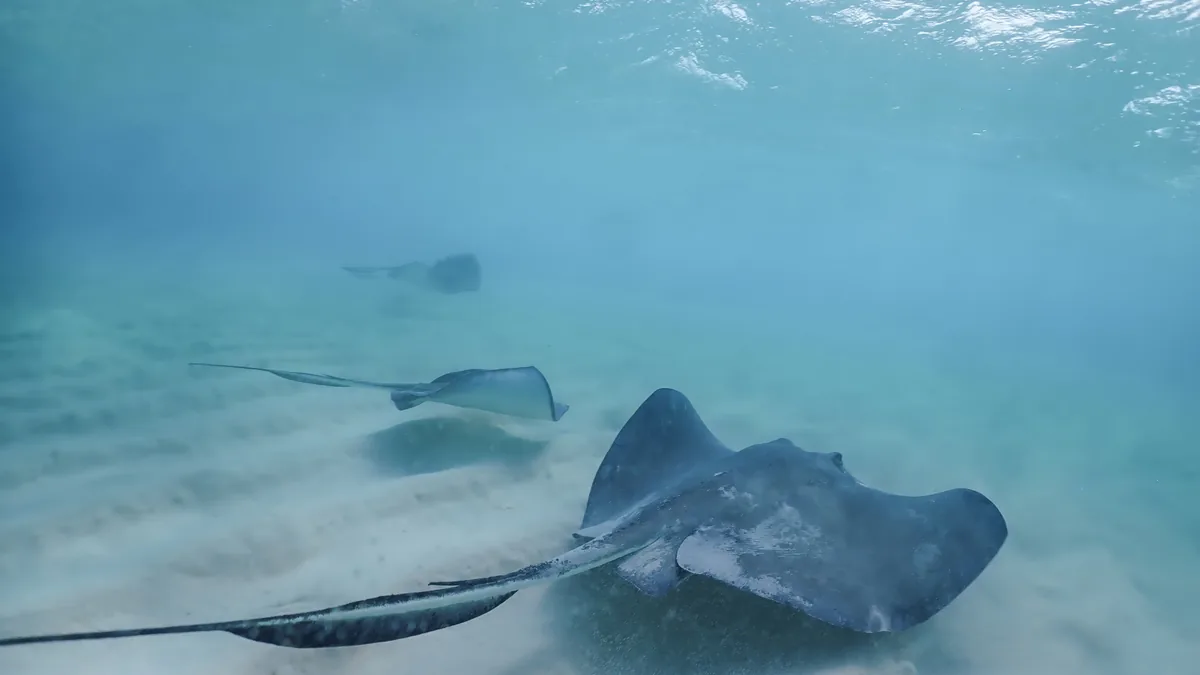
These are two different places, and operators use the names interchangeably. It matters because one of them is standing depth and the other is not.
The Sandbar sits in roughly three to five feet of water in the North Sound. You stand on the sand while southern stingrays move around you. This is what almost every cruise excursion means, and it is the one that works for non-swimmers and for children with an adult. Stingray City proper is a deeper site at around twelve feet, better suited to confident snorkellers and certified divers. If standing up matters to you, confirm which site the boat visits before you pay.
Your boat does not leave from the cruise terminal. Operators depart from North Sound marinas — Safehaven, the Yacht Club, Morgan's Harbour — so there is a road transfer at each end before you are anywhere near a stingray. A "three hour tour" is three hours plus that driving. This is the single most common reason people cut it fine getting back.
Check the operator holds a licence
Stingray City and the Sandbar were designated Wildlife Interaction Zones in 2007, and this is the one place in Cayman waters where feeding and handling the rays is lawful. Commercial operators working the zones must hold a current licence. Outside those zones, feeding fish and interfering with wildlife is prohibited, and southern stingrays carry legal protection across Cayman waters.
Add one line to your vetting: do you hold a current WIZ licence? A legitimate operator answers immediately. It is also worth knowing if your tour adds Starfish Point, which is a common third stop — that beach is not a Wildlife Interaction Zone, so the general protections apply there and the starfish stay in the water.
Seven Mile Beach is free, and public
The whole length of it is public property. You can walk it, swim off it, and sit on it without buying anything. The loungers and umbrellas belong to the resorts fronting the sand and are charged accordingly, but nobody can move you off the beach itself. Guides that treat a chair rental as the price of entry have this wrong.
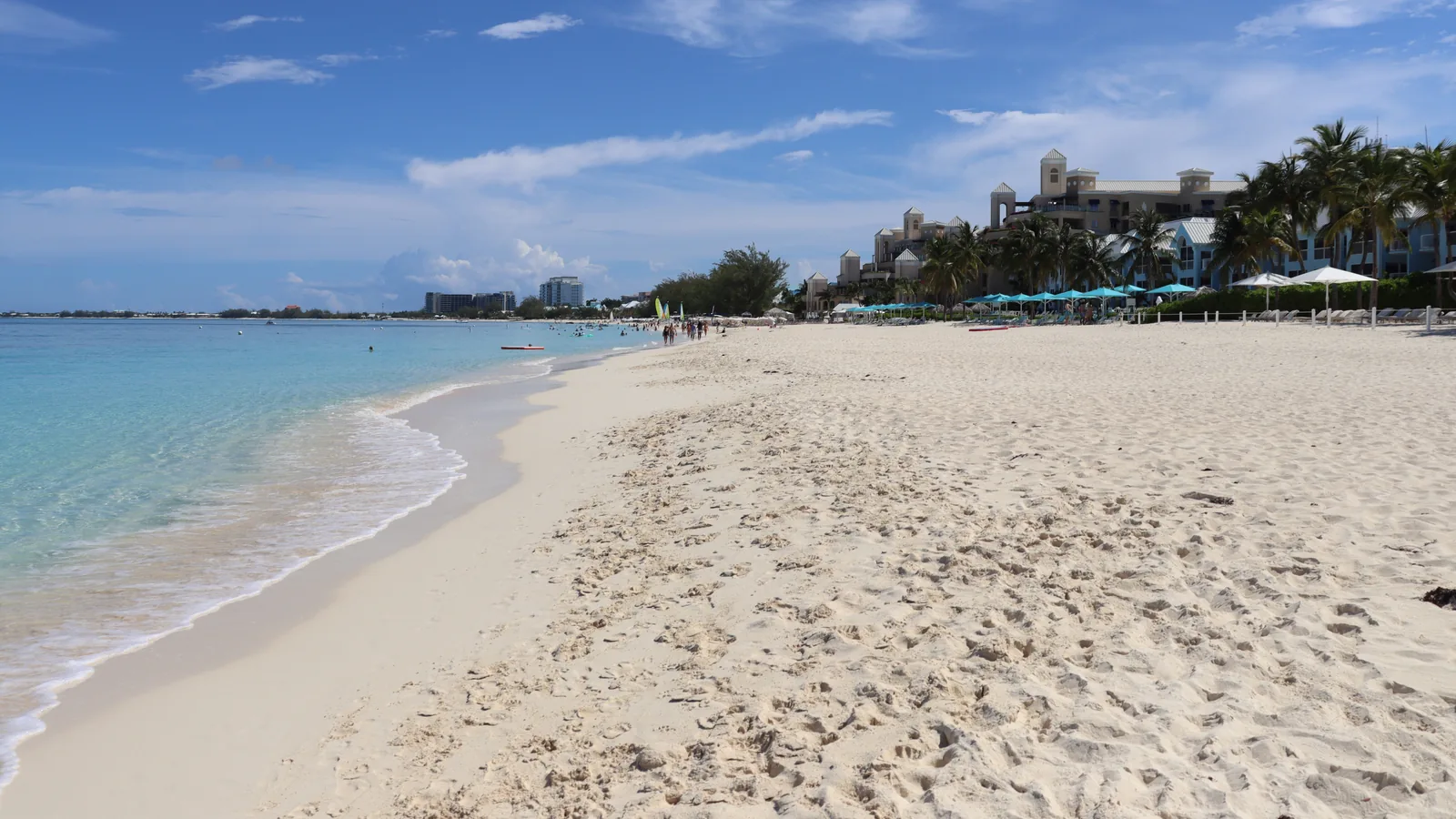
It is also about 6.3 miles rather than seven, and it is not uniform. Erosion has thinned some sections, noticeably since Hurricane Helene in 2024, so the stretch you choose changes how much sand you actually find. George Town sits directly south of the beach, which means the southern end is the closest to the terminals and the public beach area further north is the one with facilities. Route 1 runs the full length, so you can ride until the view looks right and get off.
Hell, and what it actually is
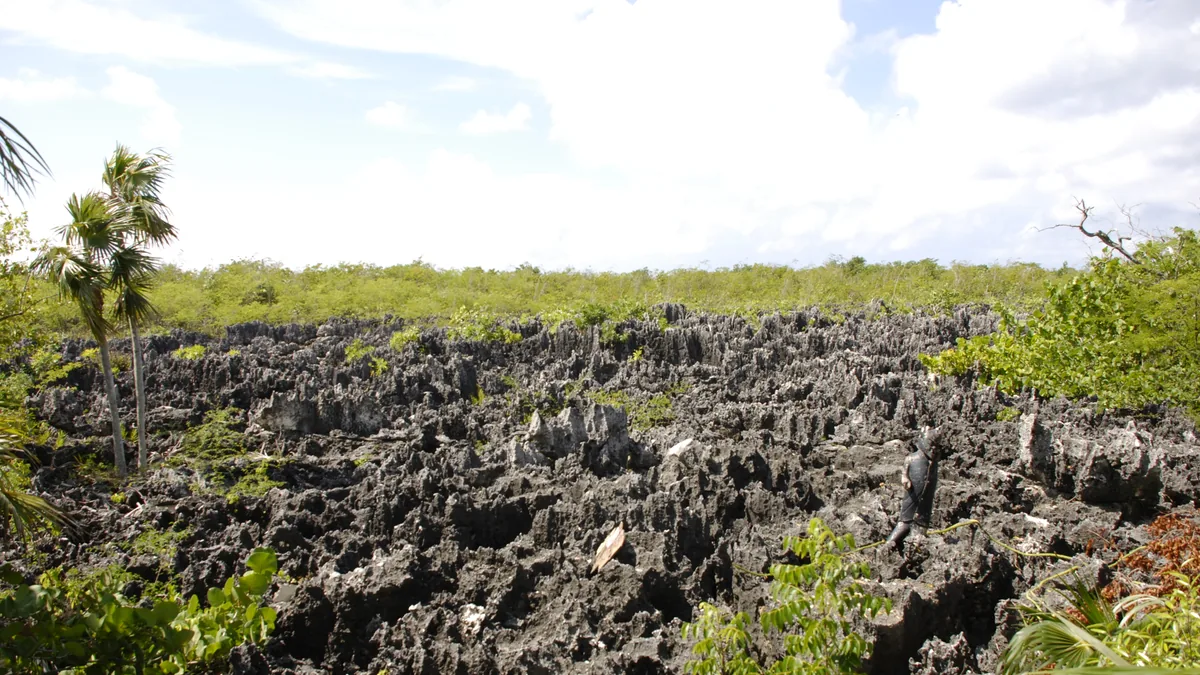
Hell is a field of jagged black limestone at 93 Hell Road, West Bay, about fifteen to twenty minutes from George Town. Two things to know before you commit the taxi fare.
It is small — roughly half a soccer field. Nobody tells people this, and it is the reason for most of the disappointment. You view it from wooden platforms and boardwalks; walking on the rock is prohibited, and the stone is sharp enough that you would not want to anyway.
The post office is the actual attraction. There is one on site, where you can send a postcard carrying a Hell postmark and have your passport stamped. That is the souvenir, and it is a genuinely good one. The site itself is free and always accessible; the gift shops, restrooms and post office are listed on the attraction's own site as 8:00am to 4:00pm, though the national tourism board lists 5:00pm. Treat 4:00pm as the working assumption so a late arrival does not find the post office shut.
Hell reads as a bolt-on and rarely works as one. It sits inland in West Bay; the stingray marinas are in the other direction. Pair Hell with Seven Mile Beach and a west-side drive, or pair the Sandbar with reef snorkelling — but do not try to stitch both halves of the island into one tender-limited day.
What the day costs
| Item | Cost | What it covers | The detail that matters |
|---|---|---|---|
| Seven Mile Beach | Free | Public along its entire length — you may walk and swim anywhere on it | Loungers and umbrellas are the resorts', and charged. You are not obliged to rent |
| Hell | Free | Viewing platforms over the ironshore. Gift shops, restrooms and post office on site | Site always open; shops listed 8:00am–4:00pm, some sources say 5:00pm |
| Sandbar / Stingray City tour | US$60–100 per person | Shared boat, typically 3–4 hours including the marina transfer | Combination tours adding reef and Starfish Point run to the upper end |
| Ship-sponsored equivalent | US$90–140 per person | Same sites, coordinated with the vessel | The premium buys the ship waiting for you, which at a tender port is worth something |
| Getting to the beach | US$2.50–25 | Bus per person, taxi per vehicle | The single biggest swing in a Grand Cayman budget |
A Grand Cayman day can cost almost nothing. Route 1 to the beach and back is US$5. The beach is free, Hell is free, and George Town is walkable from every terminal. If the marine excursion is not the reason you came, the island does not require you to spend.
Building the day around who you are
Solo
Take the bus and book a shared boat. Route 1 removes the single-traveller taxi penalty entirely — the one context where a regulated per-vehicle fare works against you — and a shared Sandbar tour gives you company for the part of the day that benefits from it. Confirm a named Royal Watler meeting point rather than "the cruise terminal", and keep 90 minutes of buffer. For how the wider maths works on a solo booking, our solo sailings pages cover reduced supplements in detail.
Couples
One headline experience, not three. A Sandbar and reef combination for three to four hours, then a taxi to Seven Mile Beach — at US$25 for the car, two people splitting it still beat the per-person shuttle. Resist adding Hell; the drive undoes the afternoon.
Multi-generational
Book through the ship and cut the transfers. The premium is real, but at a tender port with a group of mixed pace it buys the thing that actually matters: the vessel waits for its own excursions. Choose the Sandbar over the deeper site, and if swimming ability or heat tolerance varies widely, take the land day instead — Hell, a west-side drive and a beach stop, with shade built in.
Tendering and accessibility
The shore side is the easy part. The terminals are flat and central, George Town is walkable, and Hell itself is wheelchair accessible via its boardwalks. The tender boat is the obstacle, and it is a real one.
Depending on the tender vessel, the sea state and the day, you may be asked to transfer out of your mobility device to board, and handling procedures vary by cruise line. This is a question for your line, before you sail, and it deserves specific answers:
- Can my specific device be carried on the tender, and how is it handled?
- Will I be required to transfer out of it to board?
- Can I be allocated an early tender slot with boarding assistance?
- What happens if sea conditions change during the day?
An accessible tour is a statement about the tour, not about getting ashore. Operators do list accessible west-side sightseeing here, and some of it is good — but no excursion booking removes the tender. Settle the tender question with the cruise line first, then book the day around the answer.
The OTGG bottom line
Grand Cayman is a plan-the-tender-first port, and it will stay one. Request an early tender, pick one direction, and be back at your assigned terminal with 60 to 90 minutes in hand — our own risk guidance, not a cruise-line guarantee, and worth more here than at a pier port because a tender queue can build faster than a gangway one.
Water day: the Sandbar, reef snorkelling, and a short stop on Seven Mile
Beach.
Land day: Route 1 to Hell and West Bay, then back down the beach at
whichever point looks best.
Do not chase both. The money in Grand Cayman is well spent on one good experience and badly spent on a flight home from the next port.
Change disclaimer. Checked 1 September 2026. Tender operations, terminal assignments, bus and taxi tariffs, excursion pricing and attraction hours all move. The most likely to change before the rest: excursion prices and the Hell shop hours. The least likely: the absence of a cruise pier.
Off The Grid Getaways is an independent travel advisor. This guide is informational and does not guarantee port operations, tender availability, excursion schedules, accessibility or pricing. Confirm details with your cruise line and operator before booking.
Sources
- Cayman Islands Department of Environment — Wildlife Interaction Zones
- Cayman Islands Department of Environment — Stingrays
- Hell Geological Site — official visitor information
- Visit Cayman Islands — Hell
- Cayman Resident — Grand Cayman public buses, routes and fares
- Cayman Resident — Grand Cayman taxis and regulated fares
- Cayman Compass — cruise berthing referendum result, May 2025
- Cruise Critic — Grand Cayman cruise port and terminal information
- Cruise Hive — Grand Cayman cruise port, terminals and tendering
Images
Frequently asked
Is Grand Cayman a tender port?
Yes, and it is expected to stay one. George Town has no deep-water cruise pier: ships anchor offshore and tender passengers to one of three terminals on Harbour Drive. This is not a temporary gap waiting on construction. Caymanian voters rejected developing cruise berthing infrastructure by 68.9% in a non-binding referendum on 30 April 2025, and no build has been commissioned since. Plan the day around tendering rather than around a pier arriving.
Which terminal will I arrive at, and does it matter?
Royal Watler, North or South — all three sit along Harbour Drive within easy walking distance of each other and of central George Town. Which one you get depends on how many ships are in and on conditions that day, so your ship assigns it rather than you choosing. It matters for one reason: you must return to the same terminal you left from. Royal Watler is the largest and the easiest to name as a meeting point to an independent operator; North and South are little more than gates onto the street.
How much time do I actually get ashore?
Less than the itinerary suggests. Ships typically arrive between 7:00am and 8:00am and leave between 3:00pm and 5:00pm, giving a nominal seven to nine hours — but the tender ride is about ten minutes each way before you count queuing at either end. Request an early tender ticket through Guest Services, especially with an independent tour booked, and do not schedule anything that starts at the published arrival time.
What is the difference between Stingray City and the Sandbar?
They are two separate sites in the North Sound, and the distinction decides whether you can stand up. The Sandbar sits in roughly three to five feet of water and is where almost every cruise excursion goes — you stand on the sand with the rays around you. Stingray City proper is a deeper site at around twelve feet, suited to snorkellers and certified divers. Operators use the names loosely, so confirm which one your tour visits before booking if standing depth matters to you.
Is it legal to touch and feed the stingrays?
Inside the designated zones, yes, through a licensed operator. Stingray City and the Sandbar were established as Wildlife Interaction Zones in 2007, and commercial operators working them must hold a current licence under Cayman conservation law. Outside those zones, feeding fish and interfering with wildlife is prohibited in Cayman waters, and southern stingrays carry legal protection island-wide. When you vet an independent operator, ask whether they hold a current WIZ licence — a legitimate one will answer without hesitating.
What is the cheapest way to reach Seven Mile Beach from the port?
The public bus. Route 1 runs from the George Town depot, beside the Public Library and a short walk from the terminals, along Seven Mile Beach and on to West Bay, roughly every fifteen minutes for US$2.50 per person each way. You can flag it down from the roadside. A taxi is about US$25 — but that is per vehicle under the regulated tariff, not per person, so four people sharing pay around US$6 each. Both undercut a cruise-line beach shuttle at US$25 to US$35 per person round trip.
Do I have to pay to use Seven Mile Beach?
No. The beach is public property along its entire length and you may walk and swim anywhere on it. Loungers, umbrellas and facilities belong to the resorts fronting it and are charged accordingly, but you are not obliged to rent anything to be there. It is about 6.3 miles rather than seven, and erosion has thinned some sections — noticeably since Hurricane Helene in 2024 — so the stretch you pick affects how much sand you actually find.
Is Hell worth the trip?
For the postcard, yes. For the geology, manage your expectations. Hell is a field of jagged black ironshore limestone at 93 Hell Road in West Bay, about the size of half a soccer field, viewed from wooden platforms — you cannot walk on the rocks. It is free and the site is always accessible. The real draw is the on-site post office, where you can send a postcard bearing a Hell postmark and have your passport stamped. Gift shops and restrooms are listed at 8:00am to 4:00pm on the attraction's own site, though the tourism board lists 5:00pm, so do not arrive late expecting the post office open.
Can I combine Stingray City with Hell in one port call?
Not comfortably, and this is the most common way people overreach here. Stingray boats leave from North Sound marinas — Safehaven, the Yacht Club, Morgan's Harbour — so a marine excursion already includes a land transfer at both ends. Hell is inland in West Bay, fifteen to twenty minutes from George Town in the other direction. Pick a water day or a land day. If you want both, the honest version is a short Sandbar tour and Hell reached afterwards on the Route 1 bus, with a real chance the timing does not hold.
What currency should I bring?
US dollars are accepted everywhere, so you do not need to change money — but understand the peg before you spend. The Cayman Islands dollar is fixed at CI$1 to US$1.25, so a fare quoted as "twenty dollars" may mean CI$20, which is US$25. Pay in USD and your change typically comes back in KYD, which you cannot spend once you sail. Keep purchases small or pay by card where you can, and confirm which dollar a price refers to before handing anything over.
Is Grand Cayman workable with a mobility device?
The shore side is manageable; the tender is the obstacle. George Town's terminals are flat and close to town, and Hell itself is wheelchair accessible via its boardwalks. The tender boat is the real question: depending on the vessel, the sea state and the day, you may be asked to transfer out of your device to board, and procedures vary by cruise line. Ask your line directly whether your specific device can be carried, whether you must transfer, and request an early tender slot. Treat an operator describing a tour as accessible as a statement about the tour, not about getting ashore.
Want to know whether your sailing still calls here?
Grand Cayman moves on and off Caribbean routings more than most ports, and the tender is the reason. Send me your sailing and I will confirm the call is still on the itinerary, check how long you actually get ashore, and tell you whether the day you have in mind fits inside it.
Ask Paolo