A passenger limit can be a court-tested ordinance, a state-preempted ballot measure, a berth-allocation rule or a voluntary scheduling deal. Your sailing is affected by which one it is.
Sources and facts checked: October 18, 2026 (America/New_York). Court rulings, port rules and itineraries change. Check and verify with the cruise line or port before you pay.
Start with the rule behind the number
A port-cap headline gives you a number. It rarely tells you who can enforce it, when it applies or what happens if a ship does not fit.
That legal machinery matters. A local ordinance can be narrowed by a judge. State law can displace a local vote. A port authority can assign scarce arrival slots without a statutory passenger cap. And an industry agreement can shape schedules without binding every ship that might call.
For your trip, the useful question is not just “What is the cap?” Ask: What instrument creates it, who applies it, and what can that change on my sailing date?
Bar Harbor shows why the month matters
Bar Harbor’s citizen-initiated ordinance sets a 1,000-passenger daily limit on cruise-ship disembarkations. On May 15, 2026, U.S. District Court Judge Lance Walker ruled the limit unconstitutional and unenforceable outside July and August; the cap can still be enforced in those two months. Maine Public and the Bangor Daily News describe the ruling as a distinction between peak summer and shoulder-season impacts.
The town then said it would not accept new advance cruise reservations until its rules conformed with the decision and the litigation was resolved. That move is not the same as a year-round passenger cap reinstated by a court. Local pilots publicly disputed the reservation freeze, arguing that their ability to pilot ships into federal anchorages did not depend on the town’s reservation process. The town and pilots therefore described the practical effect differently. Maine Public Pilots’ position, as reported by Bar Harbor Story
For you, the takeaway is seasonal uncertainty, not a simple “cap on” or “cap off.” Check the current cruise-line itinerary and town information for your exact date. A court ruling on the ordinance does not by itself tell you whether a call is scheduled, approved or operationally settled.
Key West is a cap that state law displaces
Key West’s voter-approved limits on ship size, ship count and passenger numbers do not determine whether your ship calls. Florida law expressly preempts conflicting local ballot measures at qualifying ports, declaring them void where they restrict maritime commerce by vessel type, size, number or capacity, or regulate passenger embarkation and disembarkation. See Florida Statutes, section 311.25.
That does not mean a Key West call cannot change for other reasons. It means the widely reported local ballot limits are not the operative legal test for your sailing. The practical check is the cruise line’s current schedule and the port’s own berth information, checked close to departure.
Santorini allocates slots; it does not just post a ceiling
Santorini’s 8,000-passenger daily limit is administered through the Municipal Port Fund of Thira’s ranked berth and slot-allocation process. The official 2025–2026 policy says the 2026 calculation counts ships at 100% of stated passenger capacity, compared with the 80% assumption used for 2025. Requests are ranked using factors including past calls, length of stay, shoulder-season participation, cancellations and when the request was submitted. A lower-ranked call may be left unconfirmed or offered another date. (Municipal Port Fund of Thira policy)
Scheduled arrivals for 2026 may differ from earlier seasons; check and verify with the cruise line or port. But a schedule change is not the only way a limit shapes the day. Santorini is an anchorage port: passengers transfer by tender. Under the reported landing arrangement, at least 70% of each ship’s passengers use the Old Port at Ormos Firon, while no more than 30% use Athinios, a civil-protection measure tied to the 2025 seismic crisis. Cruise Industry News
The cap can govern which calls get a slot; tender capacity and the landing point shape how quickly passengers get ashore. So an allocated call is not a promise of a friction-free port day.
Cannes combines a size threshold with a daily limit
Cannes’s city announcement describes a municipal lever applied through the Vieux-Port concession: fewer calls by ships carrying more than 3,000 passengers, no more than one such large ship per day, and a daily ceiling of 6,000 cruise visitors. The city also says large ships anchor offshore, beyond the municipality’s direct authority at sea. (Cannes municipal decision; Seatrade Cruise News)
One reported version says ships over 1,000 passengers cannot berth directly from 2026. That blanket threshold is not supported by the Cannes municipal announcement reviewed for this article. Separate Riviera rules reported by Seatrade describe a 1,300-passenger threshold for tendering ships, alongside limits on passengers disembarking. Check and verify with the cruise line or port. Treat these as different instruments, not interchangeable versions of one Cannes rule. (Seatrade’s Riviera rules coverage)
That distinction matters: a 999-passenger ship and a 3,000-passenger ship do not fall into the same category under a 3,000-passenger threshold. Confirm whether your ship is scheduled to berth or tender; do not infer access from a headline about “large ships.”
Juneau and Dubrovnik manage schedules, not identical legal caps
Juneau’s daily limits come from a voluntary city-industry Memorandum of Agreement, not an ordinance. It sets scheduled lower-berth capacity at 16,000 Sunday through Friday and 12,000 on Saturdays. That is a schedule-management commitment among participating parties, not a statutory ceiling that automatically binds every possible caller. Check the City and Borough of Juneau agreement and cruise calendar for the port’s published schedule.
Dubrovnik likewise does not have a single statutory daily passenger cap. Its port authority says coordinated scheduling and joint booking aim, in most cases, to keep the busiest days around 8,000 passengers. It is a practical management target, not a universal legal guarantee that a day will never exceed that number. The mechanism that matters to you is berth assignment and timing. (Dubrovnik Port Authority)
A port rule does not overrule the ship’s safety decision
Cruise ticket terms generally give the operator broad discretion to change, substitute or cancel a port call for operational, weather, access or safety reasons. The exact wording and any passenger remedy depend on the contract and applicable law. A port limit does not, by itself, establish a right to compensation; do not assume every missed or substituted call has the same legal result.
Tendering is a separate operational question. The captain and onboard team retain safety authority over whether tender operations proceed. If weather, sea conditions or other safety concerns make tendering unsafe, the transfer can be halted, even after boarding has begun. Read the terms for your own sailing and ask the cruise line to clarify any specific call or access arrangement. (Royal Caribbean booking conditions; Norwegian Cruise Line terms; Virgin Voyages ticket contract)
Devil’s advocate: Most caps may feel like noise
The honest counter-case: many travelers will never notice the legal distinction. The line may quietly adjust a berth, substitute a call or tender instead of dock, and the guest experiences only a revised itinerary. A cap may protect local capacity without changing the basics of a particular sailing.
But the distinction still changes what you should verify. A seasonal court ruling, a state-preempted ordinance, a port allocation and a voluntary agreement carry different levels of enforceability and different implications for scheduling. Those differences can affect whether a call is confirmed, how your ship reaches shore and how much certainty you should assign to an early itinerary.
Verify before you pay
- Check the cruise line’s current itinerary for your exact ship and sailing date.
- Look up the port’s own schedule or berth information; do not rely on a cap headline alone.
- Ask whether the call is confirmed, allocated, requested or subject to change.
- At tender ports, ask whether the ship expects to anchor and how passengers will reach shore.
- For a port governed by a seasonal rule, verify which months the rule applies to.
- Ask the cruise line what happens under its contract if a port is substituted or missed.
- Get written confirmation from the cruise line, port, transfer provider or excursion operator for any arrangement you are relying on.
If one port is the reason you chose the sailing
Identify the specific call you care about, then check its legal status, current port schedule and access method together. A number without its instrument is a headline; the operative rule is what may shape your day.
Disclosure: OTGG operates as an independent-advisor and intermediary service; it does not control cruiseline itineraries, port rules or vessel operations.
Frequently asked
Does a port cap mean my ship will skip the port?
Not necessarily. It may affect the call’s timing, berth, landing method or allocation. The cruise line’s current schedule is more useful than the cap headline alone.
Is every passenger cap legally enforceable?
No. Some are ordinances, some are limited by court rulings, some are displaced by state law, and others are scheduling policies or voluntary agreements.
Does a port authority schedule guarantee my call?
No. It is useful evidence of planned port operations, but the cruise line may still change an itinerary under its contract or for safety and operational reasons.
Why does the Santorini cap affect tender time?
The limit determines daily allocation, while tender capacity and landing arrangements shape how quickly guests can get ashore. Those are related constraints, but they are not the same rule.
Can a captain cancel a tender after guests have started boarding?
Safety authority remains with the ship’s captain and onboard team. If conditions are judged unsafe, tendering can be stopped.
Should I rely on a port rule reported online?
Use reporting to identify the issue, then check the applicable law, port authority schedule and cruise-line itinerary. Confirm details in writing when they affect your plans.
Sources and facts checked: October 18, 2026 (America/New_York). Statutes, court coverage, port authority policies and municipal announcements were reviewed on the date shown.
Sources
- mainepublic.org — Maine Public ↗
- barharborstory.com — Pilots’ position, as reported by Bar Harbor Story ↗
- flsenate.gov — Florida Statutes, section 311.25 ↗
- santoriniports.gov.gr — (Municipal Port Fund of Thira policy) ↗
- cruiseindustrynews.com — Cruise Industry News ↗
- cannes.com — (Cannes municipal decision; ↗
- seatrade-cruise.com — Seatrade Cruise News) ↗
- seatrade-cruise.com — (Seatrade’s Riviera rules coverage) ↗
- juneau.org — City and Borough of Juneau agreement ↗
- juneau.org — Cruise calendar ↗
- portdubrovnik.hr — (Dubrovnik Port Authority) ↗
- royalcaribbean.com — (Royal Caribbean booking conditions; ↗
- ncl.com — Norwegian Cruise Line terms; ↗
- virginvoyages.com — Virgin Voyages ticket contract) ↗
- bangordailynews.com — Bangor Daily News: Bar Harbor court ruling ↗
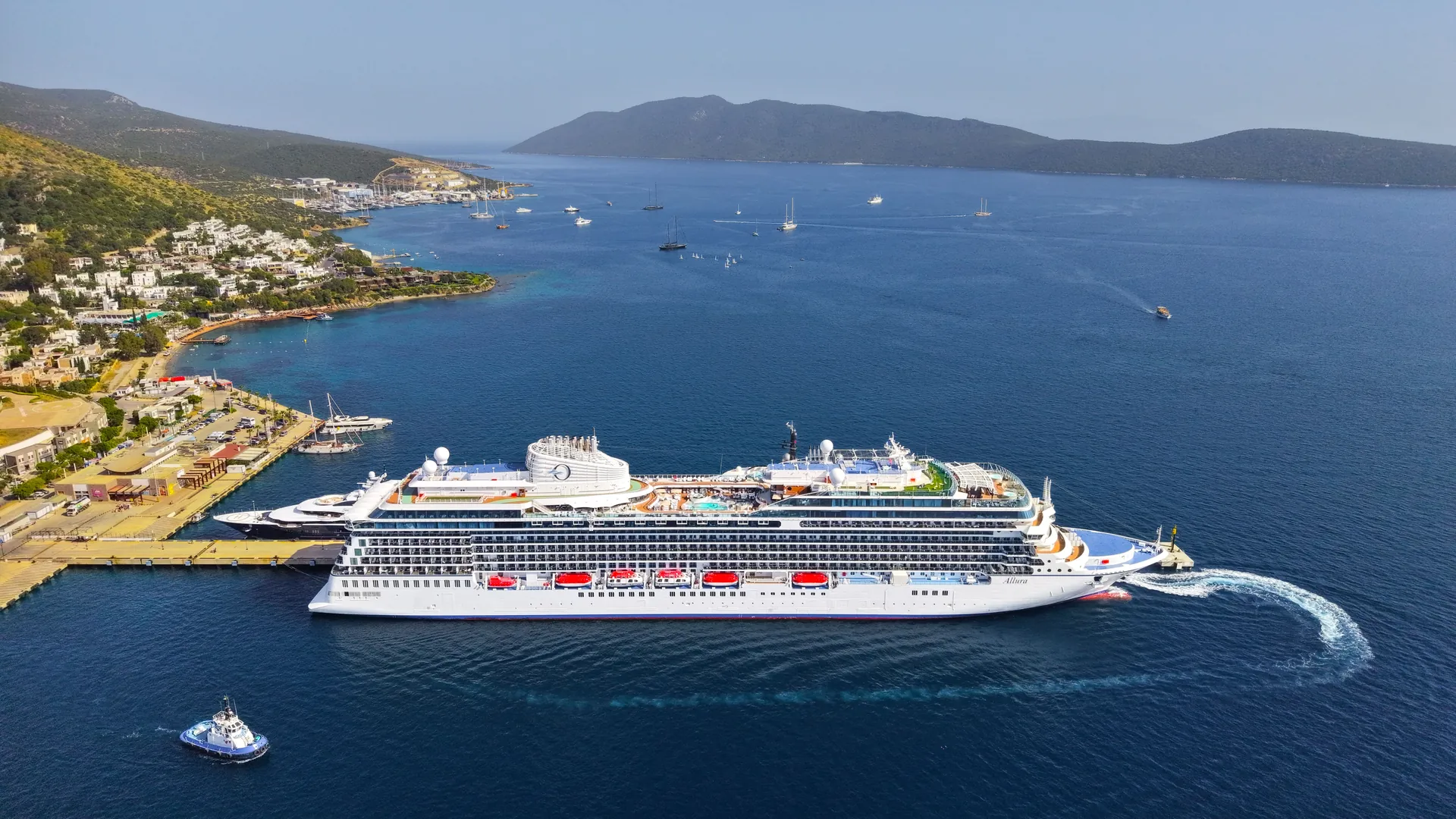
Photographs. Cruise ship moored at a small seaside port with hills beyond — Muhammed Gündüz, Pexels Cropped and resized for the web; not otherwise altered. Neither the photographers nor the licensors endorse this article.
This article is general information, not legal advice. Read the contract for your own sailing. OTGG is an independent travel advisor; this article contains no affiliate links. Cruise line and supplier policies, rates, promotions, inclusions, accessibility procedures and deposit schedules change — verify all details with the operator or an accredited travel advisor before booking or payment.
Booked a port that has a cap in the headlines?
Tell me the port and your sailing date. I will check whether the call is confirmed, allocated or only requested and what your contract says if it changes.
Begin the Journey