Pride travel is not really about picking a city with a strong LGBTQ+ reputation. It is about understanding how one specific event works on one specific date — because crowds, heat, uneven streets, temporary barriers, loud music, limited seating, changing security procedures, transit disruption and uncertain toilet access shape the day far more than the headline performers do.
Sources and facts checked: September 12, 2026 (America/New_York). Event-specific details change every year. Routes, registration windows, platform locations, shuttle provision and operating hours are set annually and often revised close to the date. Everything below is a framework for what to ask; confirm the answers on the live organizer page and directly with the organizer, transit agency, venue, cruise line or excursion operator for your own event.
Start with the organizer, not the destination
Search the official event website for:
- Accessibility, access, or disabled-attendee information.
- Parade and festival maps — they are usually different documents.
- Entry, bag, security and prohibited-item rules.
- Accessible viewing or seating registration, and whether it closes.
- Personal assistant or companion policies.
- Accessible toilet and changing facilities.
- Quiet, sensory, neurodivergent or respite spaces.
- Medical, welfare and first-aid locations.
- Shuttle, parking and public-transit information.
- Contact details for an access coordinator.
Look for a page updated for the exact year. A general city accessibility statement cannot tell you whether this year's parade has temporary trackway, whether a viewing platform needs a wristband, or whether a street closure has removed your planned drop-off point.
Some organizers publish unusually detailed material, and those are worth reading even if you are going somewhere else — they show you the shape of a good answer. Pride in London, for example, publishes access registration through the Nimbus Access Card system, a Parade Access Safe Space for Deaf and disabled attendees, a hop-on-hop-off wheelchair-accessible shuttle, Access Volunteers, an accessible viewing platform and BSL interpreters; its transport guidance also notes that Transport for London does not require accessibility assistance to be pre-booked and that it can be requested on arrival. Helsinki Pride publishes route-surface information including cobblestones and slopes. Brighton & Hove Pride ticket wheelchair viewing platforms, seated viewing and BSL zones. Margate Pride publishes ramped access, gender-neutral toilets and a welfare tent.
Read those as models for the questions, not as this year's facts. Every one of those provisions is set annually. Use them to work out what a thorough access page should contain, then hold your own event's page to that standard.
The parade and the festival are two different events
They may be run by the same organization and still function completely differently. Reaching an accessible festival entrance does not mean you can comfortably watch the parade.
| Parade route | Festival grounds | |
|---|---|---|
| Surface | Asphalt, cobbles, grass, gravel, tram tracks, slopes, temporary trackway | Usually more stable, often with laid trackway routes |
| Seating | Few formal seating areas; dense curbside crowds | Raised viewing platforms, seated areas, shade |
| Toilets | Limited, and often far from where you are standing | Accessible toilets in known, mapped locations |
| Sightline | Standing spectators, barriers, moving floats | Stage screens, interpretation, fixed sightlines |
| Sensory load | Amplified sound, smoke, confetti, flashing lights | Quiet or sensory recovery spaces, staffed access points |
| Getting out | Road closures move taxi and rideshare pickup points | Staffed exits, but capacity and queueing still apply |
Ask whether the viewing area is actually on the route, whether it has a clear sightline, whether seating is available, and whether leaving means you can get back in.
Ask precisely what "accessible viewing" means
The phrase can describe a raised platform, a cordoned area, a reserved chair, a general access zone, or simply a suggested place to stand. Ask which one:
- Is the area reserved, ticketed, wristband-controlled, or first-come first-served?
- Can I bring my own wheelchair, scooter, chair or transfer aid?
- Is there space for an essential companion, and how many are permitted?
- Is the viewing area covered, shaded, or fully exposed?
- What surface leads from the access entrance to the viewing area?
- Are there chairs with arms, back support, or different seat heights?
- Can I leave and return?
- Is the sightline obstructed by barriers, standing spectators or equipment?
- Is interpretation, captioning, audio description or speech-to-text available?
- Is there a separate access queue, and what happens if the area reaches capacity?
The planning lesson from events that publish differentiated viewing zones — shade, varied seating, accessible toilets, ASL interpretation, audio description, nearby first aid — is not to pick that city automatically. It is to look for the specific features that matter to you, and to notice when they are absent.
Sensory and communication needs
Pride can be joyful and intense at once. Plan for sound, light, touch, crowds, heat, smells, and the effort of processing several instructions at speed. Ask whether the event provides:
- A low-sensory or calm space, and a quiet viewing area.
- Ear protection or sensory aids.
- Communication cards.
- BSL or ASL interpretation, live captions or speech-to-text, audio description.
- Staff trained to support sensory overload.
- A clear way to request help without speaking.
- A location where you can regroup with companions.
Read the wording carefully. Some organizers describe calmer spaces while noting honestly that they remain connected to event noise — that is far more useful than an unqualified "sensory-friendly" label, and it tells you the organizer has actually thought about it.
On interpreters, ask who and to what standard. When an event says it provides BSL or ASL interpretation, ask who supplies it and what credentialing applies. In the UK, interpreters are commonly registered with NRCPD, NUBSLI or SASLI, which gives you a concrete way to check whether the claim reflects a qualified professional. Equivalent bodies vary by country — the point is to ask which standard, not to expect those three everywhere.
If you use a communication card, text-to-speech app, writing board or interpreter, document the preference in advance. Something as short as "I may need extra processing time. Please speak directly to me, give one instruction at a time, and allow me to respond using text" does the work. Share only what is necessary to get the accommodation — you do not owe a stranger your diagnosis, gender history or medical history.
The return journey is part of the event
Transit that is accessible on an ordinary day can be complicated by road closures, crowd-control measures, station restrictions, lift outages and changed boarding points. Check:
- The transit agency's own accessibility information, not a map app.
- Step-free routes and whether the lifts you need are actually working.
- Accessible taxi or paratransit booking requirements.
- Temporary stop closures caused by the event.
- Event shuttle capacity and how many wheelchair spaces it has.
- The distance from the stop to the access entrance.
- The last practical departure time, and a backup route if the first vehicle is full.
Book accessible transport directly where you can, and ask the provider exactly where pickup will happen after the event. "Outside the venue" is not an answer when several blocks are fenced off.
Toilets, shade, water and medication
An accessible toilet symbol is not a facilities description. Ask:
- Is the toilet step-free, and is the door wide enough for your device?
- Is there turning space, and are grab rails fitted?
- Is an adult changing bench or hoist provided?
- Is the unit staffed or locked, and is a key required?
- Where are the nearest alternatives?
- Are gender-neutral toilets available?
Confirm shade, water refill points, seating and cooling areas as well — an outdoor Pride can become physically demanding before the parade even begins. For medication, carry what you need under the applicable travel, venue and border rules, keep it in original labeled packaging where appropriate, and ask whether refrigeration or secure storage exists. Never assume an event medical tent can store, replace, prescribe or administer your medication; first aid and welfare support do not replace your clinician, your prescribed plan, your insurance or emergency services.
Security and local advisories
Procedures often change close to the date. Confirm bag size and prohibited items, whether medical equipment needs advance approval, whether food, water, medication, batteries or cooling devices are permitted, whether mobility devices are screened separately, whether a companion may use the access entrance, whether re-entry is allowed, where accessible drop-off is permitted, and what identification or wristband is required.
Check the relevant government travel advisory for the destination and review local laws and entry requirements alongside event-specific safety notices. For LGBTQ+ travelers, "welcoming" does not remove the need to understand local rules, public conduct expectations, identification requirements or protections that differ from home. The IGLTA membership and LGBTQ+ segment page sets out how we approach that, and reputable local LGBTQ+ tourism organizations can add context — but confirm legal and safety information through government sources.
When Pride falls on a cruise port day
This needs stricter planning than a hotel-based stay. First confirm the event is close enough to the terminal to be worth attempting. Then ask the organizer and the excursion operator about:
- Accessible vehicle type, and lift or ramp specifications.
- Device dimensions and combined passenger-and-device weight limits.
- Drop-off and pickup locations during road closures.
- Bathroom access along the route.
- The return time, and whether the operator guarantees a return before all-aboard.
- Cancellation terms if the event changes.
A parade's end time is not a ship-return time
Leave a substantial buffer for crowds, security, vehicle loading, traffic diversions and getting back through the terminal — and do not book an independent event transfer on the assumption that the ship will wait, because it will not. Confirm the line's accessibility process, the port transportation arrangements and the excursion operator's actual return policy in writing. Our accessible shore excursions guide covers the vehicle and transfer questions in more detail.
Devil's advocate: is Pride the right shape for this trip?
An accessible plan can still be exhausting, expensive and unpredictable. A published access page can be genuinely detailed while the event remains crowded, hot, noisy and hard to leave. Consider whether a smaller community event would give you more control, whether a festival-only visit beats the parade, whether a Pride House, museum program, film screening or scheduled panel suits you better, and whether a hotel with a reliable rest space is worth the extra cost.
Choosing a different Pride activity is not failing to participate. It is choosing the format that lets you enjoy the community on your own terms.
Verify before you go
- Read the official organizer's current accessibility page for your event year.
- Confirm the event date, route, venue and access contact.
- Ask about surfaces, slopes, barriers and temporary flooring.
- Confirm viewing-area rules, seating, companions and re-entry.
- Confirm quiet spaces — and what "quiet" means in practice.
- Check interpretation, captions, audio description or communication support.
- Locate accessible, gender-neutral and changing facilities.
- Confirm water, shade, charging, medication and medical arrangements.
- Review entry, bag, battery, device and security rules.
- Verify public-transit accessibility and event diversions.
- Arrange accessible transport directly with the provider.
- If cruising, confirm the ship’s all-aboard time and build a real return buffer.
- Get written confirmation from the organizer, venue, transit provider, line and excursion operator.
Frequently asked
Does an LGBTQ+-friendly city guarantee an accessible Pride event?
No. City reputation and event access are separate questions, and either can be good while the other is poor. A destination may be genuinely welcoming while the event footprint is difficult to navigate, and a less-celebrated city may run a meticulously planned event. Review the official organizer’s current plans for the specific year you are attending.
Are accessible viewing areas always free?
No. Some are free, some require registration that closes well before the event, and some are tied to tickets, wristbands or venue rules. Ask which model applies, whether the area can reach capacity, and what happens if it does.
Can my companion enter the accessible viewing area with me?
Often, but the number of companions permitted and the definition of an essential companion vary between events. Ask before you travel rather than at the gate — and do not assume a companion ticket means a personal-care provider, interpreter or medical assistant is being supplied.
Is a quiet space actually quiet?
Usually not silent. "Quiet" often means quieter than the main stage, and some calm spaces remain connected to event noise by design. Ask specifically about music, announcements, lighting, crowd levels, seating, and whether you can leave and return — an honest description of a partly-quiet space is more useful than a "sensory-friendly" label.
How do I check an interpreter is qualified?
Ask who provides the interpretation and what credentialing standard applies. In the UK, interpreters are commonly registered with NRCPD, NUBSLI or SASLI, which gives you a concrete cross-check on whether an event’s interpreter claim reflects a qualified professional. Equivalent bodies vary by country, so ask which one the event is working to rather than assuming.
Should I book a ship excursion for a Pride event on a port day?
Only after comparing the excursion’s accessibility, transport, return guarantee and timing against the ship’s requirements. A parade’s advertised end time is not a safe ship-return time, and no independent transfer obliges the ship to wait. Build the day around all-aboard, with a substantial buffer for crowds, security, vehicle loading, traffic diversions and getting back through the terminal.
Sources and facts checked: September 12, 2026 (America/New_York). Every organizer provision named in this article is described as an example of what a thorough access page contains, not as a current fact about this year's event. Routes, registration windows, viewing-platform locations, shuttle provision, interpreter booking and operating hours are set annually and frequently revised close to the date — confirm all of them on the live organizer page for your own event and year. The Nimbus Access Card is a real system used by some UK Pride events and is offered here as an example to research rather than a universal tool, and NRCPD, NUBSLI and SASLI are UK registration bodies, with equivalent bodies varying by country. Government advisories, transit accessibility and local legal requirements should be confirmed through the official government and agency sources rather than through event or community pages.
Sources
- Pride in London — accessibility information ↗
- Nimbus Disability — the Access Card ↗
- NRCPD — register of communication professionals with deaf and deafblind people ↗
- Transport for London — accessibility ↗
- IGLTA — International LGBTQ+ Travel Association ↗
- U.S. Department of State — travel advisories ↗
- UK Foreign travel advice ↗
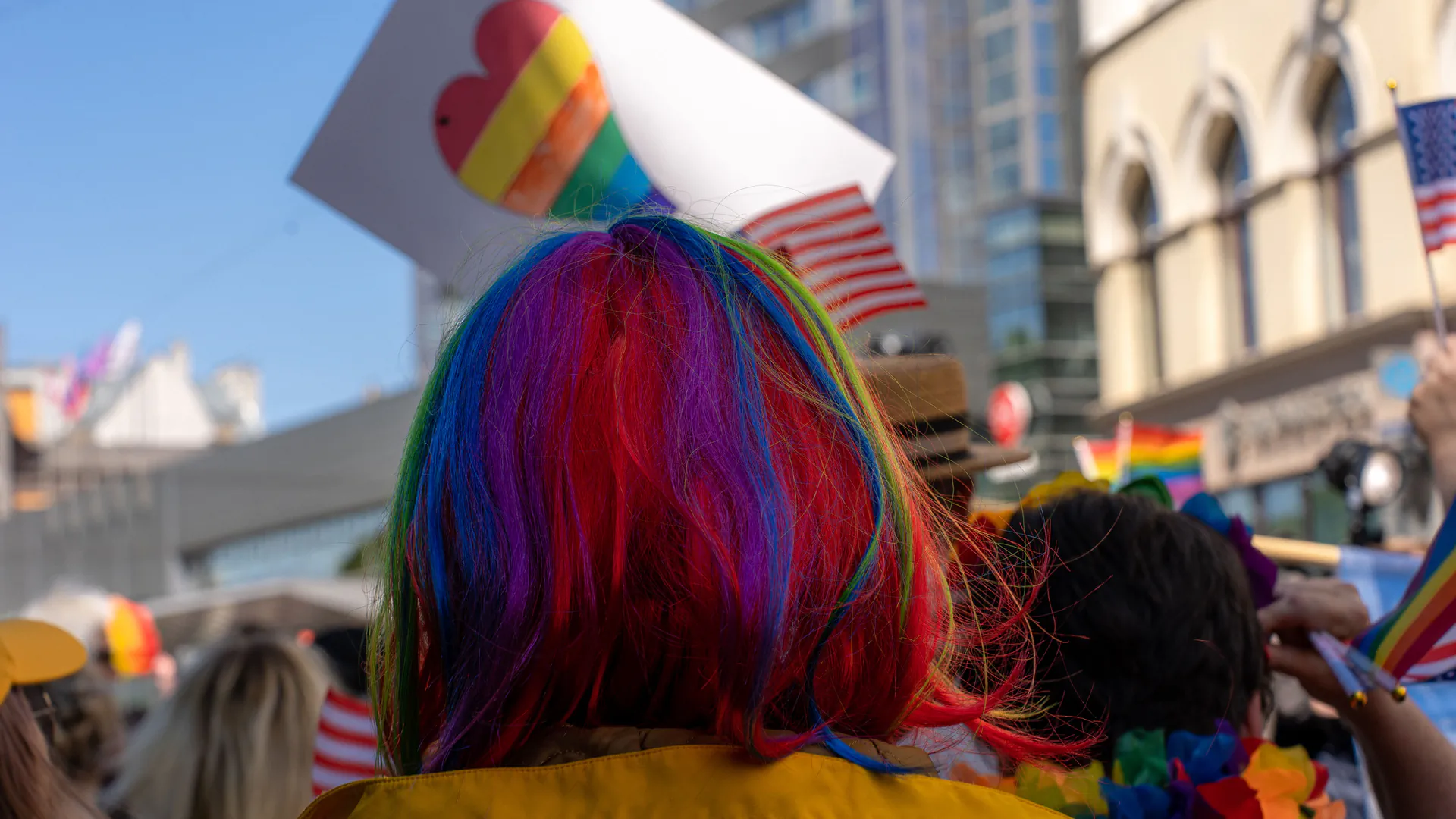
Photographs. A Pride parade crowd — Anastasiya Badun, Pexels Cropped and resized for the web; not otherwise altered. Neither the photographers nor the licensors endorse this article.
This article is general planning information, not medical, legal or emergency advice, and not a guarantee that any destination, event, venue, transport provider, cruise line or excursion will meet a particular traveler's needs. OTGG is an independent travel advisory business; this article is not sponsored and contains no affiliate links. Event policies, routes, access provisions, security procedures, transport and excursion terms change — verify current details directly with the organizer, venue, transit agency, cruise line, excursion operator, government authority or an accredited travel advisor before making plans or payment. In an emergency, contact local emergency services.
Want a Pride trip built around what you actually need?
Tell me the event, the date, and what has to work — viewing, seating, quiet space, step-free transit, a reliable way out. I will put the questions to the organizer and the transit agency, get the answers in writing, and tell you honestly when a smaller event or a festival-only day is the better trip.
Begin the Journey