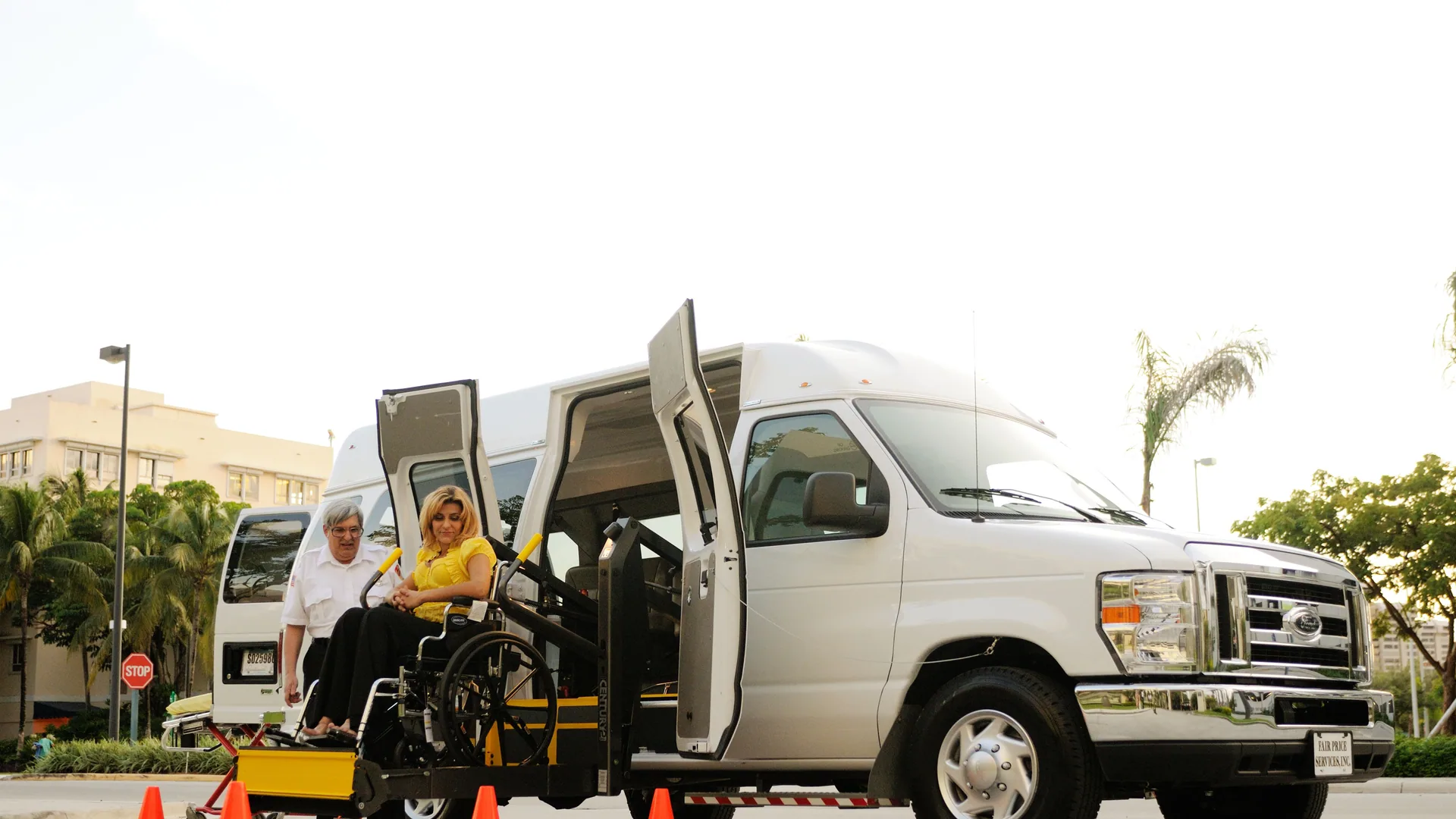
Excursion labels are useful and they are not magic. "Accessible", "easy", "wheelchair" and "mobility equipment" can describe very different days. One tour is a standard coach with three steps. Another is a ramp-equipped minibus with two wheelchair spaces. A third avoids stairs at the attraction and still needs you to transfer into a normal seat. Read the label to work out which questions to ask, then verify the vehicle before paying.
The four vocabularies
There is no shared industry taxonomy. Each line has invented its own, and the differences are not cosmetic — they change what you have to be able to do.
| Line | System | What the categories mean | The catch |
|---|---|---|---|
| Royal Caribbean | Level 1 / Level 2 | Level 1 = coach steps, collapsible device stowed below. Level 2 = adapted vehicle with ramp or lift where available, limited device capacity. | The clearest published split of the four. Level 2 requires you to stay seated on the device while using the lift. |
| Carnival | Symbols plus written advisories | One category needs a few steps, short walking and a transfer into a seat. Another uses ramp or lift transport on step-free routes. | Some individual listings state a hard combined guest-and-device weight limit. Ask for the number. |
| Celebrity | Pre-coordination by email | No public tier system — you email the accessible excursions team with itinerary, interests, mobility needs and device details. | A tour appearing in general inventory says nothing about the vehicle. Nothing is confirmed until they confirm it. |
| Norwegian | Advisory language in the description | Itinerary-specific wording such as Accessible Mobility Equipment, describing step-free routes, shorter distances and a ramp or lift. | "Easy" and "limited mobility" are effort ratings, not boarding specifications. If a ramp is not named, assume a standard coach. |
Coach-step, in practice
A coach-step excursion uses a standard motorcoach or minibus with no ramp or lift. You will likely need to walk from curb to vehicle, climb two or three steps, transfer into a passenger seat, have a manual chair or scooter folded and stowed below, and walk short distances during the tour itself.
Royal Caribbean's Level 1 is the clearest published version: intended for guests who can walk short distances, manage coach steps, and use a standard collapsible device that stows under the coach. It can genuinely suit a slow walker who manages steps safely and has a companion. It does not work if you cannot climb steps, cannot transfer, or need to stay in your device to board.
Adapted vehicle, and its fine print
An adapted vehicle is a van, minibus or coach with a ramp or hydraulic lift. It will have securement positions, a limited number of them, and maximum device dimensions. Royal's Level 2 adds a requirement worth reading twice: guests must remain seated on the wheelchair or scooter while using the ramp or lift. If you need to transfer into a standard seat, ask whether that is permitted. If you need to stay in your device, ask whether it can be secured.
Ask for the weight number, not the reassurance. Lifts have a combined guest-and-device ceiling, and "limited capacity" language hides it. Some individual listings publish the figure — one Carnival Bermuda tour states 450 lb combined. A power chair alone can run 250 to 400 lb before anyone sits in it.
This is the single most likely reason someone with a confirmed accessible booking does not board on the day, and it is answerable in one email. Get the number, and get it for the vehicle actually assigned rather than the fleet in general.
"Accessible" and "usable" are different tests
The question the label cannot answer is the only one that matters: can I take part independently, in my own device, without climbing steps or being lifted?
A tour can be accurately described as accessible and still require you to transfer out of your chair, leave the device behind for part of it, cross cobbles or sand, manage a step at a restaurant or restroom, bring a collapsible rather than a power chair, or depend on a companion. Carnival's own guidance illustrates the split — an ambulatory category needing a few steps and a transfer, against a lift-or-ramp category on step-free routes — and states plainly that guides cannot push wheelchairs or lift guests into vehicles.
Plan around the no-lift rule as a fixed constraint. Across the lines, staff generally cannot lift a guest into a coach, carry a device with someone in it, perform a transfer, or provide personal care. If you need hands-on transfer support it must come from a companion or carer you have arranged. The excursion has to be compatible with what you can do unaided.
What to ask, and where the list already lives
The seven questions that settle an operator — vehicle type, step-free the whole way, device maxima, transfer or not, bathroom on the route, what happens if the port tenders, and who to call when the wrong vehicle arrives — are set out on our accessible shore excursions page, and there is no sense in restating them here.
What this article adds to that list is three line-specific questions worth asking on top:
- What is the combined guest-and-device weight limit for the lift or ramp on the vehicle assigned to this tour?
- Is my device space reserved, or merely available? "Limited capacity" is a description, not a booking.
- What happens if the adapted vehicle is unavailable on the day — refund, alternative, or nothing?
On timing: aim to be back at the pier 60 to 90 minutes before all-aboard. That is our standard port guidance rather than any cruise line's promise, and it is the same buffer we apply in the port guides. Allow more for tenders, traffic, border control, large groups or an unfamiliar terminal.
Do not over-filter too early
Adapted vehicles are fewer, sell out sooner and sometimes cost more while covering less ground. Filtering hard on the label can delete workable options — a coach-step tour can be a good day for a slow walker with time and a trusted companion, and a small adapted tour is not automatically better value than a standard one.
The label is not a verdict. It tells you which questions to ask. Then you compare the actual vehicle, the transfer requirement, the terrain, the bathrooms and the timing against what you can actually do — and sometimes the honest answer is a shipboard day, which is a legitimate choice rather than a failure.
Frequently asked
What is the difference between a coach-step and an adapted-vehicle excursion?
A coach-step tour uses standard transport and requires you to climb two or three steps, usually transfer into a normal seat, and have a collapsible device stowed in the luggage bay. An adapted-vehicle tour has a ramp or lift — but capacity is typically two or three device spaces, and device dimensions and weight are restricted.
Does "wheelchair accessible" mean I can stay in my wheelchair?
No, and this is the most common misreading. A tour can be labeled accessible and still require you to transfer into a standard seat, leave the device behind for part of the activity, cross uneven ground, or use a collapsible chair rather than a power chair. Ask the question directly: can I remain in my own device for boarding, for the drive, and at the attraction?
Can excursion staff lift me into the vehicle?
Plan on no. Cruise lines and operators generally state that staff are not permitted to lift a guest or their equipment, and some state explicitly that guides cannot push wheelchairs. If you need hands-on transfer support, it has to come from a companion or carer you have arranged.
Is there a weight limit on a lift or ramp?
Often, and it is usually a combined guest-and-device figure rather than a device-only one. Some individual listings publish it — one Carnival Bermuda tour states 450 lb. Where a lift is involved, ask for the actual number rather than accepting "limited capacity", because that phrase hides a hard ceiling.
Are accessible excursions available in every port?
No. Availability depends on local vehicles, the attraction, roads, terrain, tender operations, weather and operator capacity. A tendered port can prevent going ashore at all regardless of the excursion booked, so confirm the call type before you book anything that depends on disembarking.
Is a cruise-line excursion safer than an independent one?
It is simpler to coordinate and the ship knows where you are, which matters for late returns. It is not automatically more suitable. Verify the same things either way: vehicle, transfer requirement, terrain, bathroom access and return time.
Verification notes and sources
Line accessibility pages reviewed on September 11, 2026 for current excursion terminology and stated limitations. Every taxonomy above is that line's own vocabulary and none is an industry standard. Excursion inventory, vehicles, capacities, weight limits, port conditions and return times change — verify the exact excursion against your own device before paying.
Sources
- Royal Caribbean — accessible shore excursions and mobility guidance ↗
- Celebrity Cruises — accessible shore excursions ↗
- Norwegian Cruise Line — accessibility FAQ ↗
- Carnival Cruise Line — guests with disabilities and shore excursion accessibility ↗
- Off The Grid Getaways — accessible shore excursions: how we vet operators ↗
- Off The Grid Getaways — Royal Caribbean accessible cruising guide ↗
Photographs. Boarding an adapted van — DΛVΞ GΛRCIΛ, Pexels Cropped and resized for the web; not otherwise altered. Neither the photographers nor the licensors endorse this article.
This guide does not assess whether a particular excursion is medically appropriate or safe for you, and it cannot guarantee vehicle availability, capacity or access on the day. Cruise-line policies, excursion inventory, vehicles, deadlines and cancellation terms change; confirm current details with the operator or an accredited advisor before paying. Nothing here is medical advice — consult a qualified professional about mobility, activity suitability or any condition affecting your trip.
Send me the tour and the device specs.
Give me the excursion, your chair or scooter's dimensions, weight and battery type, and whether you can transfer. I will get the vehicle, the lift capacity and the transfer requirement in writing before you pay — including when the answer is that this tour does not work and a different one does.
Begin the Journey