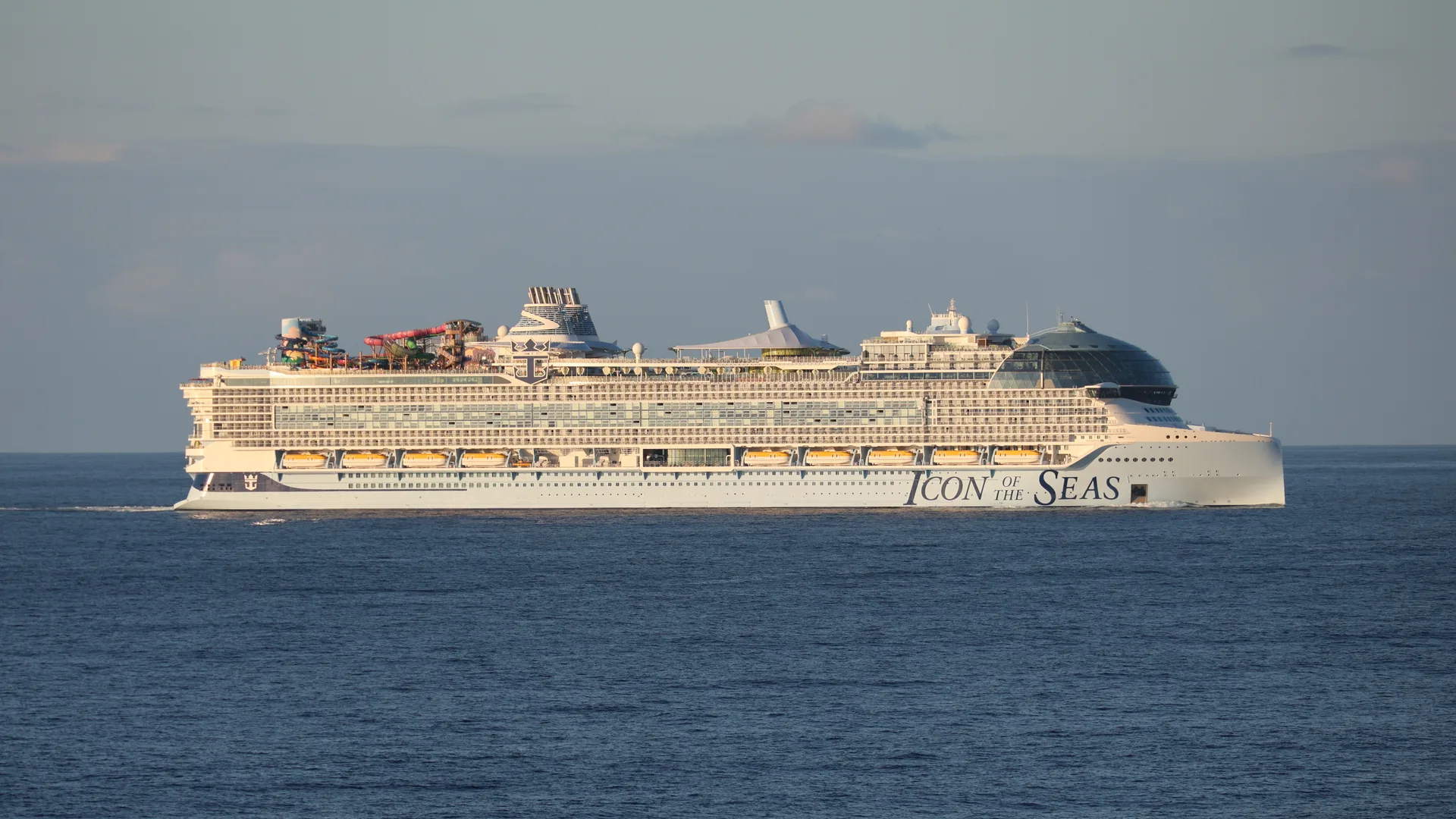
Royal Caribbean's fleet offers extensive accessibility features, but an accessible cruise is not defined by shipboard facilities alone. The lived experience depends on cabin geometry, advance-notice deadlines, embarkation procedure, port infrastructure, tender operations, sensory environment, and the sheer physical scale of the vessel.
A newer Icon- or Oasis-class ship gives you more sophisticated public-area infrastructure, pool lifts and family programming. A smaller Radiance- or Vision-class vessel cuts walking distances and ambient noise, but carries fewer accessible staterooms and fewer modern adaptations. Neither is simply "better."
The reliable approach is to evaluate accessibility as a complete system: the traveler's specific needs, the ship's architecture, the itinerary's ports, and the services that must be arranged before you sail.
Every figure in this guide was checked against Royal Caribbean's own accessibility documentation at time of writing. Policies, equipment availability, deck plans and port operations all change. Confirm anything you are relying on directly with the Access Department — (866) 592-7225 or [email protected] — before booking and again before departure.
The Deadlines That Actually Bind
Royal Caribbean coordinates disability-related accommodations through its Access Department and the online Guest Special Needs Form. The line recommends submitting it at the time of booking, and requires it no later than 30 days before sailing for most requests. Some services need longer.
Royal Caribbean says it will make reasonable efforts to accommodate late requests, but equipment and services are not guaranteed without sufficient notice. Accessibility planning therefore has to begin before you choose a cabin, not after.
Visual and hearing accommodations
Fleetwide visual accommodations include Braille and tactile signage in public areas and elevators, Braille lift buttons, audible call signals, large-print menus and large-print daily programs. Orientation tours and qualified readers may be available on request.
For guests who are deaf or hard of hearing, Royal Caribbean lists:
- Portable stateroom kitsVisual and tactile alerts for door knocks, telephone calls, smoke detectors and alarm clocks.
- TTY devicesConnecting the stateroom with Guest Relations.
- Amplified telephonesIn staterooms and in public areas.
- Closed captioningOn television programming, with all safety videos captioned.
- Assistive Listening SystemsIn the main theater on every ship, with additional coverage in selected venues and classes.
Sign-language interpreting is offered only on cruises departing from or returning to the U.S. and Canada. It is shared among eligible guests, typically covering main production shows, port and shopping presentations and other major activities — and it remains subject to interpreter availability even when you meet the 60-day deadline. If interpreting is essential, it should shape which itinerary you pick, not just which form you file.
Accessible Staterooms and the Door-Width Trap
| Size | 159–298 sq ft, depending on ship and category |
|---|---|
| Turning radius | Five feet in sleeping areas, bathrooms and sitting areas |
| Stateroom door | 32–34 inches wide, vessel-dependent |
| Bathroom door | 32–34 inches wide, vessel-dependent |
| Thresholds | No doorsill at the stateroom entrance; ramped bathroom thresholds |
| Shower | Roll-in with fold-down bench, grab bars and a hand-held showerhead |
| Fixtures | Lowered sink, vanity, closet rods and safe |
| Toilet | Raised seat, most between 17 and 19 inches; commode chairs available |
| On request | Refrigerator; accessible balconies on selected staterooms |
Accessible staterooms are intended for guests who require the features. Royal Caribbean reserves the right to move a guest who booked one without needing it, and states that it investigates suspected fraudulent bookings of this inventory.
The scooter-storage trap in standard cabins
This is the most consequential paragraph in the guide, so read it twice.
Royal Caribbean gives the standard stateroom entry door as a minimum of about 23 inches wide. That is a nominal figure — in practice, door hardware and the angle of approach from a narrow corridor can leave you with meaningfully less usable clearance than the number suggests. Most standard power scooters, rigid wheelchairs and power chairs will not pass through it.
Mobility devices must be stored and charged inside the stateroom. They cannot be left in corridors, elevator lobbies, stairwells or any other circulation space, because those are emergency evacuation routes. If your device will not fit through the door, there is nowhere else for it to go — and that discovery on embarkation day is not a problem anyone can solve for you.
A folding wheelchair or ultra-compact folding scooter may work in some standard cabins, but it depends on the device's width, length and turning radius against that specific cabin's layout. Submit the full dimensions through the Special Needs Form and get an answer before you assume. Royal Caribbean asks guests with devices wider than 32 inches to contact the Access Department directly.
Booking-system safeguards
If you need accessible features, book a specific accessible stateroom number — never a guarantee or "GTY" category. Consumer reporting has found cases where online accessibility filters displayed guarantee cabins alongside genuine accessible inventory, and a GTY booking does not guarantee an accessible assignment.
Before you pay a deposit, confirm all five:
- 01 The cabin is explicitly labeled accessible — not merely filtered as one.
- 02 The specific cabin number matches the features you need.
- 03 Your equipment’s full dimensions have been submitted on the Special Needs Form.
- 04 The Access Department has acknowledged the request in writing.
- 05 The booking does not rest on a search filter or a free-text preference note.
Accessible inventory sells out well before departure, and a reassignment at embarkation may simply not be possible.
Neurodiverse Travelers and the Sensory Environment
Royal Caribbean's autism-friendly initiative was developed with support from Autism on the Seas, including autism-awareness training for Youth staff. It is designed for guests with autism, Down syndrome, cerebral palsy and other developmental or cognitive disabilities, and may include expedited check-in, boarding and departure assistance, early disembarkation, dietary accommodations and flexible participation in youth programming.
Adventure Ocean adaptations
- Grouping by developmental abilityRather than strict chronological age.
- Toilet-training exceptionAvailable for certain children with developmental disabilities.
- Parent pagers or mobile phonesWhile children are signed in, subject to availability.
- Autism-friendly toy lendingPlus sensory-friendly toy totes with crayons, blocks, picture books and art supplies.
- Staff consultationTo judge whether a given activity can be appropriately modified.
It is a hosted youth program, not one-to-one support. Confirm the actual supervision level available for your child on your specific sailing rather than assuming individual attention. Families needing structured support should look at Autism on the Seas' separate supported group sailings, which add dedicated staff and scheduled activities.
Preparation resources
- All Aboard My Cruise social storiesFor selected Oasis- and Icon-class ships.
- Autism-friendly film screeningsLow-lit and low-volume, with permission to move around and vocalise.
- The Autism ChannelComplimentary on Quantum, Oasis, Freedom, Voyager and Radiance class ships.
Managing embarkation-day overstimulation
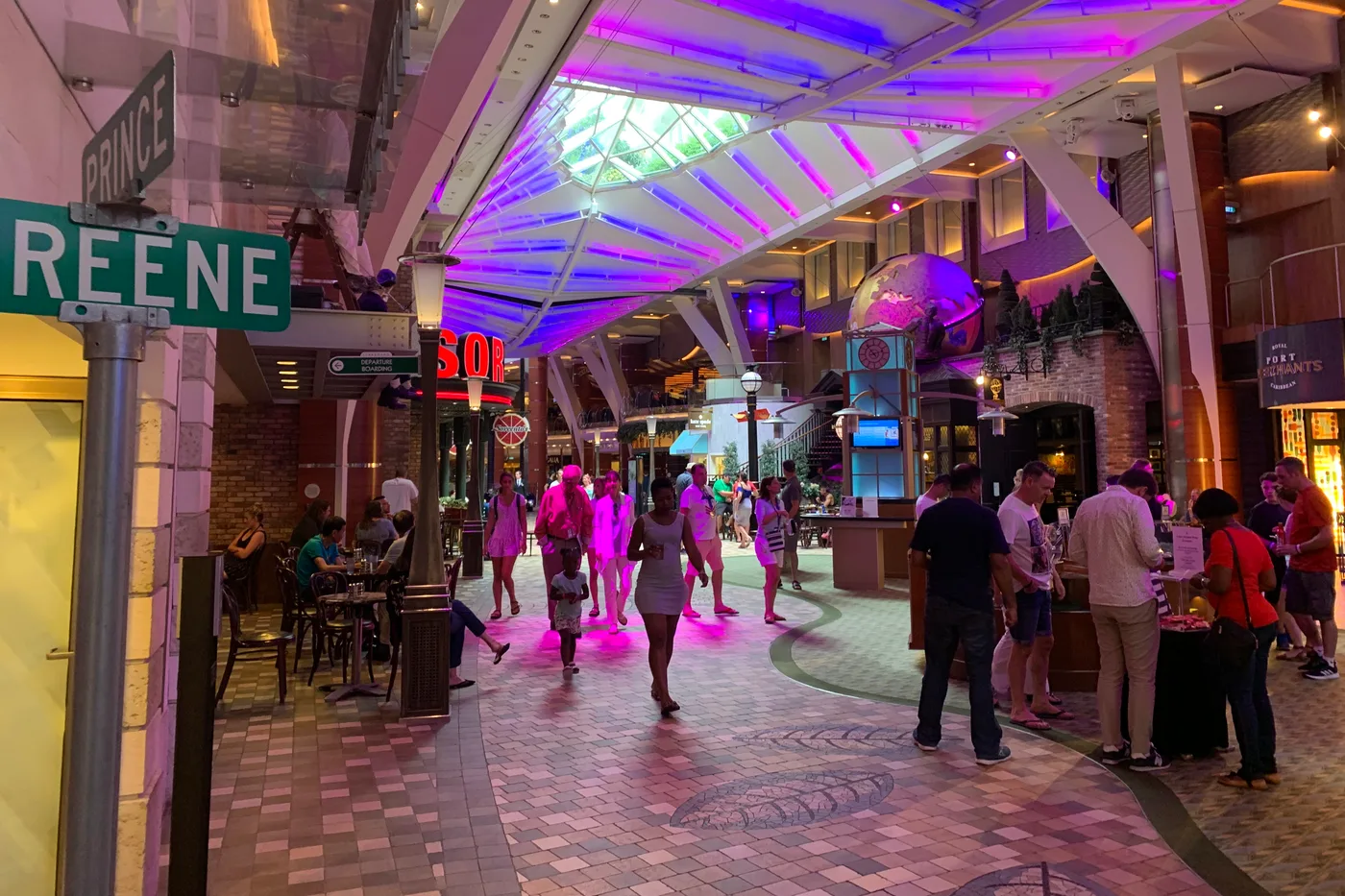
The Windjammer Marketplace at embarkation lunch is the highest-sensory hour of the entire cruise: crowds, amplified announcements, buffet queues, clattering plates, and thousands of people who do not yet know where anything is. A lower-stimulation plan:
- Arrive with a prepared visual schedule.
- Ask about early boarding or departure assistance.
- Go to the stateroom as soon as cabin access is announced.
- Use a quieter venue if specialty dining is open, or request an isolated table in the Main Dining Room.
- Avoid the peak buffet window entirely.
- Carry familiar sensory tools and noise-reduction equipment.
Dining availability varies by ship and sailing, so confirm alternatives onboard rather than assuming they exist.
Pier-Docked Versus Tender Ports
A ship can be highly accessible and still call at ports you cannot reasonably use. The decisive question is whether the vessel ties up at a pier or anchors offshore and runs tenders.
At a pier you generally get a continuous gangway or ramped route between ship and terminal — though steep gangways, tidal range, weather and shoreside construction can all degrade that. Royal Caribbean staff may assist with manual wheelchairs, walkers and canes, but are not permitted to lift guests or equipment. Request pier wheelchair assistance at least 30 days out.
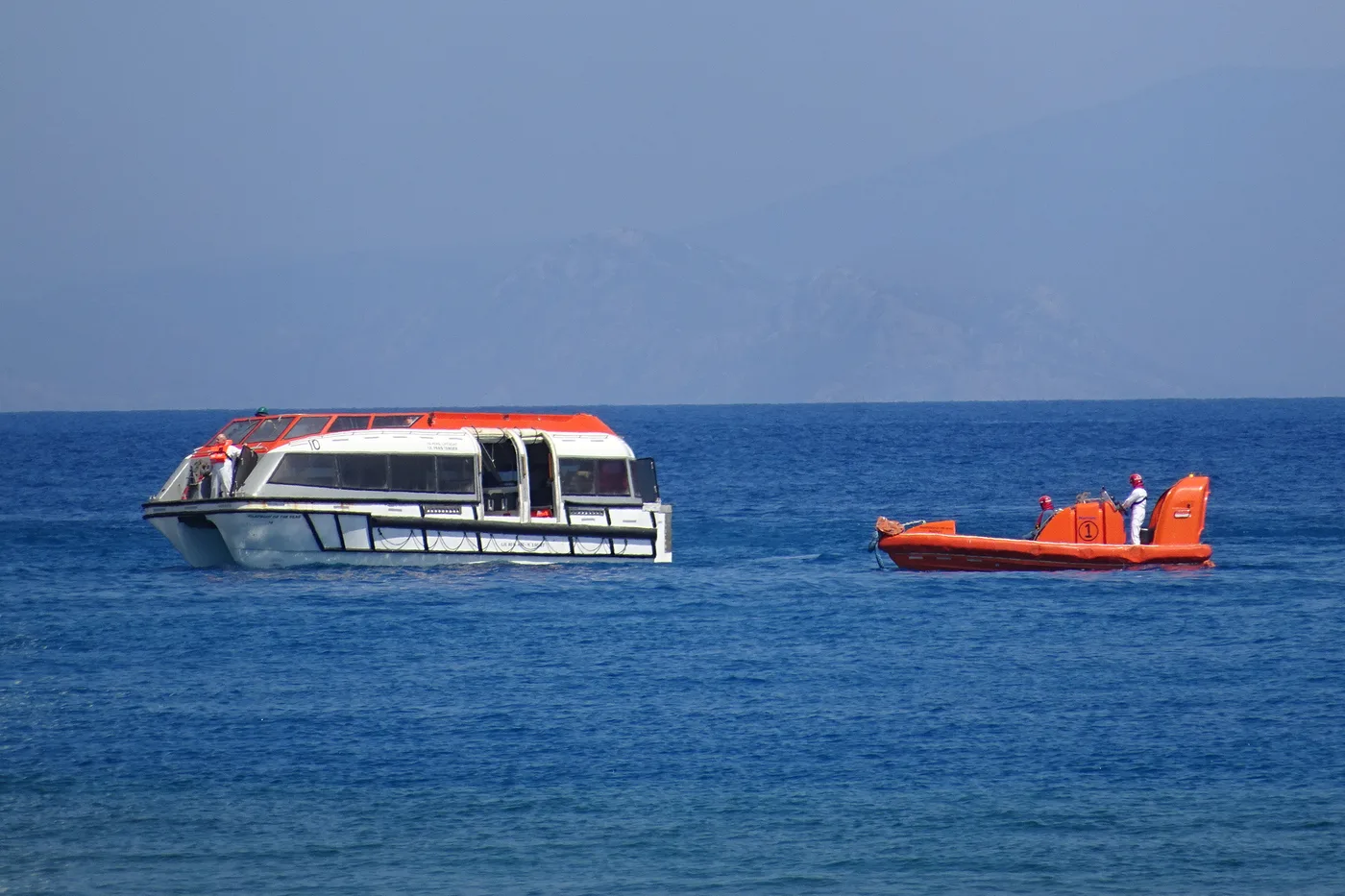
Royal Caribbean's tender guidance is unusually blunt, and worth quoting in full effect:
- Guests who cannot take a few steps will be unable to board most tenders, unless roll-on capability is available.
- Motorised wheelchairs and mobility scooters generally cannot be taken aboard without roll-on capability.
- Manual wheelchairs usually must be collapsible.
- Roll-on capability is never guaranteed — ask at Guest Relations on board.
- The Captain makes the final call on weather, sea state and safety.
A scheduled pier call can also become a tender call at short notice. Treat every tender port as a conditional shore day rather than a guaranteed one. Commonly tendered destinations include Santorini, Kotor, Grand Cayman, Belize City, Bar Harbor and Cabo San Lucas — and Grand Cayman in particular is not changing: islanders rejected building cruise berths in a 2025 referendum.
Perfect Day at CocoCay
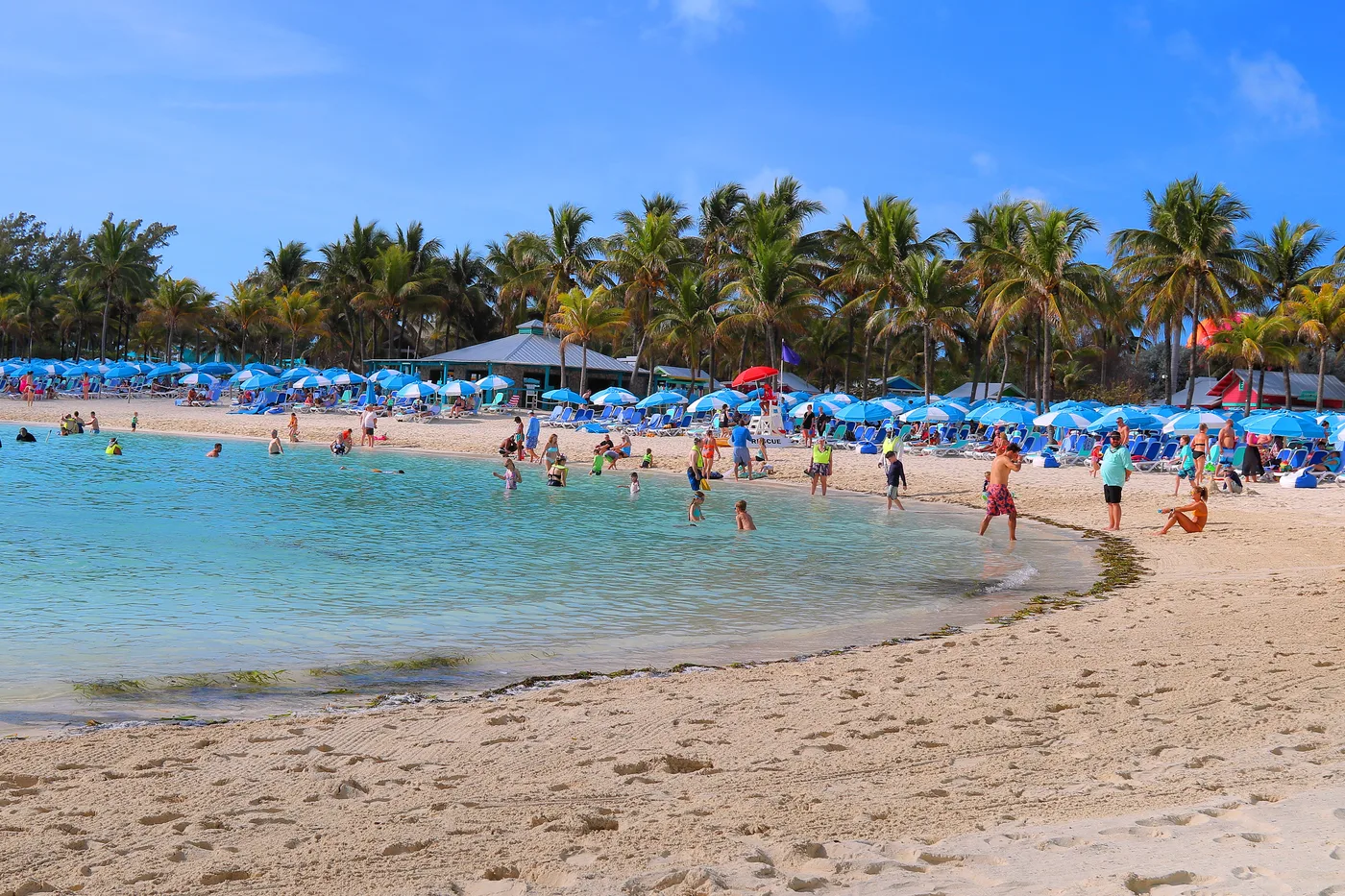
Royal Caribbean describes its private destination as accessible, and by private-island standards it genuinely is. But "accessible island" and "accessible beach" are different claims, and the difference matters.
- Available Complimentary beach wheelchairs, first come first served
- Available Accessible trams on regular rotation across the island
- Available Pool lifts at Oasis Lagoon and the Coco Beach Club infinity pool
- Available Wheelchair-accessible Wave Pool in Thrill Waterpark
- Available Ramps to Coco Beach Club dining, and a lowered bar counter
- Limitation Waterslide towers and the zip-line tower are reached by stairs
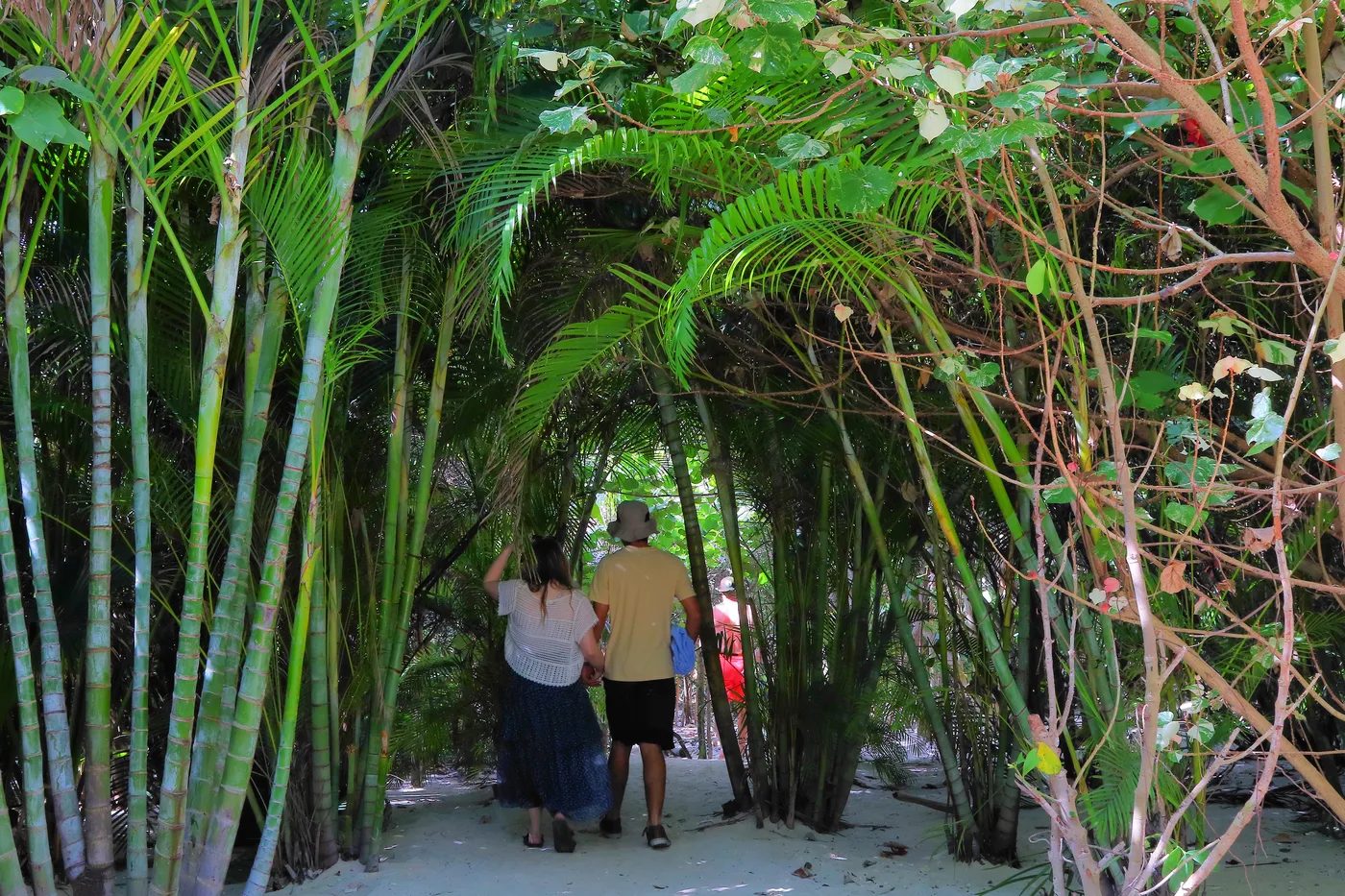
- Limitation Soft sand is still unavoidable near the beaches themselves
Ship Class Is an Accessibility Variable
| Class | Ships | Approx. guests | Accessibility strength | Trade-off |
|---|---|---|---|---|
| Icon | Icon, Star, Legend of the Seas | ~7,600 | Newest adaptations, widest public circulation, most redundancy if a lift is down | The longest distances on the fleet. Stamina, not doorways, becomes the limiting factor |
| Oasis | Oasis, Allure, Harmony, Symphony, Wonder, Utopia | ~5,700–6,900 | Excellent public-area infrastructure, neighborhood layout, strong family programming | Very large. Deck-to-venue transits are long and lifts queue at peak times |
| Quantum | Quantum, Anthem, Ovation, Spectrum, Odyssey | ~4,200–4,900 | Modern build, indoor venues, good weather-independent routing | Some signature venues have their own access constraints — verify individually |
| Freedom | Freedom, Liberty, Independence | ~3,900–4,500 | Mid-scale balance of amenity and walking distance | Older bones; accessible-cabin inventory is tighter than on newer classes |
| Voyager | Voyager, Explorer, Adventure, Navigator, Mariner | ~3,300–4,000 | Manageable footprint with a full promenade | Refurbishment history varies widely between sisters — check the specific hull |
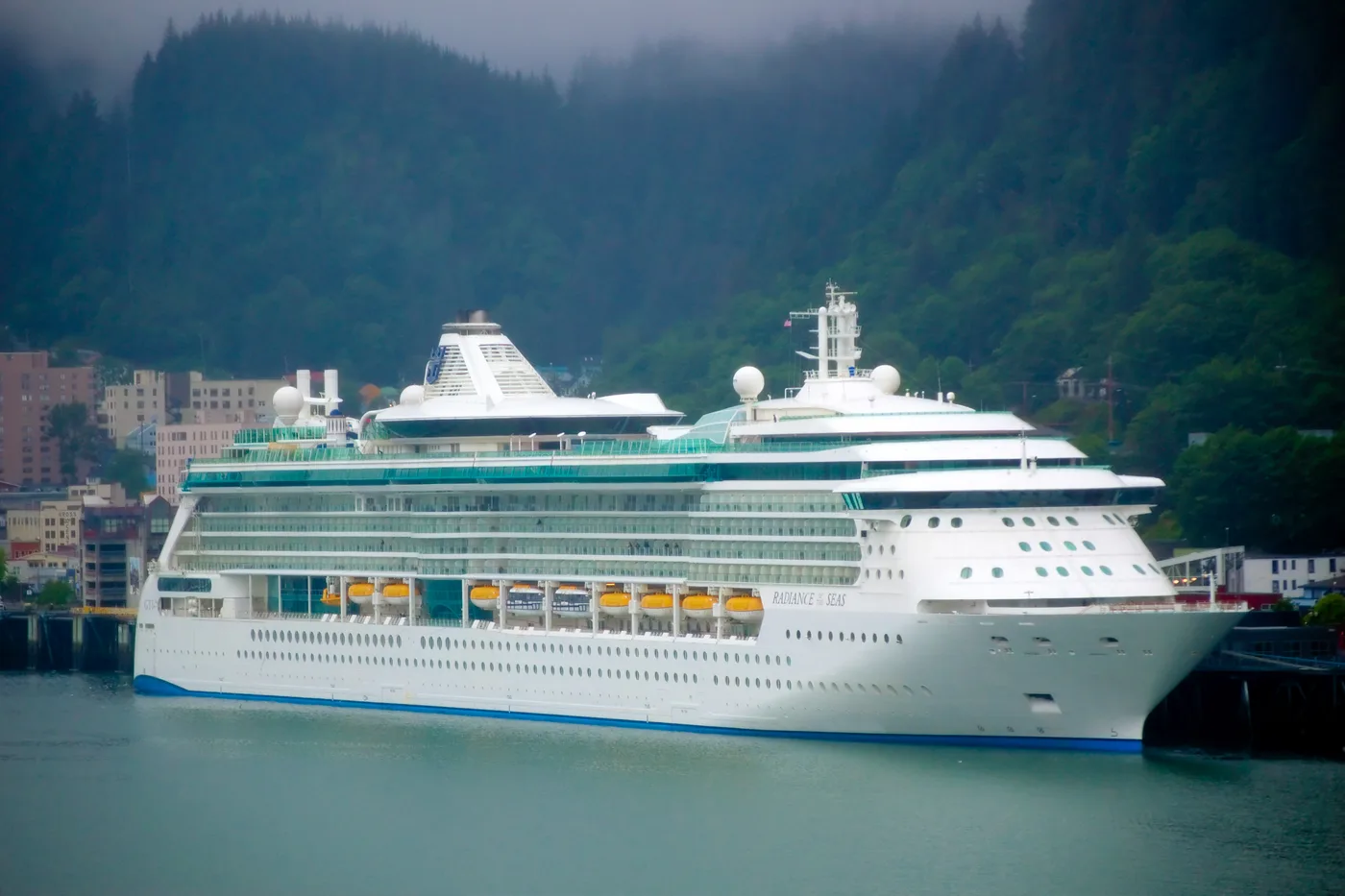
| Radiance | Radiance, Brilliance, Serenade, Jewel | ~2,100–2,500 | Short distances, calmer ambient noise, glass-forward and easy to orient in | Fewer accessible staterooms and less redundancy if one is unavailable |
| Vision | Grandeur, Rhapsody, Enchantment, Vision | ~1,800–2,400 | Smallest and quietest; the least walking of any class | Oldest fleet, fewest modern adaptations, smallest accessible inventory |
Guest figures are approximate double-occupancy counts, included to convey scale rather than to be quoted. Features are not identical across every ship in a class: refurbishment history, individual cabin location, venue access and pool-lift availability all vary between sisters. Verify the specific hull you are booking.
A large ship removes barriers with wider corridors and newer equipment, then adds one back in the form of distance. A small ship does the reverse.
Match the Traveler to the Architecture
The most successful accessible cruise plans start from four questions:
- 01 What equipment must physically enter — and stay inside — the stateroom?
- 02 Which services need 30 days’ notice, and which need 60?
- 03 Can the traveler manage a tender transfer and a variable gangway safely?
- 04 Does the ship’s scale suit their stamina, sensory profile and daily rhythm?
Submit the Guest Special Needs Form at booking. Reserve a specifically identified accessible stateroom. Verify your equipment's dimensions in writing. Review every port for tender exposure. Royal Caribbean's accessible cruising resources are the official starting point, but the decision has to be made against the exact ship, cabin, itinerary and person.
Accessibility at sea is not a single feature. It is the result of aligning policy, architecture, logistics and preparation — all of it before you leave home.
Common Questions
How wide are Royal Caribbean stateroom doors?
Accessible stateroom and bathroom doors are 32 to 34 inches wide, depending on the vessel. Standard stateroom doors are narrower — Royal Caribbean states a minimum of about 23 inches, which will not admit most power scooters or rigid wheelchairs. If your device is wider than 32 inches, contact the Access Department directly.
Can I store my mobility scooter in the corridor outside my cabin?
No. Assistive devices must be stored and recharged inside your stateroom. Corridors, fire doors, elevator lobbies and stairwells are emergency evacuation routes and must stay clear. This is the single most common planning mistake for guests who book a standard cabin.
How far in advance do I need to request accessibility services?
Submit the Guest Special Needs Form at booking. The hard floor is 30 days before sailing for most equipment and services, including oxygen, dialysis coordination, service-animal relief areas and pier wheelchair assistance. Sign-language interpreting needs 60 days and is only offered on cruises departing from or returning to the U.S. and Canada.
Can wheelchair users go ashore at tender ports?
Often not. Motorised wheelchairs and scooters generally cannot board a tender unless roll-on capability exists, and roll-on is never guaranteed. Guests who cannot take a few steps will be unable to board most tenders. The Captain decides based on sea state and safety, and a scheduled pier call can switch to tendering.
Is Perfect Day at CocoCay wheelchair accessible?
Largely yes. There are complimentary beach wheelchairs, accessible trams, pool lifts at Oasis Lagoon and the Coco Beach Club infinity pool, an accessible Wave Pool, and ramps at Coco Beach Club. But the waterslide and zip-line towers require stairs, and soft sand near the beaches is unavoidable. Arrive early — beach wheelchairs are first come, first served.
Should I book a guarantee (GTY) cabin if I need accessible features?
No. A GTY booking does not guarantee an accessible stateroom. Book a specific accessible cabin number and get written acknowledgement from the Access Department before paying a deposit. Accessible inventory sells out early and reassignment at embarkation may be impossible.
Planning an Accessible Cruise?
This is the kind of trip where one unverified assumption ruins the week. I check the cabin number, submit the equipment dimensions, chase written confirmation from the Access Department, and read every port for tender exposure before you pay a deposit.
Plan Your Voyage →Sources & further reading
- Royal Caribbean — Accessible Staterooms: dimensions, turning radius, door widths, fixtures and the reassignment policy
- Royal Caribbean — Mobility Disabilities: standard door minimum, device storage and charging rules, crew lifting restrictions
- Royal Caribbean — Assistance Onboard & Offshore: tender boarding requirements and the Captain's authority
- Royal Caribbean — Guest Special Needs Form: the 30-day baseline and the 60-day interpreting deadline with its U.S./Canada limitation
- Royal Caribbean — Perfect Day at CocoCay accessibility FAQ: beach wheelchairs, trams, pool lifts, ramps and the stair-only towers
- Royal Caribbean Access Department — (866) 592-7225 · [email protected]
- Autism on the Seas — supported group sailings, separate from the standard onboard program
Photography
- Icon of the Seas, San Juan (hero) — Corey Seeman, CC BY-SA 4.0, via Wikimedia Commons.
- Royal Promenade, Oasis of the Seas — Saucy, CC BY-SA 4.0, via Wikimedia Commons.
- Radiance of the Seas, Juneau — Fletcher6, CC BY-SA 3.0, via Wikimedia Commons.
- Rhapsody of the Seas tender, Rhodes — Pjotr Mahhonin, CC BY-SA 4.0, via Wikimedia Commons.
- Chill Island, CocoCay — Larry D. Moore, CC BY 4.0, via Wikimedia Commons.
- Sand path, CocoCay — Larry D. Moore, CC BY 4.0, via Wikimedia Commons.