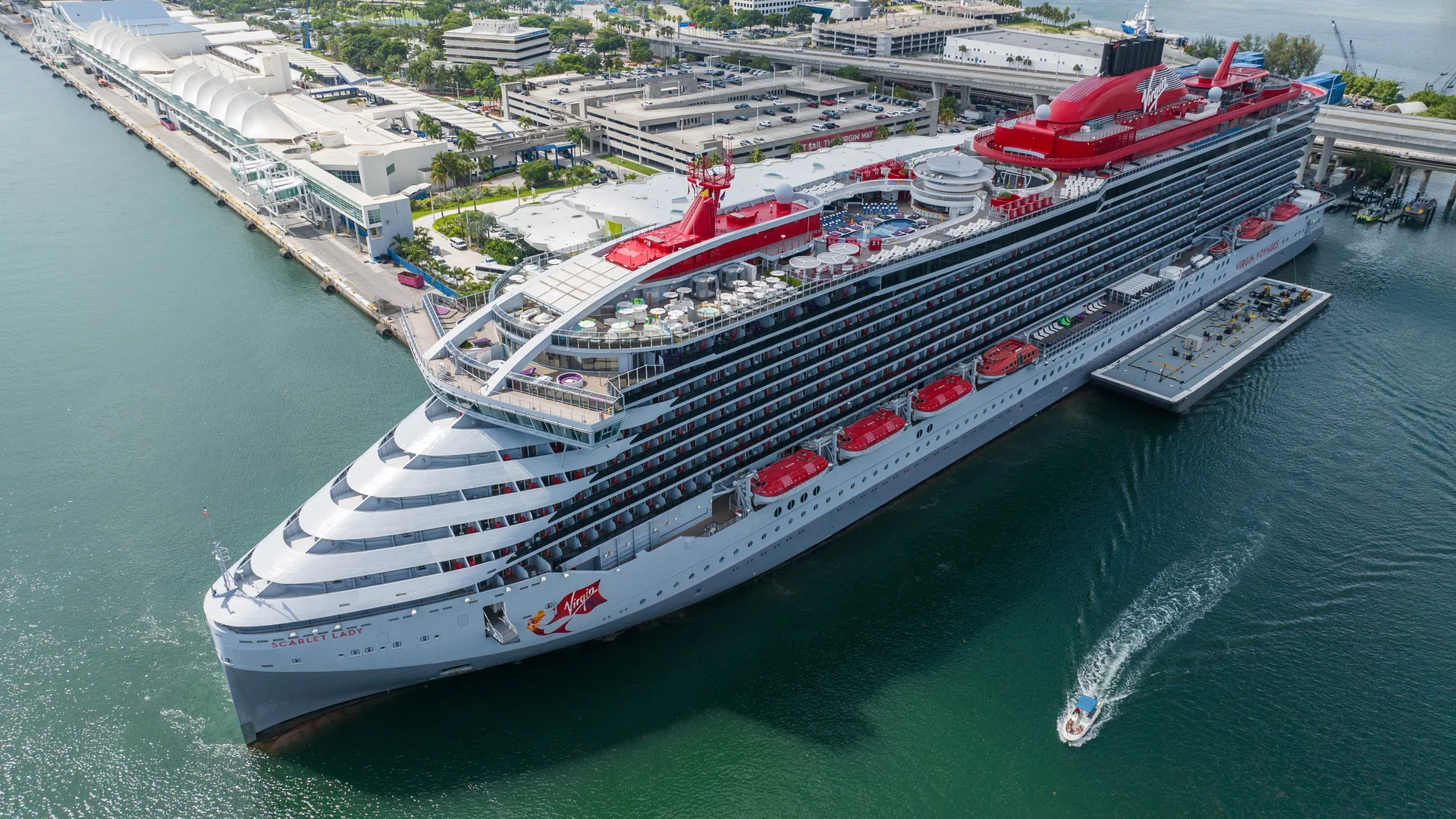
Booking an adults-only cruise with Virgin Voyages used to be simple: wait for a splashy promotion, grab a free Bar Tab, sail away. As the line has matured, its pricing architecture has changed underneath that habit — and the habit no longer works.
With the rollout of Project Ruby — Virgin Voyages' enterprise AI and data platform, built in partnership with Google Cloud — the dynamic pricing engine got smarter, faster, and far more fluid. Fares now move continuously against real-time booking velocity, cabin availability, and Sailor demand.
If you want the luxury without the top-tier price, you have to understand how the algorithm behaves. What follows is the playbook: how to time the booking, how to claw back a fare that drops, and how to line your flights up with four of Virgin's key homeports.
How Project Ruby Shifted the Rules
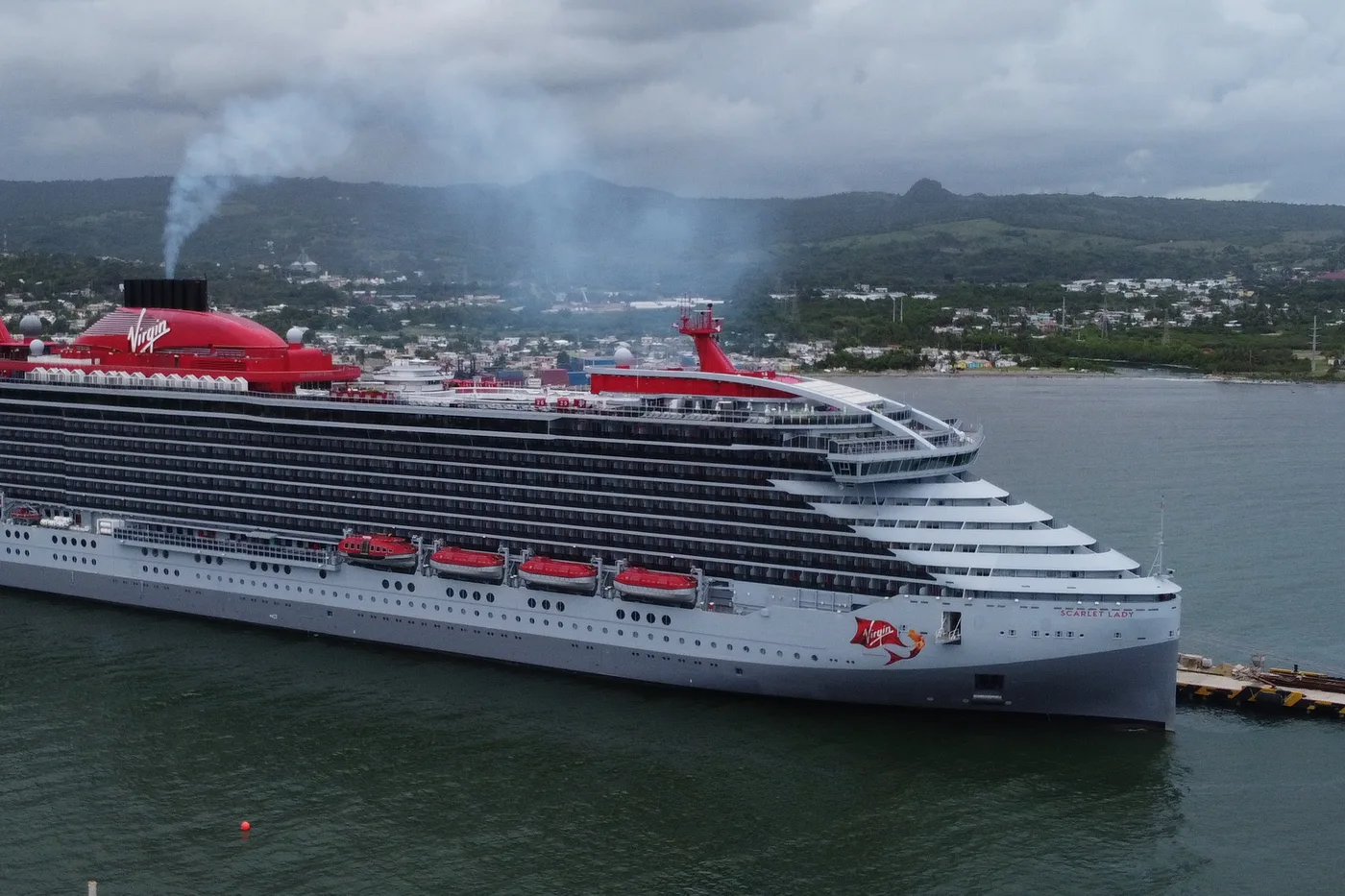
Project Ruby runs Gemini models and BigQuery on Google Cloud to analyze how travelers search, compare, and book. Paired with Virgin's yield-management system, cabin prices now move on a timescale measured in hours rather than weeks.
In the early days, deep discounts were everywhere — the job was building brand awareness. Today the ships sail near capacity, and the algorithm is tuned to reward early intent and penalize the procrastinator. On r/VirginVoyages the refrain is blunt and, annoyingly, correct: the best time to book was yesterday.
The myth of the 80%-off flash sale
Dynamic pricing makes headline promotions genuinely misleading. Sailors who track base fares report a consistent pattern: when a major promotion launches — 80% off the second sailor, that sort of thing — the underlying cabin fare is frequently adjusted upward just before the sale goes live.
The out-of-pocket price during a "massive sale" is often identical to the standard fare quoted three months earlier. Sometimes it's higher.
The lesson isn't that promotions are worthless. It's that the promotion is not the measurement. The only number that matters is what you actually pay, compared against what that same cabin cost before the banner went up.
The core booking window
- Initial itinerary drop · 18 to 24 months out The moment new voyages are announced, fares sit at their baseline floor. This is also when you get the widest choice of prime Sea Terrace cabins — mid-ship, away from top-deck noise — before dynamic pricing has anything to react to.
- Wave Season · November through January Base fares may have risen by now, but Wave is still the best window for stacking value: Virgin's highest allocations of bonus Sailor Loot and Bar Tab land here.
- Black Friday & Cyber Monday Late-November flash sales do occasionally produce genuine price drops on low-occupancy sailings. Inventory goes fast once the system detects the spike in booking velocity.
Three Hacks to Outsmart the Algorithm
Because Virgin allows flexible repricing on most standard fares, you never have to sit and wait for a price drop before you commit.
1 · The 45-day repricing rule
Book a standard fare — a Sea Terrace, say — and you can reprice the voyage if the published rate falls before your final payment window. What you get back depends entirely on how close to sailing you are:
Avoid non-refundable Lock-It-In rates unless you are entirely committed to the dates and the cabin. Those fares cannot be repriced or changed — you are trading the whole strategy above for a modest discount today.
2 · Stack an MNVV certificate
If you're on board a Virgin ship — or working with a First Mate who can source one — buy a My Next Virgin Voyage certificate. A $150 placeholder deposit is the whole cost of entry, and what it buys scales with the length of the voyage you eventually book:
Two things make this worth doing rather than merely worth knowing. First, the benefit stacks on top of whatever public promotion is running — it is not an either/or against the sale banner. Second, the $150 buys you two full years to choose your sail date and redeem, with no booking-window contingency attached: you are not required to commit within 60 days, or any other window, to keep the full value.
Which is exactly the right shape of instrument for a line that reprices continuously. You are buying optionality at the floor and deciding later, rather than deciding under the pressure the algorithm is designed to create. The full mechanics — onboard versus post-voyage perks, cancellation rules, which sailings are worth deploying a certificate on — are in the MNVV guide.
3 · Let a First Mate watch the fare
Because Project Ruby updates pricing throughout the day, manual tracking is tedious and easy to lose interest in — which is precisely what the algorithm is counting on. Advisors who specialize in Virgin run automated monitoring, catch the drop, and file the repricing request before the cabin refills.
Timing Your Flights to Key Homeports
A brilliant cruise fare means very little if the airfare eats the difference. Match the flight window to the port.
| Homeport | Airports | Booking window | Cheapest days | Best season |
|---|---|---|---|---|
| Miami | MIA / FLL | 21–45 days out | Tue & Wed | September – November |
| Barcelona | BCN | 2–4 months out | Wednesday | Shoulder season (May, Sept) |
| Athens | ATH | 3–5 months out | Tue & Wed | Early spring / late autumn |
| Los Angeles | LAX / LGB / SNA | 3–6 weeks out | Mon & Wed | October – February (excl. holidays) |
Miami · PortMiami
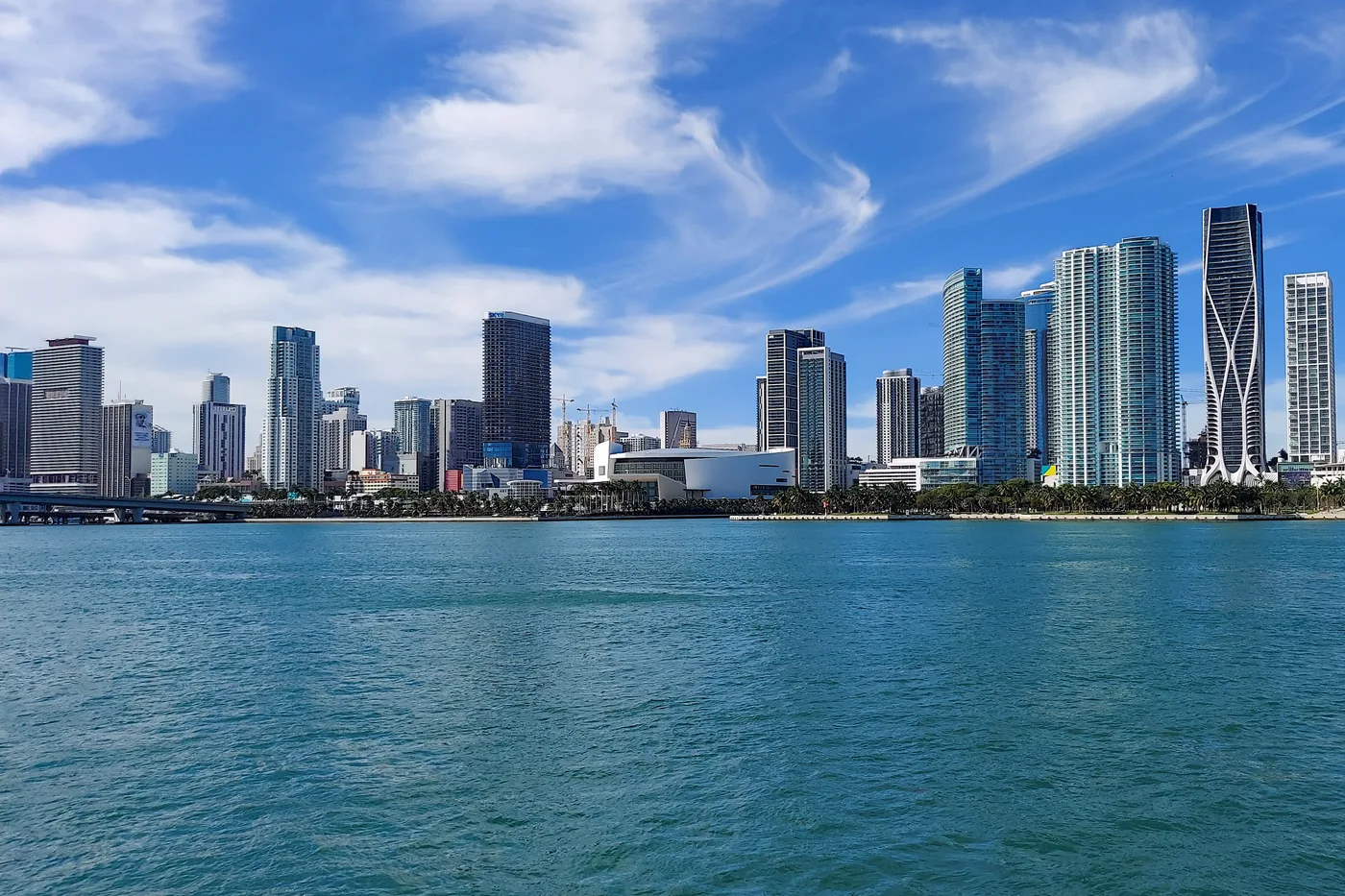
Miami hosts year-round sailings on Scarlet Lady and Valiant Lady. Domestic flights are best booked three to six weeks out; fares spike hard inside fourteen days.
Fly in the day before embarkation. Always. The r/VirginVoyages and r/travel communities are full of Sailors who missed a ship because of a morning delay at a connecting hub — it is the single most common way a well-planned trip falls apart.
Pro tip Price Fort Lauderdale (FLL) alongside Miami. A rideshare to PortMiami runs about 35 minutes, and budget-carrier fares into FLL can come in 30% lower.
Barcelona · Port de Barcelona
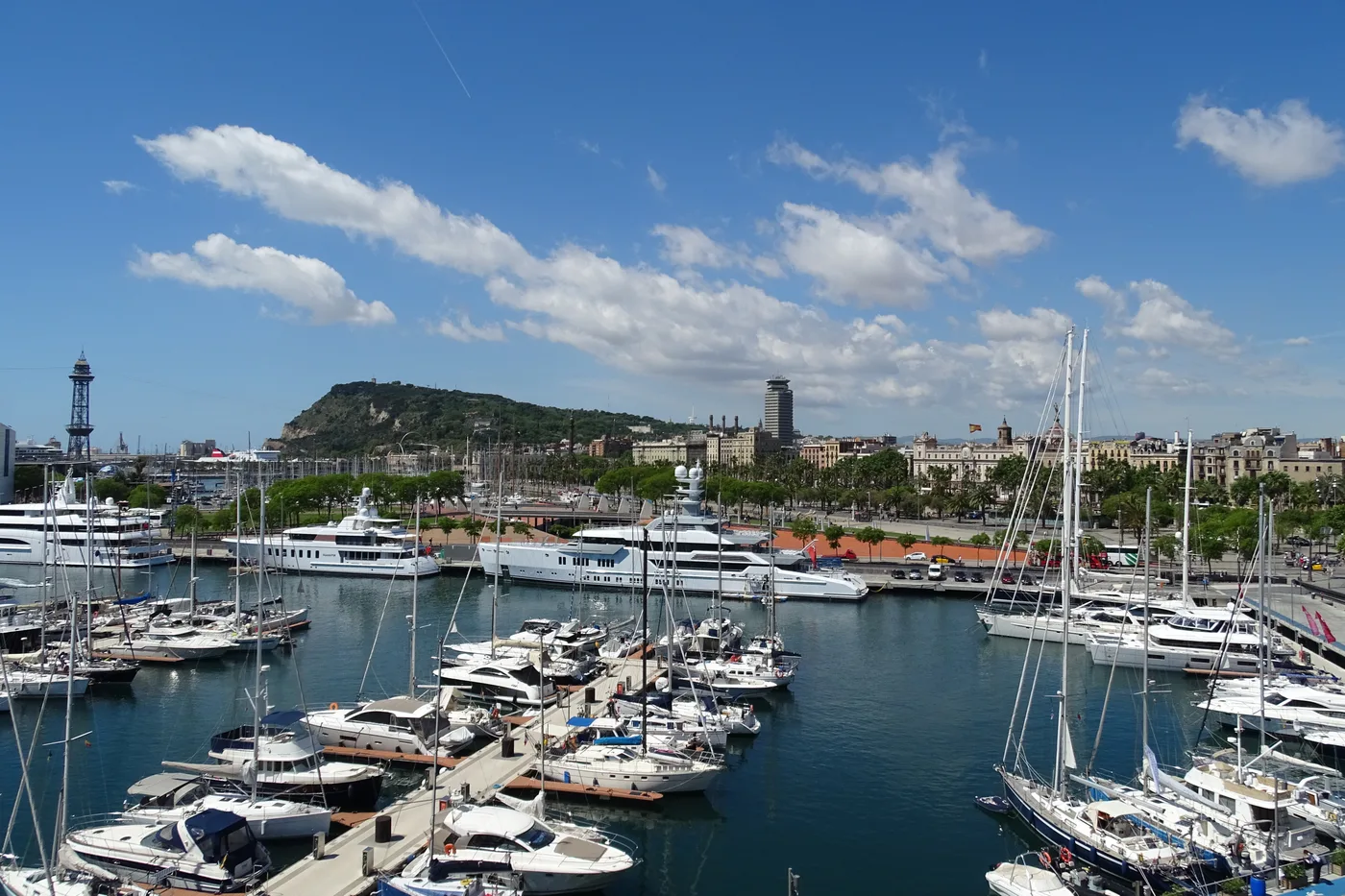
Barcelona is the primary homeport for Mediterranean itineraries aboard Resilient Lady. Book international flights two to four months out. Booking too early — eight months and beyond — usually means paying the high baseline published fare before transatlantic route competition kicks in.
Departing on a Tuesday or Wednesday saves roughly 15–20% against a Friday or Saturday.
Pro tip If your voyage is a repositioning or transatlantic sailing, look at open-jaw tickets — into Barcelona, home out of Rome or Athens.
Athens · Piraeus

Athens is the gateway for Greek Island Glow and the Aegean itineraries. Book three to five months out — Greek summer demand from June through August fills economy cabins quickly.
Transatlantic fares to Athens peak between 15 June and 20 August. Shift to a shoulder-season voyage in May or October and flight prices fall by as much as 35%, with the 60-day window often producing flash sales on the legacy carriers.
Pro tip Budget the transfer honestly. Athens International (ATH) to the Port of Piraeus is 60–90 minutes by taxi or metro, which makes a same-day arrival a genuinely bad bet.
Los Angeles · San Pedro

Los Angeles handles West Coast and Riviera repositioning routes. Book domestic flights 21 to 45 days ahead — the sheer frequency of service into the LA basin keeps fares competitive year-round.
Long Beach (LGB) sits closer to the San Pedro cruise terminal than LAX does, and it is a markedly calmer arrival.
Pro tip If you must fly into LAX on embarkation morning, land before 9:00 AM. After that you're driving south into the I-405/I-110 corridor at exactly the wrong hour.
The Smart Sailor's Execution Order
Every step above is worth doing. Doing them in this order is what produces the lowest total cost.
- 01 Lock the cruise early Secure your preferred Sea Terrace 18 to 24 months out, as the voyages are announced, at the base fare — before demand moves the algorithm.
- 02 Stack MNVV and advisor perks Apply a certificate and First Mate onboard credit on top of whatever public promotion is running.
- 03 Set flight alerts Track fares in the 30-to-90-day window out from your sail date — not before, not after.
- 04 Watch for a price drop Check the published rate before the 45-day cutoff, or have your advisor watch it, and file the repricing request.
- 05 Fly in a day early Arrive in the homeport city 24 hours before embarkation. This is the cheapest insurance in travel.
None of this requires you to outguess a machine that reprices faster than you can refresh a browser tab. It requires you to book at the floor, keep the right to reprice, and let somebody watch the fare on your behalf. The algorithm optimizes for Virgin. This is how you optimize for yourself.
Sailing Virgin in 2026 or 2027?
Tell me the window you're thinking about and I'll tell you whether it's the right one — and which of the repricing rules above will still be open to you when you book it.
Plan Your Voyage →Photography
- Scarlet Lady at PortMiami — Anthony Quintano, CC BY 2.0, via Wikimedia Commons.
- Scarlet Lady, Puerto Plata — Jusunx, CC BY-SA 4.0, via Wikimedia Commons.
- Miami skyline from the harbor — P. Hughes, CC BY-SA 4.0, via Wikimedia Commons.
- Port Vell, Barcelona — Ad Meskens, CC BY-SA 4.0, via Wikimedia Commons.
- The Acropolis from Lycabettus — Jakub Hałun, CC BY 4.0, via Wikimedia Commons.
- Downtown Los Angeles — Levi Clancy, CC BY-SA 4.0, via Wikimedia Commons.