Berlin is not one LGBTQ+ neighborhood. It is a city of overlapping queer histories, communities, nightlife styles, cultural spaces, and ordinary daily life.
Sources and facts checked: September 19, 2026 (America/New_York). Venue hours, addresses, event formats, hotel policies and CSD dates change. Nothing here guarantees a venue, hotel or route will meet an individual traveler’s needs — check and verify with the venue, organizer, hotel or vendor before you pay.
For first-time visitors, start in Schöneberg. For a younger, more alternative atmosphere, explore Kreuzberg, Friedrichshain, and Neukölln. Then build the rest of your trip around museums, public spaces, food, and history, not only the next bar.
This guide is designed for solo travelers, couples, LGBTQ+ groups, adults-only travelers, and modern multi-generational trips that want Berlin’s culture without turning the itinerary into a nightlife endurance test.
Who This Berlin Guide Fits
Choose Berlin if you want:
- A large, varied LGBTQ+ scene rather than one narrow nightlife district.
- A solo-friendly city where eating, touring, and going out alone is normal.
- Strong cultural and legal context alongside nightlife.
- Flexible neighborhoods that work for couples, friends, and groups.
- Value: public parks, affordable casual food, free or low-cost cultural experiences, and extensive public transportation.
- A city that can support a multigenerational itinerary when everyone gets independent time.
Berlin is not a traditional adults-only destination. If your group wants an adults-only hotel, venue, or experience, confirm the age policy directly. Do not assume that an LGBTQ+-friendly property is adults-only.
Where to research, and what directories miss
visitBerlin’s LGBTQ+ guide is the best official starting point for queer history, neighborhoods, museums, events, and community resources. Its neighborhood guide correctly identifies Nollendorfplatz in Schöneberg as a long-standing meeting place for Berlin’s gay and lesbian scene.
Nomado’s Berlin LGBTQ+ guide and Gayborhood’s Berlin guide add useful traveler-facing context about atmosphere, solo travel, and neighborhood differences.
Use all three types of sources differently:
- Official tourism sources: history, city events, community organizations, and visitor infrastructure.
- Community and specialist guides: atmosphere, scene orientation, and traveler perspective.
- Venue and hotel operators: current opening status, accessibility, age restrictions, prices, and reservations.
The biggest gap is live operational detail. Berlin venues change hours, locations, entry policies, and programming. Hotel listings can remain online after a property changes management or removes an accessibility feature. Treat directories as leads, not final confirmation.
Where to Stay and Explore
Schöneberg and Nollendorfplatz: The Historic Heart
Base yourself around Nollendorfplatz if this is your first LGBTQ+ visit to Berlin or if you want the city’s most recognizable queer neighborhood.
VisitBerlin dates the area’s role as a gay and lesbian meeting place to the 1920s. Today, the wider Regenbogenkiez includes Motzstraße, Fuggerstraße, Maaßenstraße, and Winterfeldtplatz.
Expect:
- A compact cluster of LGBTQ+-focused bars, cafés, shops, and cultural spaces.
- A classic gay-village feel that is easy to navigate on foot.
- Leather and fetish venues around Motzstraße and Fuggerstraße.
- Strong access to the U-Bahn network.
- Community resources including Mann-O-Meter, Lesbenberatung, and the LSVD Queer Diversity Association.
Schöneberg suits first-time visitors, travelers who want a clear neighborhood base, and groups that prefer several nearby options rather than a complicated late-night route.
Kreuzberg: Alternative and Mixed
Kreuzberg is less concentrated than Schöneberg and more integrated into the broader neighborhood culture.
VisitBerlin’s Kreuzberg 36 LGBTQ+ guide centers on Kottbusser Tor and Südblock. This area suits travelers who want:
- A younger and more international atmosphere.
- Queer spaces mixed with cafés, restaurants, markets, and creative venues.
- More FLINTA*-focused and gender-expansive programming.
- A less polished, more locally embedded experience.
Kreuzberg rewards curiosity, but it requires more checking. A venue that was central to the scene last year may now be operating as a periodic event, have moved, or have changed its format.
Friedrichshain and Neukölln: Follow the Programming
Friedrichshain and Neukölln offer more dispersed, event-driven queer culture. Check current listings through visitBerlin’s LGBTQ+ events pages, community calendars, and individual venue channels.
Neukölln has been especially important for younger queer nightlife and cultural programming. However, venue status requires careful verification. For example, visitBerlin currently describes SchwuZ as operating through parties and events while seeking a permanent long-term home, rather than presenting its former Rollbergstraße location as a normal full-time club.
That distinction matters. Confirm the venue, address, event date, entry policy, and accessibility before traveling across the city.
Mitte and Tiergarten: Culture Beyond the Scene
Mitte works well when sightseeing is the priority. Tiergarten adds space, monuments, and a slower pace.
Consider:
- The Memorial to Homosexuals Persecuted under National Socialism.
- Museum Island and central cultural institutions.
- The Brandenburg Gate and Reichstag area.
- The Schwules Museum, which documents queer history and culture.
- A scheduled queer-history tour or exhibition.
Mitte is a useful base for multigenerational groups because it reduces the distance to major attractions. It is less convenient if everyone wants to walk out of the hotel and immediately reach Schöneberg’s bars.
Beyond Nightlife
Build at least one daytime experience around history or community.
The Schwules Museum offers a serious cultural counterpoint to Berlin’s nightlife reputation. VisitBerlin also lists queer cinema, community organizations, drag-led neighborhood tours, and changing cultural events.
For a lower-cost day:
- Start with a neighborhood walk in Schöneberg.
- Stop at a café or casual restaurant.
- Visit a museum or memorial.
- Use a park or public square as recovery time.
- Keep the evening open rather than booking three fixed venues.
That format works particularly well for solo travelers and groups with different energy levels. One person can continue to a late event while another returns to the hotel without breaking the entire itinerary.
Solo Travelers
Berlin is well suited to solo travel because counter seating, communal bars, walking tours, and public transportation make it easy to participate without arriving with a built-in group.
Use Schöneberg for easy orientation. Explore Kreuzberg when you want more spontaneity. Join a scheduled tour or cultural event if you want connection without committing to a full group itinerary.
Do not rely entirely on dating or social apps. Give yourself a public meeting point, protect your phone and wallet, and make your own way back to the hotel.
LGBTQ+ Groups
Avoid planning every hour around one venue. Build a neighborhood-based itinerary:
- One Schöneberg evening.
- One Kreuzberg or Neukölln event.
- One cultural day.
- One flexible day with optional activities.
For groups, confirm whether a venue accepts reservations, whether it can seat everyone together, and whether the event is ticketed. Written confirmation is more useful than a social media comment.
Adults-Only Travelers
Adults-only travelers may prefer:
- Hotels that explicitly publish an adults-only policy.
- Evening cultural programs.
- Queer cabaret, film, and theater.
- Nightlife districts with late programming.
- Dining and wellness time that does not depend on club access.
Confirm age restrictions directly with the hotel, venue, tour operator, and event organizer. Policies can differ between regular hours and special events.
Multigenerational LGBTQ+ Families
Berlin can work well for a multigenerational LGBTQ+ trip if you separate shared time from independent time.
Choose a hotel near a reliable transit connection. Plan one shared cultural activity each day, then allow optional branches. Older travelers may prefer museums, cafés, and guided tours. Younger adults may want nightlife or neighborhood events. Meet again for dinner.
Do not assume every queer venue welcomes children or teens simply because the neighborhood is LGBTQ+-friendly. Confirm age rules before adding a venue to the family plan.
Accessibility Questions to Ask
Berlin has useful accessibility infrastructure, but the city is not uniformly step-free.
BVG’s current barrier-free travel page states that 86% of Berlin’s U-Bahn stations are step-free, while approximately 73% of tram stops are barrier-free. Berlin’s official accessibility guidance also points visitors toward accessible attractions, route planning, guide services, and alternative transport when lifts fail.
Ask these questions before booking:
Hotel
- Is the entrance step-free from the sidewalk?
- Is the accessible room guaranteed, rather than merely requested?
- What is the bathroom layout?
- Is the shower roll-in, and is a fixed or removable seat available?
- What is the clear width of the room and bathroom doors?
- Is the elevator large enough for the traveler’s mobility device?
- Can the hotel provide written confirmation of the exact room type?
Venue
- Is the entrance step-free?
- Are there stairs between the entrance, restroom, and main event space?
- Is there an accessible restroom?
- Are seating, lighting, sound, and crowd conditions suitable for the traveler?
- Are assistance animals accepted?
- Can staff provide written confirmation before tickets are purchased?
Transportation
- Is the planned station’s elevator currently operating?
- What is the accessible alternative if the lift is out of service?
- Can the route planner filter for step-free travel?
- Is an accessible taxi or alternative transfer available if the route fails?
Treat “accessible” as the beginning of the conversation, not the answer.
Value and Budget Strategy
Berlin can deliver a strong value proposition without making the trip feel basic.
Use these tactics:
- Stay near an accessible U-Bahn or S-Bahn station rather than paying a premium to sleep directly above a famous bar.
- Compare a hotel in Schöneberg with one in a nearby district before deciding.
- Use parks, public squares, neighborhood walks, and free public art as part of the itinerary.
- Eat one substantial local meal and one casual meal instead of defaulting to tourist-center restaurants.
- Check museum and event calendars for free or reduced-entry periods.
- Buy transportation only after comparing single fares, day tickets, and any city pass against your actual movement.
- Avoid booking a hotel solely because a directory calls it “gay-friendly.”
Hotel Recommendation Caution
The Pink Pillow Berlin Collection is a useful official starting point for LGBTQ+-welcoming hotels. Properties such as Mercure Hotel Berlin am Wittenbergplatz may be worth investigating for Schöneberg access and published reduced-mobility accommodations.
Cross-check any hotel you shortlist through the hotel’s official website, TripAdvisor, Google reviews, GayOut, and Spartacus. Confirm current LGBTQ+ positioning, room features, age policy, renovation status, and accessibility directly with the property.
A Practical Four-Night Sample Trip
Day 1: Schöneberg Orientation
Check in, walk Nollendorfplatz, explore Motzstraße and Fuggerstraße, and choose a low-pressure dinner. Keep the first night flexible after long-haul travel.
Day 2: Queer History and Local Culture
Visit the Schwules Museum or join a scheduled queer-history experience. Add a café stop and an early evening in the Regenbogenkiez.
Day 3: Kreuzberg and Beyond
Explore Kottbusser Tor and Kreuzberg 36 during the day. Check the current program at any venue before committing. Return to the hotel or continue to a ticketed event.
Day 4: Mitte, Tiergarten, and Choice
Visit a central museum, the Memorial to Homosexuals Persecuted under National Socialism, or another cultural site. Let each traveler choose the final evening: dinner, theater, a bar, or an early night.
Day 5: Departure
Leave extra time for airport transportation, luggage, and any lift or train disruption. Do not schedule a final event that depends on a precise late-night connection.
CSD and Seasonal Planning
Berlin CSD is held in late July. The 2026 event was held July 24–25, with the main demonstration on Saturday, July 25. It was the first two-day CSD Berlin in the event’s history, including a Friday Democracy Night at Brandenburg Gate. The official parade opened at approximately 11:30 a.m. at Leipziger Straße at the corner of Spittelmarkt/Charlottenstraße, with the first vehicles departing at noon. The confirmed route ran Leipziger Straße → Potsdamer Platz → Potsdamer Straße → Bülowstraße → Nollendorfplatz → Kleiststraße → An der Urania → Schillstraße → Lützowplatz → Klingelhöferstraße → Hofjägerallee → Großer Stern/Victory Column → Straße des 17. Juni → Brandenburg Gate, where the closing rally took place. The route passed directly through Nollendorfplatz, Schöneberg’s historic queer heart — a useful planning detail for travelers staying in that neighborhood during CSD. See the official Berlin CSD announcement.
When this guide was last checked, the official Berlin event page did not yet list a 2027 CSD date. Recheck the Berlin city event page and the official CSD organizer before you book.
For a future CSD trip, begin hotel research approximately six months ahead. Confirm the date, parade route, road closures, accessibility arrangements, hotel cancellation terms, and event capacity before paying. If you stay near Nollendorfplatz, check whether the confirmed route passes directly outside or near your hotel and plan for closures, crowds, noise, and accessible movement on parade day.
Devil’s Advocate: Is Berlin Always the Right Choice?
Berlin’s LGBTQ+ reputation can create unrealistic expectations.
The city is legally progressive and has substantial queer infrastructure, but that does not eliminate discrimination, harassment, smoking, crowds, uneven accessibility, or nightlife fatigue. Some venues are intentionally rough around the edges. Some have stairs, narrow restrooms, loud sound systems, or cash-oriented operations. A famous venue may not be the right venue for your group.
Schöneberg can feel too traditional for travelers seeking a more alternative scene. Kreuzberg can feel chaotic for visitors who need predictable access and quiet evenings. Neukölln and Friedrichshain require more event-by-event planning.
The solution is not to avoid Berlin. Match the neighborhood to your priorities, and confirm the details that matter to you.
Before you book
- Check Germany’s current entry and travel requirements for your nationality.
- Confirm the hotel’s LGBTQ+ welcome, room type, accessibility, and age policy in writing.
- Cross-check hotel information through official property pages, TripAdvisor, Google, GayOut, and Spartacus.
- Confirm every venue’s current address, operating status, ticket rules, and accessibility.
- Ask the relevant hotel, venue, transfer provider, or tour operator for written confirmation.
- Use BVG’s accessible route tools and recheck lift status shortly before travel.
- If traveling for CSD, verify the official 2027 date and route before booking.
- Review cancellation terms before paying for nonrefundable rooms or events.
- Share the itinerary with group members, including independent-time options.
- Keep a backup plan that does not depend on nightlife.
Frequently asked
Is Berlin LGBTQ+-friendly?
Yes, Berlin has a large LGBTQ+ community, established queer institutions, and strong legal protections. Social acceptance is especially visible in Schöneberg, Kreuzberg, Friedrichshain, Neukölln, and Mitte. As in any major city, legal protection does not guarantee that every visitor will experience every interaction positively.
Is same-sex marriage legal in Germany?
Yes. Germany extended the right to marry to same-sex couples on October 1, 2017. The Federal Anti-Discrimination Agency explains the legal history and current protections in its sexual identity guidance.
Which Berlin neighborhood is best for first-time LGBTQ+ visitors?
Choose Schöneberg around Nollendorfplatz if you want Berlin’s historic LGBTQ+ heart, walkable venue density, and straightforward orientation. Add Kreuzberg for a younger, more alternative atmosphere.
Is Berlin accessible for wheelchair users?
Parts of Berlin are accessible, but conditions vary by station, venue, sidewalk, and building. Use official BVG and Berlin accessibility information, then confirm every hotel and venue directly.
Is Berlin suitable for solo LGBTQ+ travelers?
Yes. Solo travelers can move easily between neighborhoods, eat alone, join tours, and participate in public cultural life. Use normal urban safety habits and avoid depending on a stranger or app connection for your transportation plan.
Sources and facts checked: September 19, 2026 (America/New_York). visitBerlin’s LGBTQ+ guides, neighborhood and events pages and Pink Pillow Berlin Collection, the Schwules Museum, BVG’s barrier-free travel page, Berlin.de accessibility and event pages, the official CSD Berlin announcement, the Federal Anti-Discrimination Agency, and Nomado and Gayborhood city guides were reviewed on the date shown. Directory listings lag and venues change — confirm with each supplier in writing before booking.
Sources
- visitBerlin — VisitBerlin’s LGBTQ+ guide ↗
- visitBerlin — Neighborhood guide ↗
- Nomado — Nomado’s Berlin LGBTQ+ guide ↗
- Gayborhood — Gayborhood’s Berlin guide ↗
- visitBerlin — Mann-O-Meter, ↗
- visitBerlin — Lesbenberatung, ↗
- visitBerlin — LSVD Queer Diversity Association ↗
- visitBerlin — Kreuzberg 36 LGBTQ+ guide ↗
- visitBerlin — VisitBerlin’s LGBTQ+ events pages, ↗
- visitBerlin — Schwules Museum, ↗
- Schwules Museum — Schwules Museum ↗
- BVG — BVG’s current barrier-free travel page states that 86% of Berlin’s U-Bahn stations are step-free, ↗
- Berlin.de — Accessibility guidance ↗
- visitBerlin — Pink Pillow Berlin Collection ↗
- CSD Berlin — Official Berlin CSD announcement ↗
- Berlin.de — Berlin city event page ↗
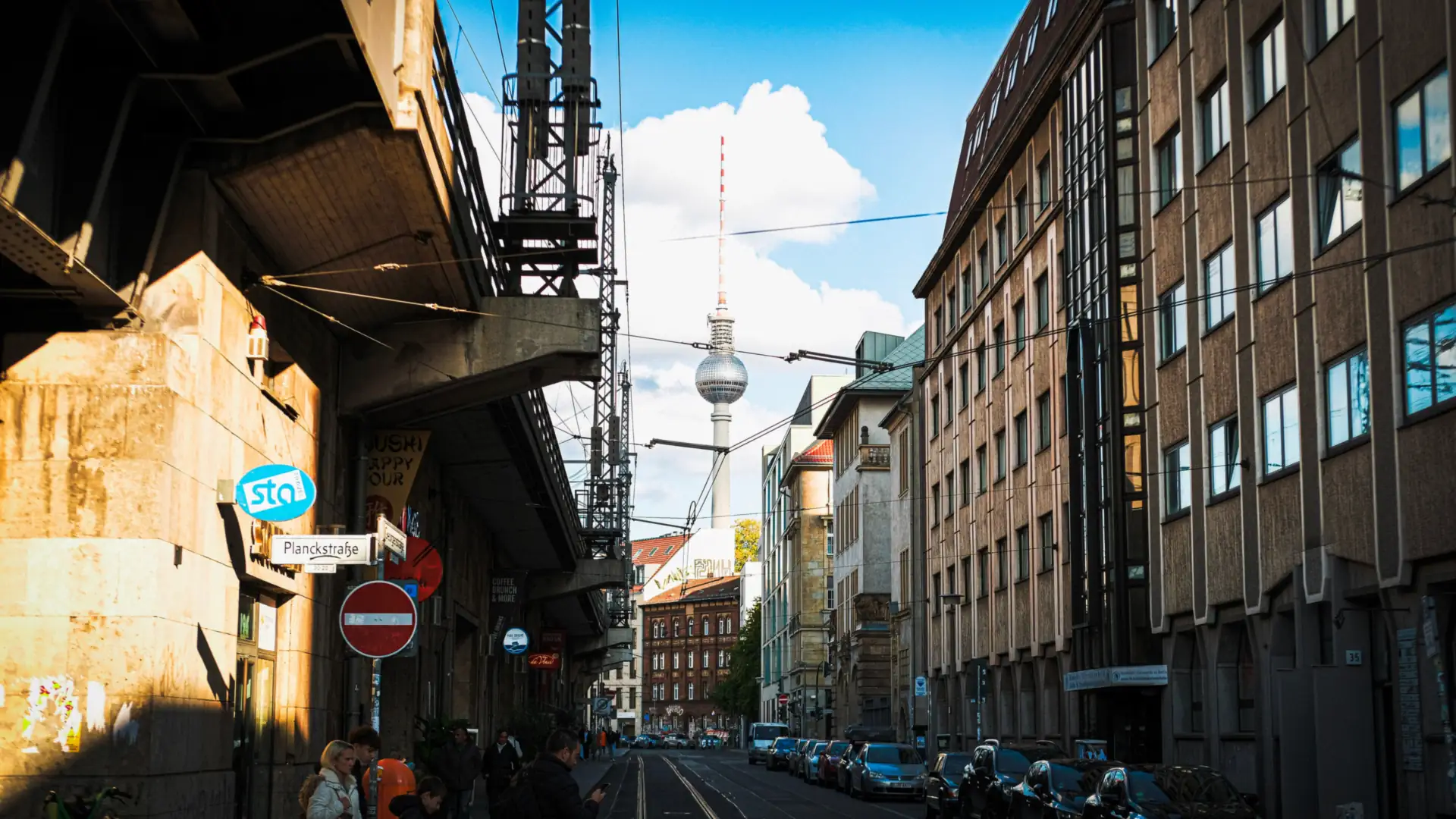
Photographs. A Berlin street with the Fernsehturm TV tower — Marcel Condurachi, Pexels Cropped and resized for the web; not otherwise altered. Neither the photographers nor the licensors endorse this article.
This article is general information, not legal, safety or accessibility advice. OTGG is the travel-planning platform of Paolo Melendez, an independent travel advisor with Nexion, LLC, a Travel Leaders Network Affiliate Agency. This article contains no affiliate links and is not a paid hotel or venue ranking. Supplier policies, rates, availability and accessibility provisions change — verify with the operator or an accredited travel advisor before booking.
Adding Berlin to a European trip or a Baltic sailing?
Tell me who is traveling and what kind of days and nights you want. I will match the neighborhood, cross-check the hotel, and get room, accessibility and age-policy details in writing. See more on our <a href="/lgbtq-travel">LGBTQ+ travel page</a>.
Begin the Journey