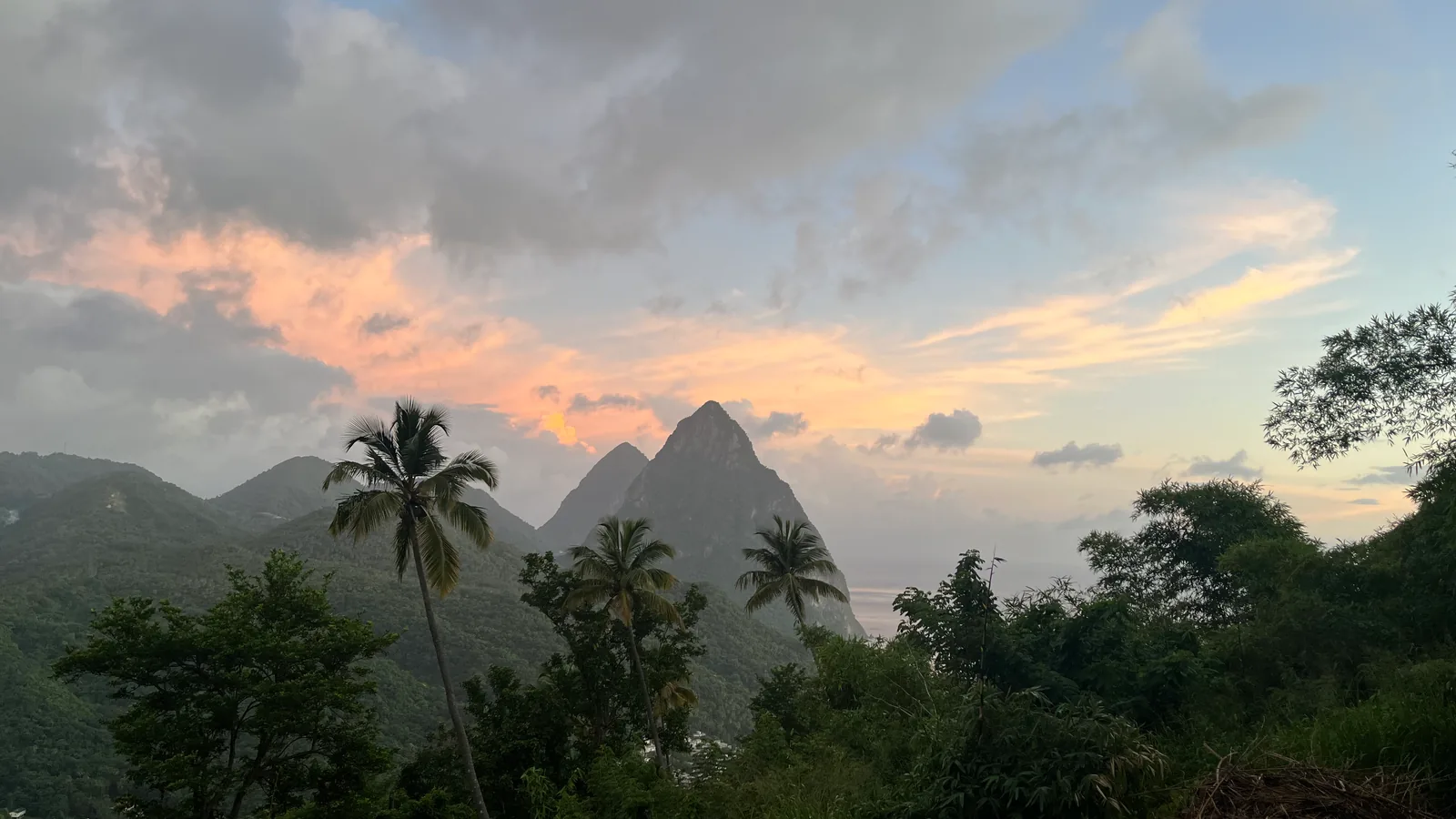
Castries rewards a decision more than an itinerary. Saint Lucia gives you volcanic peaks, a drive-in volcano, colonial forts and genuinely good beaches — but the terrain that makes the island beautiful is the same terrain that makes it slow. In an eight-hour call you go north or you go south. Attempting both is how a luxury escape turns into an endurance event.
Two piers, and a water taxi between them
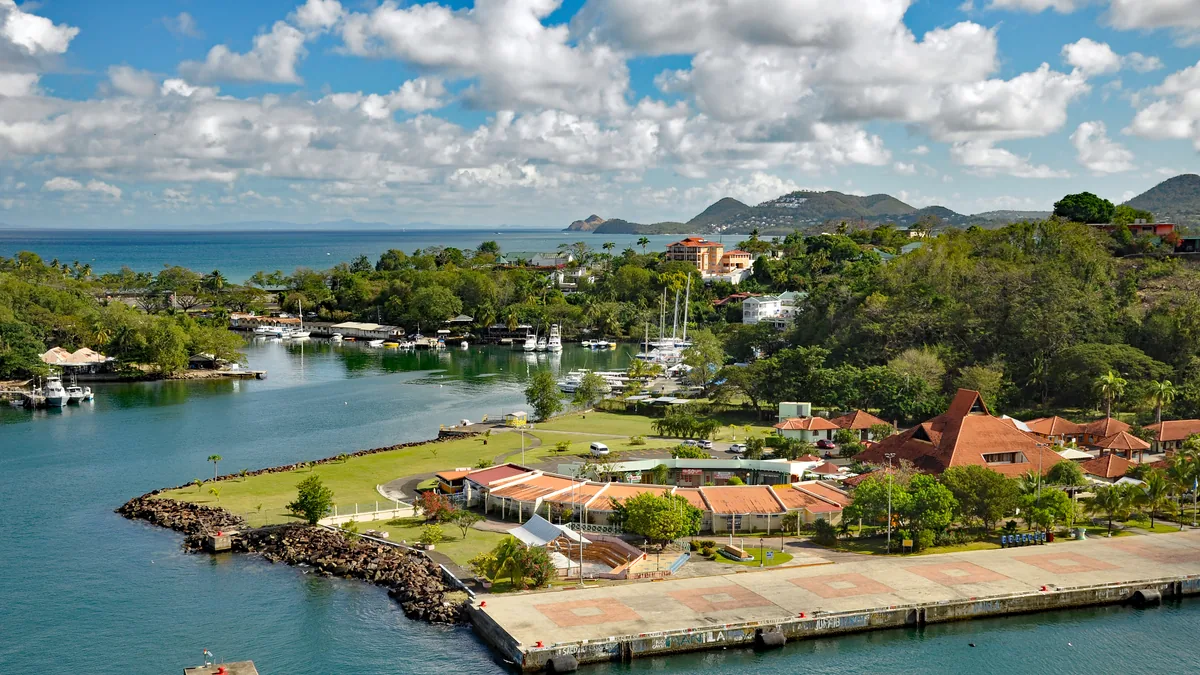
| Pier | At the terminal | Getting into town | What it means for your day |
|---|---|---|---|
| Pointe Seraphine North side of the harbor | Duty-free shopping, cafés, taxi rank, tour desks | About a 20-minute waterfront walk, under a mile | Better facilities at the pier, worse for a spontaneous town wander |
| La Place Carenage South side, downtown | Smaller terminal, shops, right on the waterfront | You step off into the city — market, Derek Walcott Square, the Cathedral | Better for a town day, and for a short call where walking time counts |
Ships normally berth alongside here — tendering is the exception rather than the routine, though weather, congestion, vessel size or a call at an alternative Saint Lucia anchorage can change that. Confirm the arrangement for your day rather than assuming a gangway.
If you are docked at the wrong pier for your plan, there is a water taxi. It crosses the harbor between Pointe Seraphine and La Place Carenage for roughly US$5 round trip. That is the fix nobody mentions: a downtown morning is entirely workable from the north pier, and it costs five dollars rather than a twenty-minute walk each way in the heat.
Pick a direction
This is the whole guide in one table. Everything else is detail.
| Direction | Transfer time | What you get | The detail that matters |
|---|---|---|---|
| South — the Pitons | Catamaran, roughly 5–6 hours for the cruise version | Sailing past Petit and Gros Piton; usually a swim or snorkel stop, often Soufrière and Sulphur Springs | Confirm it is the cruise-passenger version. Many advertised Pitons catamarans are 8-hour full-day trips |
| South by road | 60–90 minutes each way | Soufrière, Sulphur Springs, waterfalls — more stops than the boat reaches | Two to three hours of winding road out of an eight-hour call |
| North — Pigeon Island | 25–35 minutes each way | Fort Rodney, military ruins, Rodney Bay views, two swimming beaches | Opens 9:30am, last entry 4:15pm. Do not arrive off an early gangway |
| Castries on foot | Zero transfer from La Place Carenage | Market, Derek Walcott Square, the Cathedral Basilica, waterfront | The honest choice for a short call or a slow day |
Soufrière is only about 24 miles away, and that number is a trap. The west coast road climbs and switchbacks the whole way, so those 24 miles take 60 to 90 minutes in each direction. Two to three hours of an eight-hour call, before you have looked at anything. This is the arithmetic that decides your day.
South: the Pitons and Sulphur Springs
Gros Piton and Petit Piton are Saint Lucia's signature and part of the Pitons Management Area, a UNESCO World Heritage property. They are the reason most people want to go south, and seeing them properly means either the coast road or a boat.
The catamaran is comfort, not speed
A catamaran sails roughly two hours each way from Ganters Bay down the west coast. Against 60 to 90 minutes of driving, that is not a time saving — it is a trade. What you buy is an open deck, uninterrupted coastal views and no mountain road, which for anyone prone to car sickness on switchbacks is worth a great deal.
Check the duration before you check the price. A large share of the Pitons catamarans advertised online are eight-hour full-day trips, which cannot fit inside an eight-hour port call under any arrangement. Operators run separate cruise-passenger versions at around five to six hours. Booking the wrong one is the single most expensive mistake available at this port, and the listings do not always make the difference obvious.
Budget roughly US$80 to US$155 per person for a shared cruise-passenger catamaran, with lunch-inclusive, premium and private options running higher. Confirm whether port transfers, lunch, equipment and site admissions sit inside the price before comparing anything against anything.
Sulphur Springs, the drive-in volcano
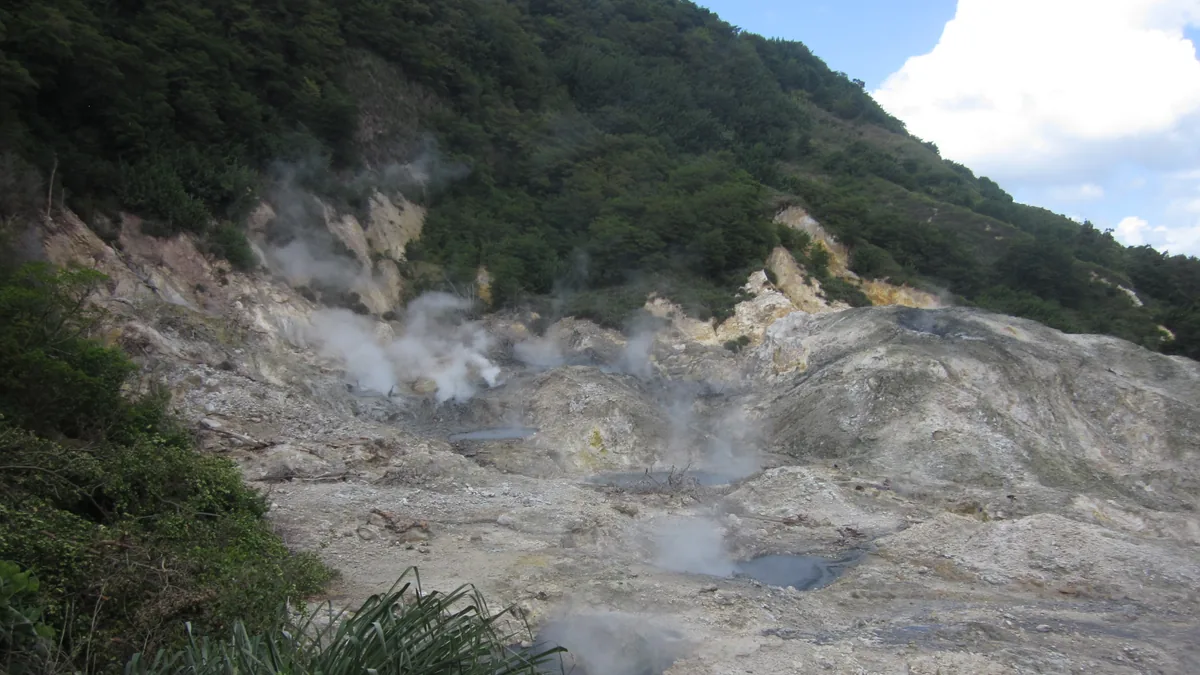
If you are going south anyway, this is the natural pairing. Sulphur Springs is a geothermal field of steaming vents and bubbling mud pools that you drive into rather than hike to, with mineral mud baths alongside. Entry runs about US$10 to US$15 per person with a guide, and most southbound tours bundle it — confirm rather than assume. It is not a reason to go south by itself, and it is not reachable from a northern day.
North: Pigeon Island and Rodney Bay
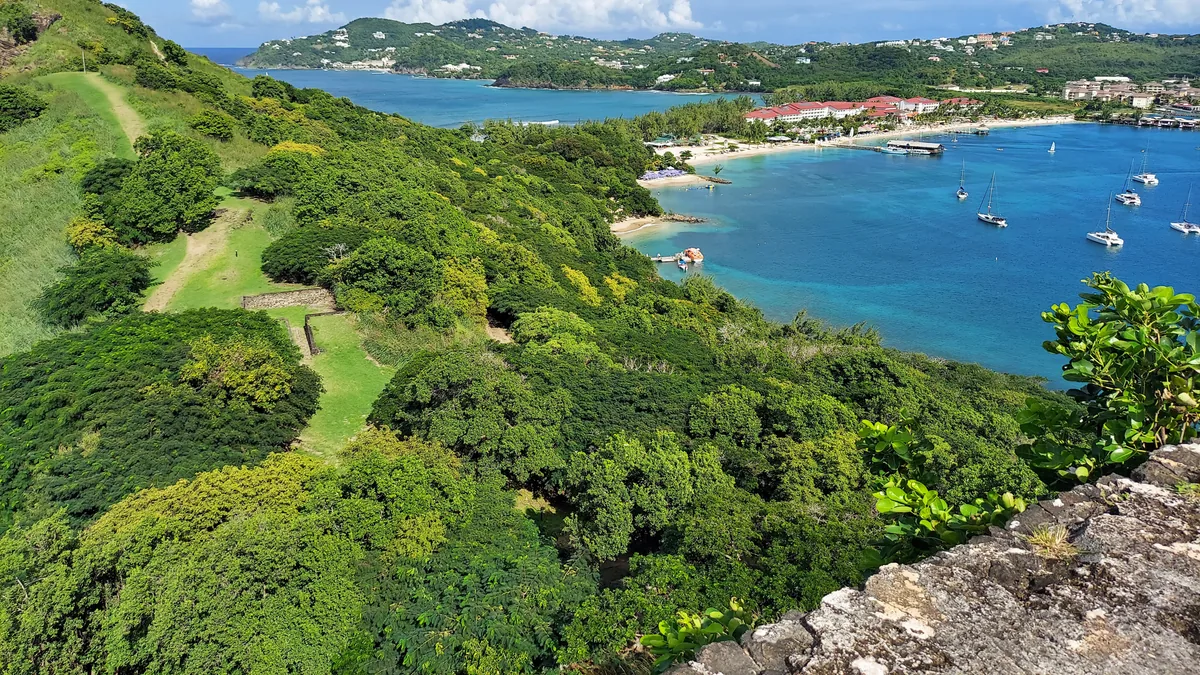
Pigeon Island National Landmark is the shorter, more forgiving day: 25 to 35 minutes north of Castries, with British and French military ruins, Fort Rodney on its hill, wide views over Rodney Bay, and two swimming beaches plus a quieter paddling beach where turtles nest.
It does not open until 9:30am, and last entry is 4:15pm. Guides that tell you to leave the ship promptly and head north will put you at a closed gate off an early gangway. Build the morning around 9:30, not around your arrival time. And note that the Interpretation Centre closes at weekends and on holidays — which is when a great many cruise calls happen, and it is a real part of what you are paying to see.
Entry from the Saint Lucia National Trust is US$10 for non-resident adults 13 and over, US$3 for children 5 to 12, and free under five; CARICOM visitors get 30% off with ID. A guided tour is US$20 for one to four guests, and beach loungers and umbrellas are US$3 each. The on-site restaurant has been closed with a reopening flagged for early 2026, so check before you plan lunch there.
And the option nobody sells you
Castries itself, on foot, is a legitimate choice. From La Place Carenage you are already there: the market, Derek Walcott Square, the Cathedral Basilica of the Immaculate Conception and the waterfront are all within a short walk of the pier, with no transfer, no fare to agree and no return buffer to worry about.
For a short call, a hot day, or a group with mixed pace, this is the honest recommendation rather than the consolation prize. Do not assume every entrance and every block is step-free, and it is worth pairing a town morning with a taxi to a beach in the afternoon rather than trying to fill eight hours downtown.
Fares, fees and which dollar
| Item | Cost | What it covers | The detail that matters |
|---|---|---|---|
| Pigeon Island entry | US$10 adult 13+ | Children 5–12 US$3; under 5 free; CARICOM visitors 30% off with ID | Guided tour US$20 for one to four guests. Loungers and umbrellas US$3 each |
| Taxi, port to Pigeon Island | ~US$25 round trip | Association rates for standard routes, quoted upfront | Per vehicle, up to four. Agree the fare, the wait and the return before you get in |
| Water taxi between piers | ~US$5 round trip | Pointe Seraphine to La Place Carenage across the harbor | The fix when you are docked at the wrong pier for your plan |
| Pitons catamaran | US$80–155 per person | Shared boat; lunch, premium and private options run higher | Check whether port transfers, lunch and admissions are inside the price |
| Sulphur Springs | US$10–15 per person | Drive-in volcano site entry with a guide; mud baths vary by package | Usually bundled into southbound tours — confirm rather than assume |
Taxis here are not metered, but they are not improvised either. Rates for standard routes are set by the taxi associations and quoted to you upfront, and the norm is per vehicle for up to four passengers rather than per head. That is a better negotiating position than it first appears — you are confirming a known rate, not inventing one. Settle four things before you get in: the fare, one-way or return, whether waiting time is included, and what an extra stop costs.
Establish which dollar. Saint Lucia uses the East Caribbean dollar, pegged at roughly EC$2.70 to US$1. Tourist prices are usually quoted in USD, but not always, and "twenty dollars" meaning EC$20 rather than US$20 is the standard misunderstanding at this port. Ask, before you agree.
Building the day around who you are
Solo
Take the shared catamaran. It does the social work for you without requiring you to have arrived with anyone, and it removes the single-traveler problem of a per-vehicle taxi fare with one person in it. Choose an operator with a named pier pickup point, a written return time and enough reviews to establish they run reliably. For how the wider arithmetic works on a solo booking, our solo sailings pages cover reduced supplements in detail.
Couples
South if the day is a milestone, north if you want it unhurried. The catamaran is the celebratory option and it earns that. Pigeon Island is the one where you can change your mind at lunchtime — a fort, a beach and a short drive back, with room to sit still.
Multi-generational
North, almost always. A 25 to 35 minute transfer means someone needing shade, a snack or a quiet half-hour does not derail the whole party, and Pigeon Island has beaches and grounds for the people who are not climbing to the fort. If the Pitons are non-negotiable for the family, take a catamaran with limited walking and optional swimming rather than a road tour stacking inland stops.
Accessibility, honestly
The piers and central Castries are the workable part. Beyond them, verify everything.
- Pigeon Island has uneven ground, inclines, steps and open sun. Fort Rodney sits on a hill; the grounds and beaches are far more realistic than the summit.
- Catamarans involve gangways, boarding over water and movement on deck. Ask about gangway width, boarding assistance, mobility-device storage, restroom access and whether swimming stops are optional.
- Road transfers on this island are winding enough to be physically tiring in their own right, which matters as much as the destination.
"Easy sightseeing" describes pace, not access. Ask operators for the specifics — vehicle type, walking distance from the drop-off point, surfaces, seating, shade and restrooms — and get the answers before you pay rather than on the day.
The OTGG bottom line
Confirm your pier, pick one direction, and work backwards from the published all-aboard time with 60 to 90 minutes in hand — our own risk guidance, not a cruise-line guarantee, and Saint Lucia earns the upper end of it. A southbound excursion puts real distance and real road between you and the ship, and a catamaran running late has no alternative route home.
South: a cruise-passenger catamaran to the Pitons, with Soufrière and
Sulphur Springs if the itinerary includes them.
North: Pigeon Island from 9:30, Fort Rodney, a beach, and back with time
to spare.
Short call: Castries on foot from La Place Carenage, and no apologies for it.
The island is beautiful and it is slow. Those are the same fact. Plan for the second one and you get to enjoy the first.
Change disclaimer. Checked September 1, 2026. Pier assignments, opening hours, admission fees, taxi rates and excursion durations all move. Most likely to change first: catamaran pricing and the Pigeon Island restaurant's reopening. Least likely: the drive time to Soufrière.
Off The Grid Getaways is an independent travel advisor. This guide is informational and does not guarantee port operations, excursion availability, accessibility, taxi arrangements or pricing. Confirm details with your cruise line, the operator or the site directly before booking.
Sources
- Saint Lucia National Trust — Pigeon Island National Landmark, fees and hours
- Saint Lucia Tourism Authority — Pigeon Island
- Saint Lucia Tourism Authority — Sulphur Springs
- Cruise Critic — St. Lucia cruise port and terminal information
- Cruise Hive — St. Lucia cruise port: piers, getting around and what is nearby
- Sea Spray Cruises — catamaran day to Soufrière for cruise passengers
- UNESCO World Heritage Centre — Pitons Management Area
Images
Frequently asked
Which pier will my ship use in Castries, and does it matter?
Castries has two: Pointe Seraphine on the north side of the harbor, and La Place Carenage downtown on the south side. It matters mainly for walking. From Pointe Seraphine the town center is about a twenty-minute waterfront walk, under a mile; from La Place Carenage you step off essentially into the city, beside the market and a short walk from Derek Walcott Square and the Cathedral. Your cruise line assigns the berth, so check the daily program rather than assuming — and if you are at the wrong one for your plan, a water taxi runs between them for around US$5 round trip.
Does Castries tender?
Usually not. Ships normally berth alongside at one of the two piers, and tendering is the exception rather than the routine — but weather, congestion, vessel size or a call at an alternative Saint Lucia anchorage can change that. Confirm the arrangement for your specific day through your cruise line rather than assuming a gangway.
Can I see the Pitons and Pigeon Island in the same port call?
No, and this is the mistake the island punishes hardest. They are at opposite ends of Saint Lucia, and the terrain is the problem rather than the distance. Soufrière is only about 24 miles from Castries but 60 to 90 minutes each way by road; Pigeon Island is 25 to 35 minutes north. Attempting both in an eight-hour call means spending most of it in a vehicle. Pick a direction.
Is a catamaran to the Pitons faster than driving?
No — it is more comfortable, which is a different thing. Catamarans sail roughly two hours each way from Ganters Bay down the west coast, against 60 to 90 minutes of driving. What you buy is open deck, coastal views and no winding mountain road, not saved time. The important check is duration: a large share of advertised Pitons catamarans are eight-hour full-day trips that cannot fit inside an eight-hour port call. Operators run separate cruise-passenger versions at around five to six hours. Book that one, and confirm it in writing.
What does Pigeon Island cost and when is it open?
The Saint Lucia National Trust charges non-resident adults 13 and over US$10, children 5 to 12 US$3, and under-fives go free; CARICOM visitors get 30% off with ID. It opens at 9:30am with last entry at 4:15pm. Two details a cruise guide should flag: do not head straight there off an early gangway, because you will arrive before it opens, and the Interpretation Centre closes at weekends and on holidays — which is when a great many cruise calls happen. A guided tour is US$20 for one to four guests, and beach loungers and umbrellas are US$3 each.
How do taxi fares work in Saint Lucia?
There is no government meter or published national tariff, but this is not a free-for-all either: rates for standard routes are set by the taxi associations and quoted to you upfront, and the norm is per vehicle for up to four passengers rather than per head. Agree the whole arrangement before you get in — the fare, whether it is one-way or return, whether waiting time is included, and what any additional stop costs. Port to Pigeon Island and back runs around US$25 for the car.
What currency should I use?
Saint Lucia uses the East Caribbean dollar, pegged at roughly EC$2.70 to US$1. US dollars are widely accepted and tourist prices are usually quoted in USD — but not always, and mixing the two is the standard misunderstanding here. When someone says "twenty dollars", establish which dollar before you agree. Change may come back in EC$, which you cannot spend once you sail.
What is Sulphur Springs and is it worth adding?
It is Soufrière's drive-in volcano — a geothermal field of steaming vents and bubbling mud pools you can drive into, with mineral mud baths nearby. Entry runs about US$10 to US$15 per person with a guide, and it is bundled into most southbound tours. If you are already going south it is the natural pairing with the Pitons; it is not a reason to go south on its own, and it is not reachable as an add-on to a northern day.
Is an independent tour cheaper than the ship's?
Often by roughly 20 to 30% on a genuine like-for-like comparison, but treat that as a planning benchmark rather than a promise, and check what sits inside each price — port transfers, lunch, equipment, site admissions. What the ship's premium actually buys is that the vessel waits for its own excursions. On a long southbound day on a winding road, that protection is worth more than it looks on paper. Independent is the better value when the operator documents departure and return times, port pickup, cancellation terms and a return policy in writing.
How much return buffer should I leave?
Sixty to ninety minutes before all-aboard, and that is our own risk guidance rather than any cruise-line guarantee. Saint Lucia earns the upper end of it: the roads are slow and winding, a southbound excursion puts real distance between you and the ship, and a catamaran running late has no alternative route. Work back from the published all-aboard time, not the departure time.
Is Castries manageable with limited mobility?
The pier areas and central Castries are the workable part; almost everything else needs checking. Pigeon Island has uneven ground, inclines and steps, and Fort Rodney sits on a hill — the grounds and beaches are more realistic than the fort. Catamarans involve gangways, boarding over water and movement on deck. Road transfers on this island are winding enough to be tiring in themselves. Ask operators specifically about vehicle type, boarding method, walking distances from the drop-off, restroom facilities and whether swimming stops are optional, and treat "easy sightseeing" as a description of pace rather than of access.
Not sure which pier you are getting, or how long you really have?
Both decide the shape of a Castries day, and neither is obvious from an itinerary. Send me your sailing and I will confirm the berth, work out what actually fits inside your call time, and tell you whether the catamaran you are looking at is the cruise-passenger version or the full-day one.
Ask Paolo