Dublin's queer story is unusually close to the present. Same-sex activity was decriminalized in 1993, and Ireland voted for marriage equality in 2015 — the first country in the world to do it by popular vote. Those changes happened within living memory, not in some comfortably distant chapter, and the city's LGBTQ+ infrastructure grew alongside them.
Sources and facts checked: October 7, 2026 (America/New_York). Venue hours, festival dates, transport arrangements and access provisions change. Check and verify with the venue or operator before you rely on any of it.
Dublin is not a single gayborhood. Think of it as a walkable network of venues, community spaces and cultural institutions, with The George as the long-running anchor and the Liberties to the west giving the trip more substance than a bar crawl.
Where to base yourself
Stay central for the easiest first visit
Base yourself around South Great George's Street, Dame Street, Capel Street, Parliament Street or the south city center. That puts you within reach of the Rainbow Mile, cultural attractions, restaurants and several LGBTQ+ venues without needing a taxi for every move. The Rainbow Mile is a community-facing route promoted by Tourism Ireland and DublinTown rather than a formal district — do not treat it as a gated or exclusively queer neighborhood.
The George is the obvious anchor. Visit Dublin calls it the city's oldest and biggest gay bar, serving the community for over thirty years, and its Sunday bingo with Shirley Temple Bar is Dublin's longest-running drag show. One practical warning: its website publishes nothing useful — the hours, admission and directions pages render blank. Phone ahead on 00353 1 478 2983 rather than expecting the site to answer you.
PantiBar on Capel Street is the pub-style stop north of the Liffey, with the rainbow crossing directly outside. Street 66 on Parliament Street is an evening bar — armchairs, cocktails, DJ nights on Friday and Saturday, a monthly queer poetry night and midweek board games. It does not open before 1 p.m. at the earliest and 3 p.m. on weekdays, so it is not a daytime stop whatever other guides tell you.
Outhouse on Capel Street is the community and cultural center, with a café open to all. It is closed Sunday and Monday — Tuesday to Friday 11 a.m. to 9 p.m., Saturday 11 a.m. to 6 p.m. If your ship calls on a Sunday, which is common, it will be shut.
Add the Liberties for history and atmosphere
The Liberties sits west of the central nightlife cluster and is a strong choice if you want historic streets, food, museums and the Guinness Storehouse alongside LGBTQ+ travel. It is not a replacement for the city-center scene; it is the part of the itinerary that gives the trip a daytime shape.
For a pre- or post-cruise stay, choose the center for the shortest route to multiple neighborhoods. Choose Dún Laoghaire only if you specifically want a coastal base and are comfortable treating it as a separate town.
What to do beyond nightlife
Follow the queer history
Collins Barracks, part of the National Museum of Ireland, runs LGBTQI+ programming including a Rainbow Trail you can collect at reception or download before you arrive — useful if you are pacing a visit. Admission is free; Tuesday to Saturday 10 a.m. to 5 p.m., Sunday and Monday 1 p.m. to 5 p.m. A dedicated LGBTQIA+ tour launched in 2025 for the tenth anniversary of the marriage referendum.
The National Gallery of Ireland publishes a self-guided Through a Lens tour: LGBTQIA+, designed to be walked in the building in about an hour. Two access notes from the gallery itself: the route moves across levels and may require lifts, and there is a Changing Places facility at the Merrion Square entrance — a rare provision that can decide whether a day out is possible at all.
The National Library's Living with Pride: Photographs from the Christopher Robson Collection is a permanent online exhibition, not a room you can visit. Read it before you travel. For an on-site connection, the Library holds the Irish Queer Archive.
Make room for the ordinary Dublin day
Pair the queer-history stops with one non-nightlife activity: a gallery visit, a literary walk, a coastal outing or a slow lunch. Dublin's LGBTQ+ travel identity is not limited to venues with rainbow branding. That matters for couples, solo travelers, multi-generational groups and anyone who wants a welcoming trip without making every hour a social performance.
The annual calendar
Dublin Pride 2027
The parade is Saturday, June 26, 2027, on a 1.4 km route from the O'Connell Street assembly area along the quays to Merrion Square. The public join-in point, the Purple Zone, starts moving around 1:30 p.m.
Access arrangements are already published, which is unusual this far out and worth planning around: accessible viewing areas at O'Connell Street, a second quiet zone at City Quay, accessible buses and a dedicated support team. The organizer takes inclusion questions at [email protected].
A full festival program for 2027 has not been published, so do not book a whole week around one. For scale, the 2026 parade drew around 100,000 people according to RTÉ — useful context for hotel prices, road access and cruise-day transfer times, but prior-year detail rather than a forecast.
Film and theater
GAZE is Ireland's flagship LGBTQ+ film festival. The 2026 edition ran July 28 to August 3 at the Light House Cinema and the Irish Film Institute, and it has recently fallen on the late-July bank holiday weekend. As of October 2026 the organizer has not published 2027 dates — check before planning a trip around it.
The International Dublin Gay Theatre Festival has been renamed Wilde Stages, Dublin's Queer Theatre Festival. The 2027 edition runs May 3 to 16, 2027 at venues across the city — dates the organizer has already published, so this one you can plan around.
Cruise connection: Dublin Port or Dún Laoghaire?
This is the decision that quietly makes or breaks a Dublin shore day, and the two are not variations of the same thing.
If your ship uses Dublin Port
Dublin Port is a working estate about 2.7 km from the center. Two transport notes the port's own pages make easy to misread: bus route 53 runs to the Irish Ferries terminal, not to the cruise berths, and the Luas Red Line's Point stop is a seven-minute walk to port facilities, not to a ship.
Do not build a walking itinerary from the ship until the cruise line confirms that passengers may walk out of your berth — walking out of a working port estate is generally not permitted. Ask for the exact berth address, whether a shuttle is included or paid, the city-center drop-off point and return frequency, the latest recommended return time, and written accessibility confirmation for the transfer vehicle and boarding process.
If your ship uses Dún Laoghaire
Dún Laoghaire has no alongside cruise berth. Ships anchor in the bay and passengers come ashore by tender, to a pontoon in the Carlisle Pier area. There is no docked version of this call.
If you use a mobility device, treat that as the decisive fact of the day. Cruise lines routinely decline tender transfers for passengers who cannot manage steps unaided or who use a non-folding wheelchair or scooter. Ask the line in writing, before you book, whether it will carry you on the tender and on what terms. A question asked at the gangway on the morning is asked too late.
The DART connects Dún Laoghaire with central Dublin at Pearse, Tara Street and Connolly. Irish Rail asks for at least four hours' notice for travel assistance; Dún Laoghaire sits in Zone 3, reachable on (01) 828 6180 or (087) 7388718. The operator also warns of platform-to-carriage gaps that may need assistance at boarding.
For a short call, choose central Dublin or Dún Laoghaire and build in a protected return buffer. Dublin is compact on a map; ship time is not.
Access and mobility
Luas trams and platforms are wheelchair accessible, with two designated wheelchair areas per tram reached through the central double doors. Travel assistance is free during all operating hours on +353 1575 6110. Check live service updates and lift status before you set out.
For every hotel, restaurant, museum, bar and event, ask the specific questions rather than the general one:
- Is the entrance step-free from the public pavement?
- Is there an accessible toilet on the same level?
- Is there seating, and can it be reserved?
- What is the route from the nearest accessible transport stop?
- How late does accessible transport run from this address?
A theoretically accessible route still fails on a platform gap, a lift outage, a crowd or an inaccessible final doorway. Several of the venues in this guide publish no access information at all — treat silence as "ask," never as "yes."
Safety, honestly
Ireland is a welcoming destination and the legal picture is strong. The Criminal Justice (Hate Offences) Act 2024 came into force on December 31, 2024; it covers sexual orientation, gender — expressly including transgender people and genders other than male and female — sex characteristics and disability, and increases sentences where an offense is aggravated by hatred.
That is not the whole picture, and the destination bodies say so themselves. IGLTA's own Ireland guide carries a safety section noting that bias-motivated violence against LGBTQ+ people remains a challenge, that transgender protections are limited, and that conversion therapy is not banned. Both things are true at once, and a guide that quotes only the welcoming half is not being useful.
Practically: the central venues sit in busy nightlife streets, so ordinary city-center care applies to everyone. The Luas and DART do not run through the small hours, so a late finish means a taxi — decide how you are getting back before you go out.
Devil's advocate: is Dublin worth a dedicated queer trip?
If you want a dense, concentrated scene on the scale of Berlin or Madrid, Dublin will feel small. The venue count is modest and several close early by continental standards.
The counterargument is that Dublin's queer life is woven into an unusually walkable city with a genuinely recent civil-rights story you can still visit the edges of. For a cruise call, a long weekend or a pre-voyage stay, that combination is the point — not the number of clubs.
Common questions
Where is Dublin's LGBTQ+ scene?
There is no single gayborhood. The venues cluster around South Great George's Street, Parliament Street and Capel Street, within walking distance of each other across the Liffey. The George is the long-running anchor; Outhouse on Capel Street is the community center rather than a bar.
When is Dublin Pride 2027?
The parade is Saturday, June 26, 2027, on a 1.4 km route from O'Connell Street to Merrion Square via the quays. The organizer has published the parade and its access arrangements but not yet a full festival program, so do not book a whole week around it.
Does my ship dock in Dublin or tender at Dún Laoghaire?
They are different places and the difference matters. Dublin Port is a working estate about 2.7 km from the center. Dún Laoghaire has no alongside cruise berth at all — ships anchor and passengers come ashore by tender. If anyone in your party uses a mobility device, confirm which one you are getting before you book anything.
Is Dublin walkable for the LGBTQ+ venues?
The central cluster is compact and most people walk between it. That is not the same as step-free: several venues publish no access information at all, and The George's own website leaves its hours, prices and access pages blank. Phone ahead rather than relying on the sites.
What is there to do beyond the bars?
Collins Barracks has a downloadable Rainbow Trail and free admission; the National Gallery runs a self-guided Through a Lens: LGBTQIA+ tour in the building, and has a Changing Places facility at its Merrion Square entrance. The Liberties adds history, food and the Guinness Storehouse to the west.
How do I get home late at night?
By taxi. The Luas and DART do not run through the small hours, so a 2:30 a.m. finish at The George is a taxi journey. Plan it before you go out rather than at closing time.
Sources
- Dublin Pride — parade route, date and access arrangements
- Visit Dublin — LGBTQ+ guide to Dublin
- Tourism Ireland — the Rainbow Mile
- Outhouse — Dublin's LGBTQ+ community center and café
- GAZE International LGBTQ+ Film Festival
- Wilde Stages — Dublin's Queer Theatre Festival
- National Museum of Ireland — LGBTQI+ engagement and the Rainbow Trail
- National Gallery of Ireland — Through a Lens tour: LGBTQIA+
- National Library of Ireland — Living with Pride (online exhibition)
- Dublin Port — to and from the port
- Dún Laoghaire-Rathdown County Council — cruise season 2026
- Transport for Ireland — Luas accessibility
- Irish Rail — accessibility on DART and commuter services
- Criminal Justice (Hate Offences) Act 2024
- IGLTA — Ireland destination guide
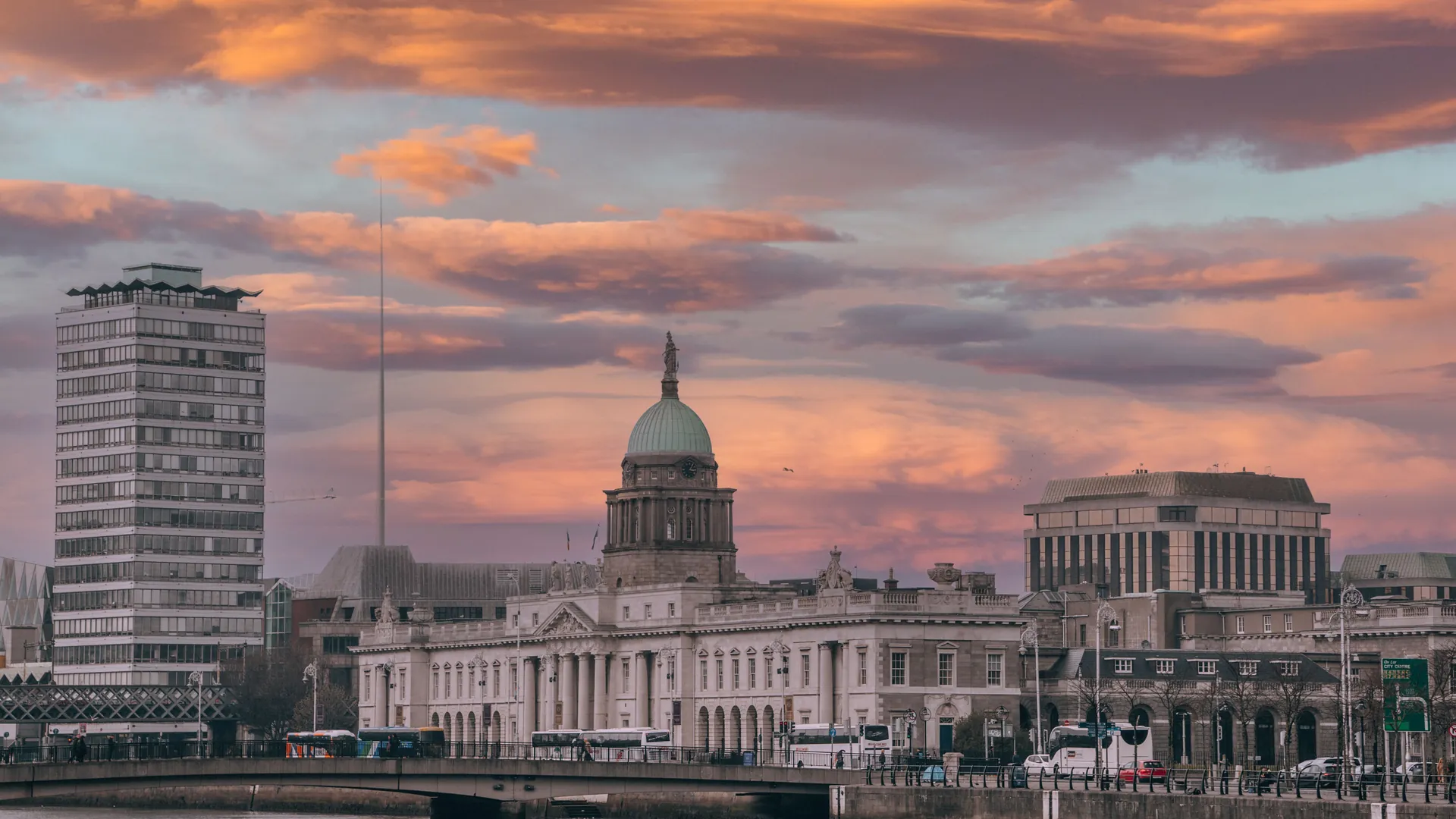
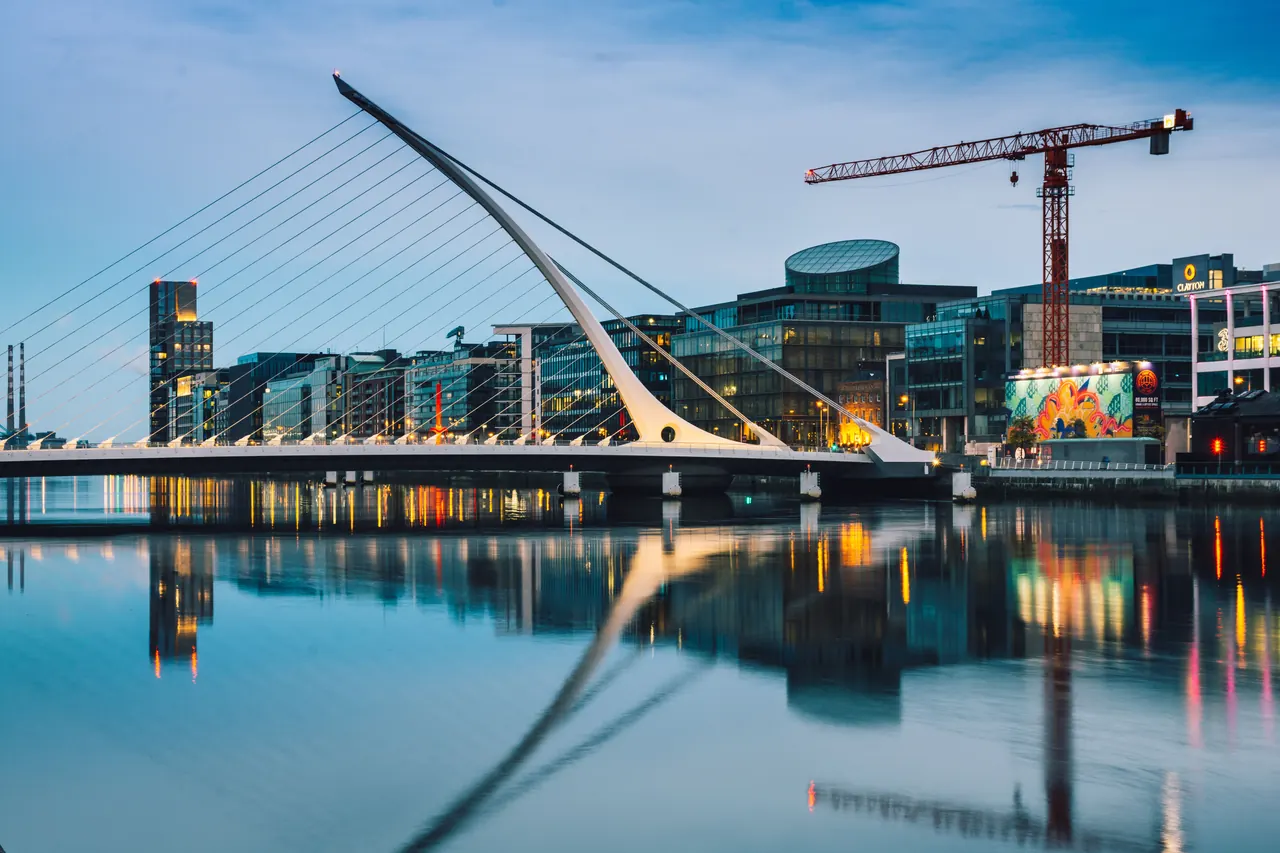
Photographs. The Custom House on the Liffey at sunset — Selim Karadayı, Pexels · Dublin's docklands at twilight — Alexander Kaliberda, Pexels · The Samuel Beckett Bridge at twilight — Luciann Photography, Pexels Cropped and resized for the web; not otherwise altered. Neither the photographers nor the licensors endorse this article.
This article is general information, not medical, legal, financial or safety advice. OTGG is an independent travel advisor; this article contains no affiliate links and does not guarantee venue access, opening hours, event arrangements, transport availability or berth assignments. Verify details with the venue, operator or cruise line before you travel.
Planning Dublin around a ship, a Pride weekend, or both?
Send me the dates and who is traveling. I will confirm whether you are docking at Dublin Port or tendering at Dún Laoghaire, check the access arrangements in writing where they exist, and build a plan that works for everyone actually going ashore.
Begin the Journey






















