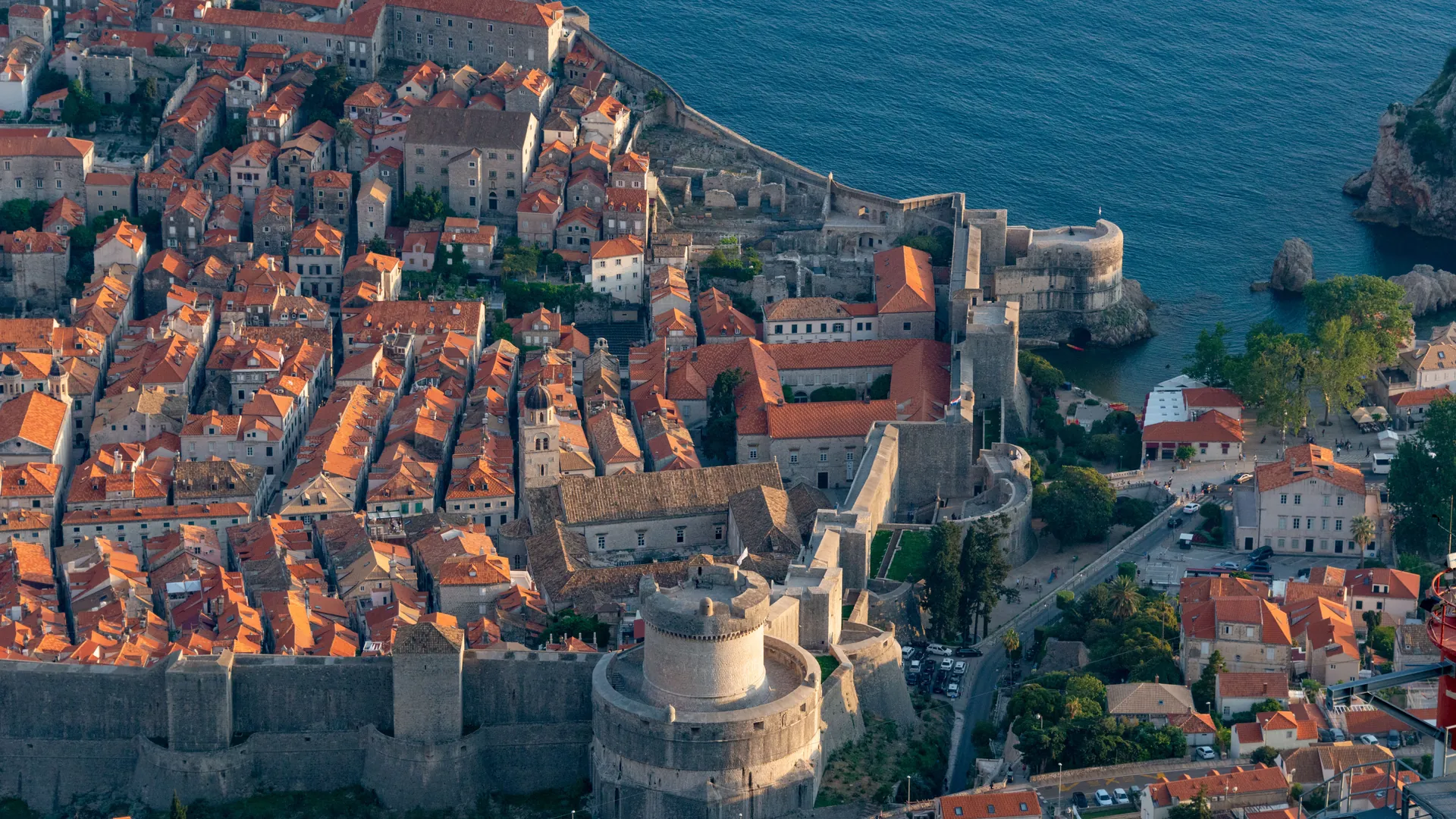
Your best day depends on three things: where the ship is positioned, how many ships arrive with you, and whether you want the walls, the cable car, the islands — or simply enough time to enjoy the city without turning it into an obstacle course.
Sources and facts checked: October 7, 2026 (America/New_York). Prices, opening seasons, transport fares and accessibility arrangements change. Check and verify with the operator before you pay or plan around any of it.
What it costs, and when things are actually open
Start here, because two of these are routinely published wrong elsewhere.
| What | Price | When |
|---|---|---|
| City walls + Lovrjenac | €40 adult · €15 ages 7–18 | 1 March – 30 November |
| City walls + Lovrjenac | €20 adult · €5 ages 7–18 | 1 December – end of February |
| Cable car | €30 return · €17 one way (adult) | April – November only |
| Cable car | €8 return · €5 one way (ages 4–12) | April – November only |
| Libertas city bus | €1.73 bought before boarding · €2.50 from the driver | Year round |
| Taxi, Gruž to Old Town | About €10, plus €0.50 per bag | Year round |
Two corrections worth the price of this article. The low-season walls ticket is €20, not €15, and the low season runs December to February, not November. And the cable car is closed for all of December, January, February and March — not merely on reduced hours. Several widely-copied guides get both wrong.
A consequence nobody mentions: a November call pays the full €40 high-season price but gets winter opening hours, because the operator's winter period starts on November 1 while the high-season price runs to November 30. The walls operator publishes no opening hours on its website at all, so phone +385 20 638 800 rather than trusting a third-party listing. Its own FAQ is stale in places — it still refers to paying in kuna.
First decision: Gruž or anchorage?
Check your cruise line's final port information, then compare it with the Dubrovnik Port Authority arrival schedule. The berth assignment affects your entire day.
If you are docked at Gruž
Gruž is the practical starting point for most large cruise ships — nine berths along 1,600 m of operational quay. From the terminal you can take a cruise-line shuttle, a Libertas city bus, or a taxi.
The Port Authority publishes times rather than distances: the bus to the Old City takes 10 to 15 minutes, a taxi 7 to 10 minutes, and walking it is 30 to 40 minutes. Treat any kilometre figure you see elsewhere as approximate — no official source publishes one.
On fares, go to the operator rather than the port: Libertas charges €1.73 if you buy before boarding at a kiosk, the terminal or in the app, and €2.50 from the driver. A 24-hour ticket is €5.31 and a 72-hour ticket €11.95. The Port Authority's own page still prints a superseded €1.99 on-bus fare. A taxi to the Old Town runs about €10, plus €0.50 per piece of luggage.
One trap for disabled readers: Libertas publishes a "Transport of persons with disabilities" page, but it is a service for registered residents of the City of Dubrovnik on a council-administered list. It is not a visitor service, however promising it looks in a search result.
If your ship is anchored
Under the port's booking arrangement, two large ships use the port while one may be positioned in front of the Old Town — anchored, tendering guests ashore. That lands you close to the Old Town, but it is a different day, not a shorter walk.
There is also an anchorage inside Gruž, so "anchored" does not automatically mean "near the Old Town." Confirm the specific berth or anchorage position, not just the port name.
If you use a mobility device, the anchorage is the decisive fact of the day. Some cruise lines do not permit certain devices on ship tenders at all. Confirm in writing with the line before booking any excursion, and do not assume that being closer to the walls makes an anchorage call easier — it usually makes it harder.
One gap in the obvious advice: the Port Authority's downloadable schedule covers calls in Gruž. The Old Town anchorage is administered separately by the Dubrovnik County Port Authority, so a ship anchored in front of the Old Town may not appear on the list you were told to check.
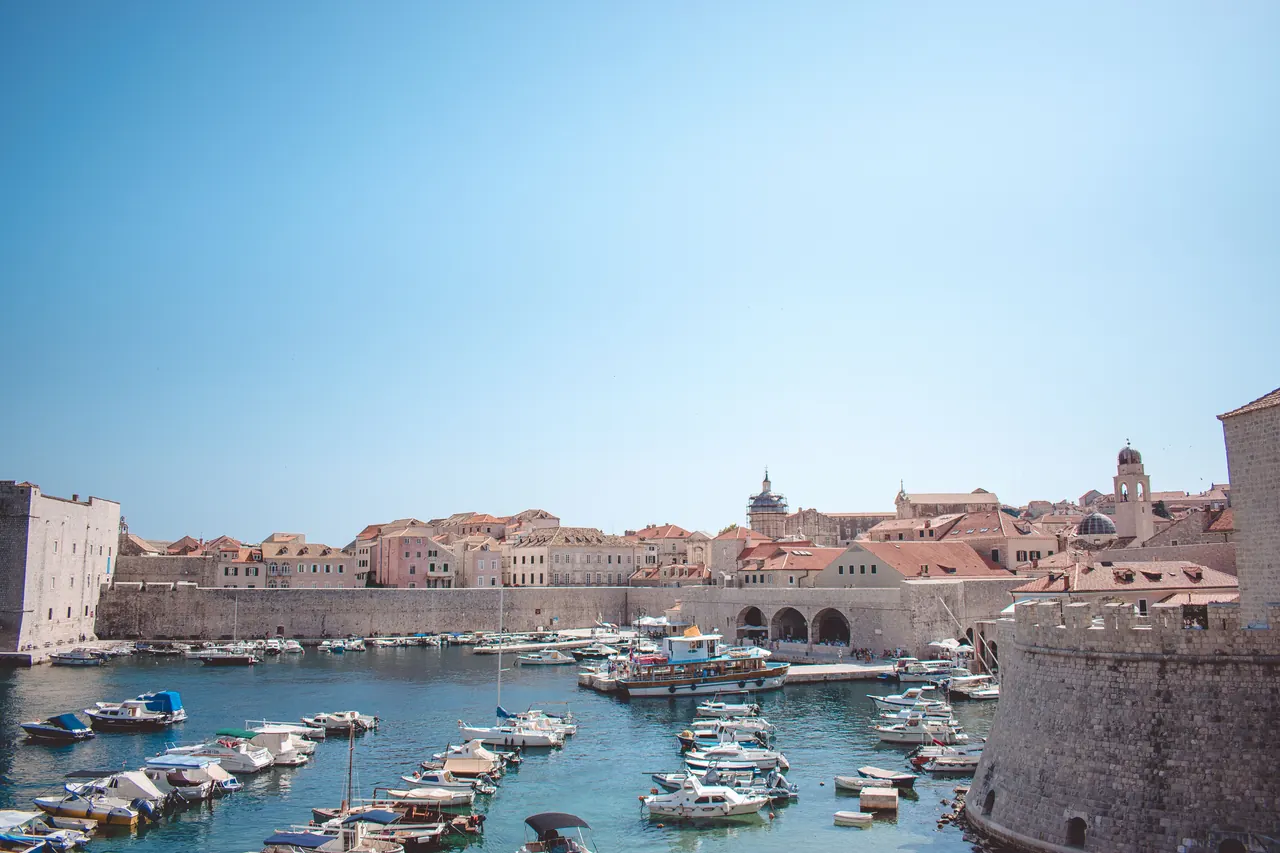
The Old Town crowd curve
The Old Town is most manageable early, before the main shore-excursion wave. Crowds build through late morning and early afternoon, especially when several ships are calling. The walls have little shade, so midday combines the most people with the most exposed walking.
Your practical order:
- Arrive early and choose one headline experience.
- Use the middle of the day for a slower meal, a museum, a café or a level street route.
- Return toward your transport well before the final rush.
For scale rather than alarm: the Port Authority states it limits cruise passengers to 8,000 per day, and the published autumn 2026 pattern at Gruž runs to about three calls a day. Busy is not the same as the worst case you may have read about. We cover how that cap compares with Palma's and Venice's in the Adriatic port rules guide.

The walls, honestly
The circuit is 1,940 m of main wall, sixteen towers and three fortresses. Your ticket includes Lovrjenac Fortress, the Western Outer Wall (itself closed December to February) and the Collection of Coins of the Republic of Ragusa — two inclusions most guides omit. The ticket is valid for one tour and re-entry is not possible, and the webshop ties it to the date you choose at purchase, which matters if your call shifts.
On accessibility, use the operator's own words rather than a step count. It says its heritage sites are "difficult to access for people with disabilities." You will see "about 1,080 steps" quoted widely; no primary source publishes any step count, so we do not repeat one. What is certain is steep stairs, uneven stone, little shade and no re-entry if you need to stop.
There is a disabled-visitor discount, and it is easy to miss. The operator approves a special discount at the entrance to each heritage site on presentation of a valid disability card. Veterans qualify too. Children under 7 are free.
The cable car
Adult fares are €30 return and €17 one way; ages 4–12 pay €8 and €5, and under-4s travel free. The last departure from the lower station is 30 minutes before closing.
It does not run in winter at all — closed December through March. April to November it operates, with November hours short at 09:00 to 17:00 and midsummer running to midnight.
The operator states it stops when wind exceeds the safety threshold and ceases operations in possible lightning. Heavy rain is not listed as a closure trigger, whatever other guides say.
For accessibility this is the good news in the article: the operator describes all facilities as fully equipped for disabled access — both stations, the cabin, restrooms and a lift, and the city tourist board confirms the cable car is fully wheelchair accessible. Still confirm the boarding process for your specific device in writing, but this is a genuinely accessible way to see Dubrovnik from above, in season.
An eight-hour schedule
This assumes a conservative eight-hour call. Many Gruž calls are considerably longer — the published autumn 2026 average stay is over sixteen hours — so check yours before you ration the day.
- Hour 1. Disembark, clear the terminal, confirm your return transport and its last departure. If you are tendering, add the queue to this figure, not to the end of the day.
- Hours 2–4. Your one headline experience: the walls early, or the cable car. Not both.
- Hours 4–6. A level Old Town route, a museum, a long lunch. The Stradun is wide and smooth-paved; the side streets become steep or stepped very quickly.
- Hours 6–7. Move back toward Gruž or the tender point. Traffic is part of the excursion.
- Final 60–90 minutes. Buffer. That is our planning rule, not an operator rule — your ship's all-aboard time is the only binding figure.
The Elaphiti Islands do not fit. A full island trip typically runs 09:45 to 17:45 from Gruž at around €70, and is sold only April to October. On an eight-hour call that is the whole call or more, with no buffer left at all. It is a long-call option or a land-stay option, not a standard port-day one.
Accessibility beyond the walls
Dubrovnik is more accessible than its reputation suggests, once you are off the fortifications. The city tourist board confirms that the Stradun is wide and smooth-paved, that the Cathedral can be reached by a ramp at the southern entrance with a mobile transporter available for rent, and that the Aquarium, Museum of Modern Art and Rector's Palace are wheelchair accessible. It also publishes a downloadable accessible city map — the single most useful thing to have on your phone before you go ashore.
What still needs confirming in writing, every time: whether a transfer vehicle is genuinely step-free, whether a wheelchair or scooter can stay assembled, whether the driver returns you to the correct terminal entrance, and whether your cruise line will carry your device on a tender. "Accessible" on its own is not an answer.
OTGG value strategies
- Buy the bus ticket before you board. €1.73 against €2.50 is a 31% difference for thirty seconds at a kiosk, and a day ticket at €5.31 pays for itself on the third ride.
- Check the month before you count on the cable car. Between December and March it is not a fallback, it is closed.
- Ask about the disability discount at the gate. It is approved on presentation of a card and it is not advertised prominently.
- A November call is the worst value of the year — full price, winter hours, and the Western Outer Wall closing from December. February and early March are better value if the itinerary allows.
- Ask about the Dubrovnik Pass. It bundles the walls, museums and a bus ticket, and may be worth more than the walls ticket alone — but we could not confirm the current price from the official source, so confirm it yourself before buying.
Devil's advocate: skip the walls
The walls are the headline and they are genuinely spectacular. They are also 1,940 m of stairs in full sun, with no re-entry, at €40 a head in season.
If your group includes anyone with limited stamina, if it is midday in July, or if three ships are in, the better day may be the cable car for the view and the Old Town at street level for everything else — at a fraction of the effort and a fraction of the cost. The walls will still be there on a longer, cooler call.
Verify before you pay
- Confirm your specific berth or anchorage, not just "Dubrovnik" — and remember the Port Authority list covers Gruž only.
- If tendering, confirm in writing that your line will carry your mobility device.
- Confirm the walls price for your travel date on the operator's own webshop, and that the ticket date matches your call.
- Confirm the cable car is running in your month before treating it as the accessible option.
- Ask whether a shuttle is free or charged, where it drops off, and when it last returns.
- Carry the accessible city map offline, and save your return instructions before you lose signal.
Common questions
How much is the Dubrovnik city walls ticket?
€40 for an adult from 1 March to 30 November, and €20 from 1 December to the end of February. Children 7–18 pay €15 and €5; under 7 is free. Several third-party guides still quote €15 as the low-season adult price — that figure is wrong. Buy from the operator's own webshop, and note the ticket is tied to the date you select at purchase.
Is the cable car open in winter?
No. It is closed for all of December, January, February and March. It runs April to November, with the last departure 30 minutes before closing, and November hours are short at 09:00 to 17:00. If you are counting on it as the step-free alternative to the walls, check the month first.
Are the city walls wheelchair accessible?
No. The operator says plainly that its heritage sites are difficult to access for people with disabilities. The circuit is 1,940 m of steep stairs and uneven stone with little shade. The cable car is the usual alternative, but only from April to November.
Is there a disabled visitor discount?
Yes, and it is easy to miss. The walls operator approves a special discount for disabled visitors at the entrance to each heritage site on presentation of a valid disability card. Veterans qualify too, and children under 7 are free.
Will my ship dock at Gruž or anchor?
Most large ships dock at Gruž, which has nine berths. Under the port's booking arrangement one large ship may be positioned in front of the Old Town instead, anchored and tendering. There is also an anchorage inside Gruž itself, so 'anchored' does not automatically mean 'near the Old Town'. Confirm the specific berth, not just the port.
Can I do the Elaphiti Islands on a port call?
Usually not. A full Elaphiti trip typically runs 09:45 to 17:45 from Gruž and is sold only April to October. On a standard eight-hour call that is the entire call or more, with no return buffer left. Treat it as an option only on a long call, and only with the operator's written confirmation against your all-aboard time.
Sources
- Dubrovnik city walls — the City Walls (Society of Friends of Dubrovnik Antiquities)
- Dubrovnik city walls — FAQ, accessibility and discounts
- Dubrovnik city walls — official ticket webshop
- Dubrovnik Cable Car — timetable and prices
- Dubrovnik Cable Car — technical details and accessibility
- Dubrovnik Port Authority — how to get to the Old City
- Dubrovnik Port Authority — ship arrivals and departures
- Dubrovnik Port Authority — Dubrovnik as a cruise destination
- Libertas Dubrovnik — bus price list
- Experience Dubrovnik — Dubrovnik without barriers (accessible city map)
- Norwegian Cruise Line — tender ports and accessibility
Photographs. Dubrovnik's Old Town and city walls from the air — Diego F. Parra, Pexels · A narrow stepped alley in the Old Town — Carlo Jünemann, Pexels · The historic harbour at Dubrovnik — Vitalii Dobrianskyi, Pexels Cropped and resized for the web; not otherwise altered. Neither the photographers nor the licensors endorse this article.
This article is general information, not medical, legal, financial or safety advice. OTGG is an independent travel advisor; this article contains no affiliate links and does not guarantee berth assignments, attraction access, transport availability, excursion suitability or pricing. Stairs, heat, uneven stone and tender transfers all carry risk. Fitness-to-travel and medical-clearance questions belong to your own clinician and the cruise line's medical desk.
Want Dubrovnik planned around your actual berth?
Send me the ship and the date. I will find out whether you are docking at Gruž or anchoring off the Old Town, check what is open in your month, confirm tender policy if anyone uses a mobility device, and build a day that fits the people actually going ashore.
Begin the Journey






















