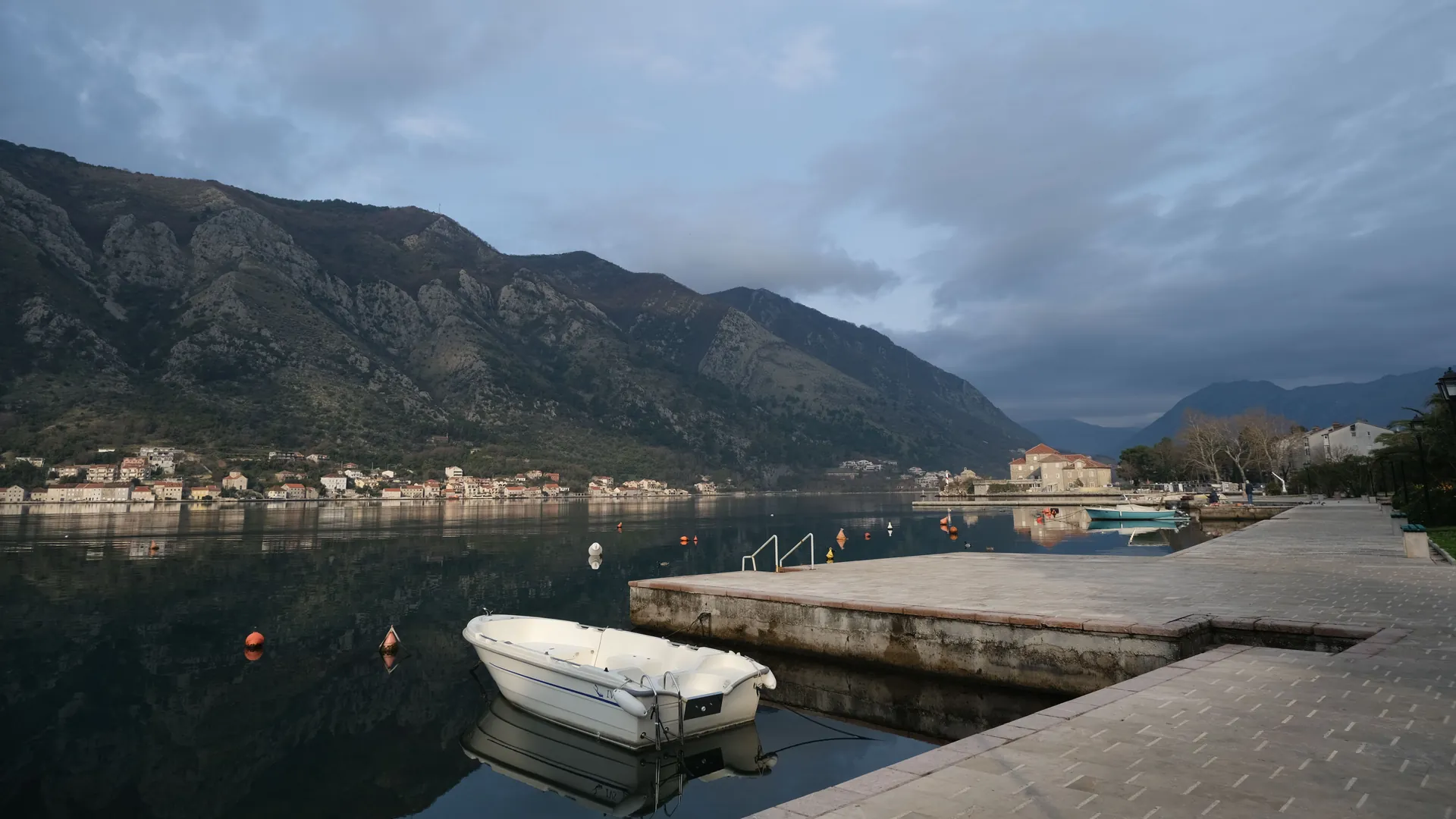
Kotor is one of those cruise ports where the geography does most of the work. When your ship is alongside, the Old Town is immediately in front of you. When your ship anchors, the tender still usually lands close to the same historic waterfront.
Sources and facts checked: October 6, 2026 (America/New_York). Berth assignments, call times, taxi and ferry fares, attraction hours and accessibility arrangements change by sailing and season. Check and verify with the cruise line or operator before you pay.
That makes Kotor different from Dubrovnik, Rome or Athens. The excursion-drive argument is weaker here than almost anywhere else on an Adriatic itinerary. Your first decision is not “Which tour should I book?” It is “Will I dock or tender, and what does that do to my usable time?”
Kotor sits within the UNESCO-listed Natural and Culturo-Historical Region of Kotor, a protected landscape encompassing the Bay of Kotor, historic settlements and fortifications. UNESCO verification
Kotor cruise port highlights
- Old Town at the waterfront: The main historic district is close enough to make an independent visit realistic for many cruise guests.
- Docked versus tendered changes the day: A berth gives you predictable access. A tender adds queues, weather exposure and a less certain return sequence.
- The walls are spectacular but physically demanding: The lower Old Town and the fortress climb are different experiences. Do not treat them as one attraction.
- Perast is the sensible scenic extension: It can work in a longer call, but only if you choose it instead of trying to do everything.
- Budva and Lovćen require discipline: Both can consume the day in traffic before you have seen the place you came to visit.
First question: will you dock or tender?
Kotor operates two distinct arrival modes, not two terminals. The Port of Kotor describes a mixed operation with cruise berths and designated anchorages — a ship either comes alongside or anchors and tenders guests ashore, and the landing area remains near the same historic waterfront either way. A berth may be assigned when the ship fits the technical requirements and space is available; otherwise, the ship may anchor and transfer guests by tender. Port of Kotor technical information
Do not assume that a ship’s usual pattern guarantees your call. The final decision can depend on ship size, draft, berth allocation, the number of vessels visiting and weather conditions. The captain and port authorities retain operational control.
Check in this order:
- Review the cruise line’s itinerary and port notes before sailing.
- Check the ship’s app or daily program the evening before arrival.
- Ask the shore-excursions or guest-services team whether the call is alongside or at anchor.
- If mobility, medical or timing needs are involved, request written confirmation from the cruise line and Port of Kotor.
Several ships may be scheduled for Kotor at once. The published call schedule confirms that vessels are expected in port, but it may not guarantee which ship receives the quay. On a busy day, the second or third ship may tender even if that line sometimes docks.
A tender does not necessarily put you far from the Old Town. The landing area remains near the waterfront, but the process can add queuing and transfer time. Treat the tender as part of your itinerary, not as a footnote.
The Old Town and the walls
Kotor’s Old Town is compact, pedestrianized and filled with stone lanes, squares, churches and historic buildings. The main route from the waterfront to the Sea Gate is short and comparatively flat, but the interior surfaces are not smooth. Expect polished stone, uneven cobbles, thresholds and occasional steps.
The Old Town itself is a strong choice for:
- Solo travelers who want an easy-to-navigate cultural day.
- Multi-generational groups that need frequent stopping points.
- Adults-only travelers looking for architecture, cafés and a slower shore day rather than a beach transfer.
- Guests who can manage uneven surfaces but not a sustained climb.
The city walls and San Giovanni Fortress are another matter. The ascent is steep, exposed in places and made up of many uneven steps. Common visitor estimates put the route at approximately 1,350 steps, with the elevation gain usually cited at around 260 meters and the ascent taking roughly 45 to 90 minutes depending on pace and stops. Check and verify with the cruise line or port operator. On the step count itself:** 1,350 is the widely used consensus estimate, not an official figure. No authoritative municipal step count is published, and popular totals vary between roughly 1,300 and 1,426 because routes and counting methods differ. Treat it as a reliable indication of scale rather than a precise number.
The climb is not suitable for wheelchair users and may be inappropriate for guests with significant mobility, balance, cardiac or respiratory limitations. There is no step-free substitute that reproduces the summit experience.
Choose one:
- Lower-impact plan: Sea Gate, main squares, waterfront and selected ground-level interiors.
- Fortress plan: Start early, carry water, wear shoes with reliable grip and skip the rest of the region that day.
- Group plan: Split the party. Strong walkers can attempt the walls while others remain in the Old Town or take a low-mobility scenic transfer.
Do not climb outside the designated route. Historic walls are not an invitation to improvise a shortcut.
Can Perast and Our Lady of the Rocks fit?
Yes, but not automatically.
Perast is north along the Bay of Kotor and is commonly reached by road from the port in roughly 20–25 minutes, traffic permitting. Check and verify with the cruise line or port operator. Its waterfront is more straightforward than Kotor’s steep fortifications, although the town center and boat access still require careful surface and transfer checks.
Our Lady of the Rocks is reached by boat from the Perast area. That adds another transfer, another boarding point and another timetable to your day. The island involves stone surfaces and may not be suitable for every wheelchair or mobility device.
A realistic Perast plan is:
- Docked ship or early tender ashore.
- Pre-arranged transfer to Perast.
- Short waterfront visit.
- Boat visit only if boarding conditions and return timing are confirmed.
- Direct return to Kotor with a substantial ship buffer.
Do not combine the full walls climb, Perast and Our Lady of the Rocks during a standard eight-hour call. That is three separate physical and logistical plans pretending to be one itinerary.
Budva or Lovćen?
Budva
Budva is generally around 30–45 minutes from Kotor by road, but summer traffic, roadworks and the coastal route can extend that estimate. Check and verify with the cruise line or port operator.
Budva makes sense if you want:
- A second walled Old Town.
- A livelier coastal atmosphere.
- A short look at the Budva Riviera.
- A pre-arranged private transfer with a fixed return plan.
It makes less sense if your priority is Kotor itself. You are trading the distinctive Bay of Kotor setting for another historic coastal center, while adding road risk.
Lovćen
Lovćen is the ambitious option. The mountain road is winding, and the Njegoš Mausoleum area requires additional walking and stairs. A drive from Kotor to the mausoleum area is often estimated at approximately 60–75 minutes each way, depending on the route and traffic. Check and verify with the cruise line or port operator.
Lovćen can work for a cruise guest who has already visited Kotor, has a long call and wants mountain scenery more than Old Town time. It is a poor fit for a first visit if you also want the fortress, Perast or Budva.
For guests sensitive to motion, mobility limitations or fatigue, ask the operator for the exact vehicle, road route, stop duration, restroom plan and walking distance. “Scenic drive” does not mean physically effortless.
Flexible eight-hour schedule
This framework assumes an approximately eight-hour call. Your ship’s published all-aboard time always overrides it.
Option A: Kotor without the excursion drive
- Hour 1: Disembark or tender ashore; locate the return point immediately.
- Hours 1–3: Sea Gate, main squares, waterfront and a slower Old Town circuit.
- Hours 3–4: Lunch or a shaded rest near the return route.
- Hours 4–5.5: Choose one museum, church interior or lower-level viewpoint.
- Hours 5.5–6.5: Return toward the waterfront and browse only if the tender situation remains comfortable.
- Hours 6.5–8: Keep a 60–90 minute return-to-ship buffer for queues, tender loading or unexpected port controls.
Option B: Perast-focused day
- Hour 1: Get ashore and meet a pre-arranged driver.
- Hours 1.5–3: Travel to Perast and explore the waterfront. Drive time is commonly estimated at 20–25 minutes each way, but confirm locally.
- Hours 3–4.5: Add Our Lady of the Rocks only after confirming boarding, weather and return timing.
- Hours 4.5–6: Return to Kotor.
- Hours 6–8: Use the remaining time for a short Old Town visit and maintain the 60–90 minute ship buffer.
Do not use this plan if your ship is tendered and the first or last tender schedule is uncertain.
Accessibility considerations
The waterfront and lower Old Town may work for some guests with mobility limitations, but “close to the ship” does not mean the route is step-free throughout. The Old Town has uneven stone surfaces, narrow lanes and historic interiors with variable entrances.
The walls are not a realistic wheelchair route. The tender may be the larger obstacle: boarding can require stepping across a gap, transferring out of a device or using a collapsible manual wheelchair. Cruise-line policies differ, and the captain may suspend tendering because of weather, tide or safety.
Before paying for a specific excursion, obtain written confirmation from:
- The cruise line’s accessibility department.
- The Port of Kotor or relevant port representative.
- The excursion operator or transfer provider.
- Any boat operator serving Perast or Our Lady of the Rocks.
- The adapted-vehicle supplier, if applicable.
Ask for exact vehicle dimensions, lift or ramp specifications, combined guest-and-device weight limits, transfer requirements, storage arrangements, restroom access and the point where the vehicle can drop you. No vehicle can simply drive through the pedestrian Old Town and remove the surface problem.
OTGG value strategies
- Spend first on certainty, not distance: A private transfer to Perast is only useful if the return plan is written and realistic.
- Do not pay for transport you do not need: If your ship is docked, the Old Town is the value play.
- Solo travelers: Join a small, verified shore excursion only if it protects return timing and avoids a single-occupancy penalty on private transport.
- Multi-generational groups: Split the day rather than forcing every guest onto the walls climb.
- Adults-only travelers: Kotor rewards a slower cultural day. You do not need to turn it into a checklist race.
Devil’s Advocate: skip the excursion
The strongest Kotor plan may be no excursion at all.
If you are docked, the Old Town is close. If you are tendered, the landing may still be near the walls. Paying for a long coach loop to Perast, Budva and Lovćen can leave you with less time in the place that made the port call attractive.
The counterargument is crowding. When several ships arrive together, the Old Town can feel compressed, and a pre-arranged scenic transfer may provide welcome breathing room. But transport does not eliminate traffic, tender queues or the need to return on time.
Choose the excursion only when it solves a specific problem: mobility, local interpretation, a repeat visit or a clear desire to see beyond Kotor.
Verify before you pay
- Confirm whether your ship is docked or tendered in the final ship program.
- Confirm first tender, last tender and all-aboard times in writing.
- Check how many ships are scheduled for the same date.
- Ask whether the tour returns to the ship’s actual landing point.
- Obtain written accessibility confirmation from the cruise line, port and operator.
- Confirm vehicle type, lift or ramp, device storage and weight limits.
- Ask whether Our Lady of the Rocks boarding requires a transfer.
- Confirm cancellation terms for weather, tender suspension or missed port access.
- Keep a 60–90 minute return buffer, and increase it when tendering.
Frequently asked
Is Kotor walkable from the cruise port?
Usually, yes. The Old Town is close to the waterfront, whether you arrive from a berth or a tender landing. Exact access depends on the ship’s assigned location and port operations.
Should I climb the Kotor walls?
Only if you are comfortable with a steep, uneven ascent involving approximately 1,350 steps and roughly 260 meters of elevation gain. Check and verify with the cruise line or port operator. It is not a wheelchair-accessible attraction.
Can I visit Kotor, Perast and Budva in one day?
You can attempt it, but it is not a sensible default for an approximately eight-hour cruise call. Choose Kotor plus Perast, or Kotor plus Budva, rather than collecting road time.
Is Lovćen suitable for accessible travel?
Not without detailed, written confirmation. The winding drive, mountain terrain and stairs at the mausoleum create several separate access barriers.
Where should I read about Adriatic port rules?
Read OTGG’s Palma, Dubrovnik, Venice: 2026 Port Rules for the port-rule framework. This guide focuses on Kotor’s shore-day logistics rather than repeating that article.
Sources and facts checked: October 6, 2026 (America/New_York). Official tourism, port and transport information were reviewed on the date shown.
Sources
Photographs. Kotor Bay at morning with mountains behind — Muhammed Fatih Beki, Pexels Cropped and resized for the web; not otherwise altered. Neither the photographers nor the licensors endorse this article.
This article is general information, not medical, legal, financial or safety advice. OTGG is an independent travel advisor; this article contains no affiliate links. Cruise line and supplier policies, rates, promotions, inclusions, accessibility procedures and deposit schedules change — verify all details with the operator or an accredited travel advisor before booking or payment.
Calling at Kotor and weighing a tour?
Tell me the ship, the call times and whether you are docking or tendering. I will tell you whether the walls, Perast or an excursion fits, and what to skip.
Begin the Journey






















