Three legal decisions are reshaping Mexican cruise capacity: Loreto lost international access, Cozumel’s fourth-pier proposals were refused, and Ensenada’s new pier received environmental authorization.
Sources and facts checked: October 15, 2026 (America/New_York). Decrees, permits, itineraries and fee schedules change. Check and verify with the cruise line or vendor before you pay.
Loreto’s international access ended by decree
Loreto’s cruise change is not a weather reroute. A federal decree repealed the measure that had opened Loreto to international maritime traffic. The port returned to cabotage status, domestic navigation, and Mexican reports say the Baja California Sur port administration notified cruise lines that arrival requests covering 2026 through 2030 were refused. Check and verify with the cruise line or vendor.
The distinction matters. A storm can temporarily remove a port from a sailing. A legal restriction changes what a cruise line can schedule in the first place. For the affected itineraries, the replacement port comes from the same regional pool, but the change is planned into a sailing series rather than made for a single rough week.
One reported example is Holland America’s Koningsdam Mexico sailing departing on November 28, 2026. Loreto was removed; the itinerary added an overnight in Puerto Vallarta and shifted the Mazatlán call. Check and verify with the cruise line or vendor. That is a concrete consequence of a changed legal map, but verify your own itinerary with the cruise line. Other sailings may have different substitutions.
The decree’s stated rationale is to protect Bahía de Loreto. Do not treat the current restriction as a permanent ban beyond the period and terms reported, or assume that every type of vessel is subject to the same rules. The operative decree and port-specific notices are what matter.
Cozumel’s fourth pier hit an environmental stop
Cozumel still operates three cruise piers: Punta Langosta, International Pier and Puerta Maya. Punta Langosta puts you downtown in San Miguel; International Pier and Puerta Maya sit south of town, with terminal facilities and taxi access. The distinction matters on a port day, but the bigger story here is capacity: a fourth pier has not been approved.
The paperwork involved more than one application. Semarnat revoked an earlier environmental authorization for the proposed fourth pier and later confirmed that rejection; reports say the developer is contesting it in federal court. A later proposal to expand the SSA México cruise pier was also refused. Trade reporting describes environmental concerns including reef patches, protected species and proximity to the Villa Blanca reef system.
So be precise: this was an environmental refusal, not a funding shortfall. The previous authorization was revoked, and the later proposal did not create a new approved pier. Cozumel continues to rely on its existing three.
That leaves multi-ship days concentrated on current infrastructure. It does not mean every call will be crowded or that a fourth pier would have solved every bottleneck. It does mean that planned capacity relief cannot be assumed. For pier location and arrival logistics, see the Cozumel cruise port guide.
Ensenada gained a permit, not an operating pier
Ensenada is the counterpoint: environmental authorization for Muelle 3 at Ensenada Cruiseport Village was issued on September 18, 2026 and published in Semarnat’s October gazette. The file is registered as 02BC2025HD128, and the authorization has a 51-year validity period. Check and verify with the cruise line or vendor.
The port currently operates two berths, with the larger berths reported at roughly 335 and 350 meters. Ensenada's municipality announced 41 scheduled cruise arrivals for October 2026 alone. Those calls demonstrate the port's current activity, not use of a pier that is still on paper.
That timing is the useful distinction for anyone comparing itineraries. The permit creates the possibility of additional capacity once construction proceeds; it does not relieve a port day you are booking now. No verified construction start or completion date was available for this article, so do not read the authorization period as a build schedule.
Nor does the permit prove that Loreto’s displaced calls were assigned to Ensenada. A port can have a larger future capacity plan without receiving any specific replacement call. The available reporting identifies a Puerto Vallarta overnight and a shifted Mazatlán visit for the Koningsdam example, not an Ensenada substitution.
Mexico’s passenger duty is a separate paperwork change
Mexico’s cruise-passenger non-resident duty is another policy shift, but it is not a port-capacity decision. The federal decree establishes a phased tax credit against the immigration duty and specifies factors tied to the prevailing exchange rate. Trade coverage commonly describes the resulting amounts as rounded U.S. dollar equivalents: $5 through July 2026, $10 from August 1, 2026 through June 30, 2027, $15 from July 1, 2027 through July 31, 2028, and $21 from August 1, 2028 through September 30, 2030. Check and verify with the cruise line or vendor.
Those dollar figures are shorthand, not a promise of a fixed-dollar charge: the decree’s calculation is based on the applicable exchange rate. The duty is assessed once per itinerary, rather than once for each Mexican port. Cruise lines or their agents collect it, and it is commonly included in the taxes, fees and port expenses shown with the fare.
Check the line’s own breakdown before paying. The Diario Oficial decree is the controlling source for the formula and schedule; a line’s current booking terms explain how the amount appears on your invoice.
As broader context, Sectur reported roughly 7.5 million cruise passengers and 2,045 arrivals from January through July 2026, up about 16.2% and 11.9% year over year; Sectur put the economic impact for that period at about US$649 million. Treat these as reported figures pending independent confirmation. Reports also describe a Puerto Vallarta homeporting push tied to a planned port-authority-managed terminal and wider master plan; the scope, schedule and berth details need confirmation before using them as settled capacity facts.
Devil’s advocate: most vacations will still happen
The honest counter-case is that most travelers may barely notice a refused pier or a removed port. A sailing can substitute another destination, and demand can move to ports that already have berths. A small per-passenger duty may also be less significant than airfare, cabin choice or a night in a pre-cruise hotel.
That is true for many individual trips. But it does not make the changes immaterial. Legal access determines where lines can schedule calls; environmental decisions constrain future infrastructure; and a permit does not add usable capacity until a project is built. These decisions shape the options cruise lines have over time, even when your own sailing changes by only one stop.
Verify before you pay
- Compare your booked itinerary with the cruise line’s current record, especially if it includes Loreto.
- If Loreto was removed, ask which calls changed and whether the replacement is an overnight, a longer stay or a different port.
- Confirm your Cozumel pier assignment. Ask whether any quoted taxi rate is per vehicle or per person, and check the posted zone-rate board.
- Treat Ensenada’s Muelle 3 as authorized future capacity, not an operating berth. Ask the port or line for written confirmation before relying on a construction or opening date.
- Review the taxes, fees and port expenses line for Mexico’s duty. Ask how the line calculates the exchange-rate equivalent and whether the charge is once per itinerary.
- Request written confirmation from the relevant cruise line or operator for any itinerary, fee or port arrangement detail that affects your plans.
If your Mexico sailing is already booked
Compare the itinerary and invoice you have with the cruise line’s latest written record. A legal change, a construction permit and a fee schedule are three different kinds of paperwork, and each affects your trip on a different timeline.
Frequently asked
Is Loreto still on international cruise itineraries?
A decree repealed Loreto's opening to international maritime traffic, returning it to cabotage status. Mexican reports say the Baja California Sur port administration refused cruise-arrival requests for 2026–2030, and the specific period and any later regulatory changes need a final source check. Check and verify with the cruise line or vendor.
Why was Cozumel’s fourth pier refused?
Semarnat refused the relevant environmental authorizations. Trade coverage describes concerns about reef habitat, protected species and the Villa Blanca reef system. This was an environmental decision, not a funding decision.
Does Cozumel have three cruise piers or four?
It currently has three operating piers: Punta Langosta, International Pier and Puerta Maya. No fourth pier is approved for operation based on the decisions reviewed.
Is Ensenada’s third pier open?
No. The environmental authorization for Muelle 3 was issued and published, but that is not evidence that construction is complete or the pier is operating.
Will Mexico charge the passenger duty at every Mexican port?
The decree and reported collection approach treat the duty as once per itinerary, not a new charge at each Mexican call. Check your cruise line's invoice and written explanation.
Does the duty apply if I stay on board?
Cruise-line and trade guidance describes the duty as applying to cruise passengers on a qualifying itinerary, including passengers who remain aboard. Confirm how the line applies it to your specific booking.
Sources and facts checked: October 15, 2026 (America/New_York). Mexican federal decrees and gazette notices, port and municipal announcements, and trade coverage were reviewed on the date shown.
Sources
- dof.gob.mx — Diario Oficial decree ↗
- dof.gob.mx — Diario Oficial de la Federación: Loreto decree repeal, May 25, 2026 ↗
- sinat.semarnat.gob.mx:8443 — SEMARNAT: Ecological Gazette, October 2026, including Ensenada file 02BC2025HD128 ↗
- ensenada.gob.mx — Ensenada municipal government: October cruise-arrival announcement ↗
- salrevista.com — Sal! Revista: Cozumel fourth-pier refusal, May 4, 2026 ↗
- consultaspublicas.semarnat.gob.mx — SEMARNAT: Cozumel environmental-gazette file ↗
- royalcaribbean.com — Royal Caribbean: taxes, fees and port expenses ↗
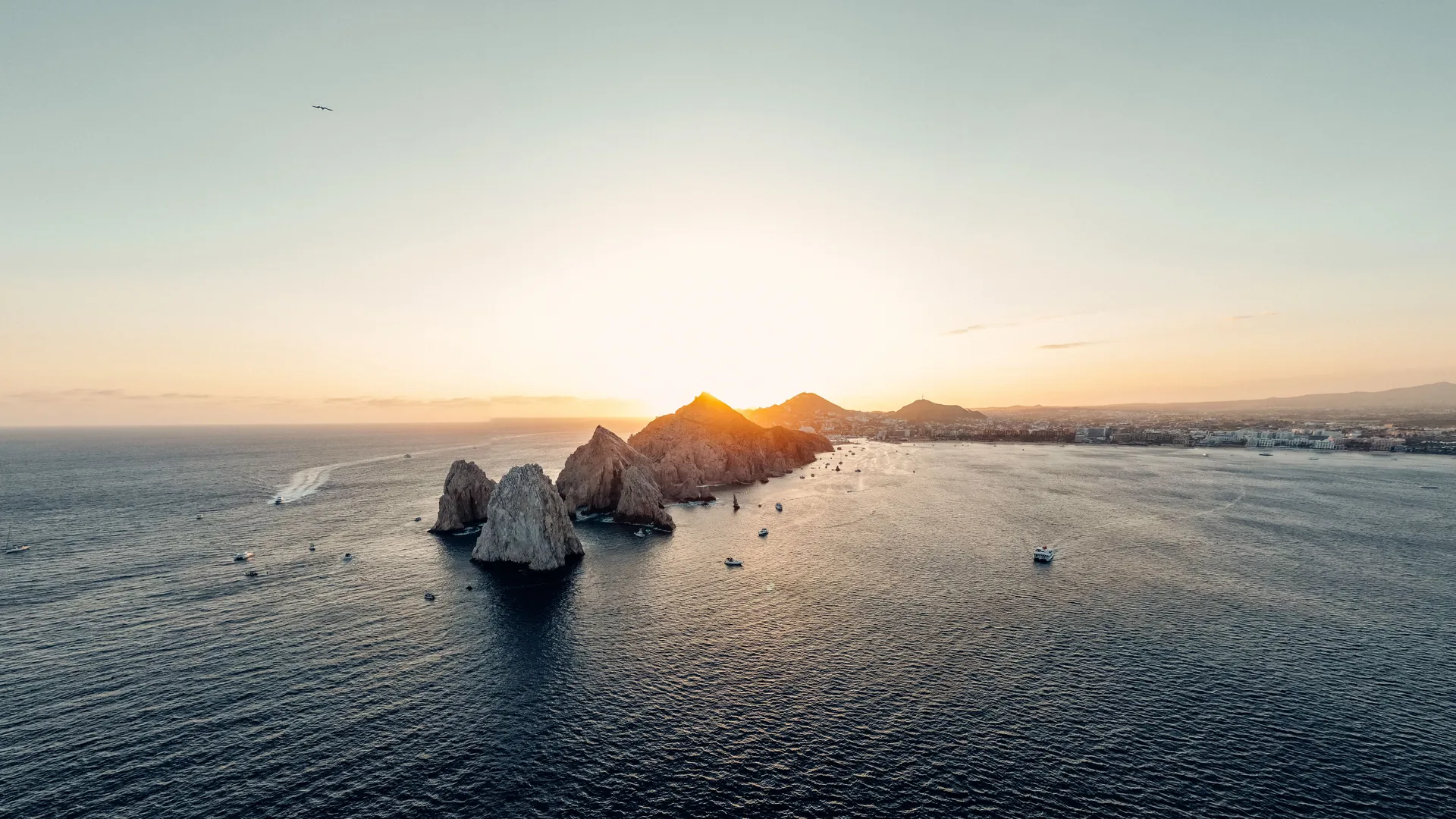
Photographs. Rocky coastline and bay on Mexico’s Pacific coast at sunset — Vladimir Miranda, Pexels Cropped and resized for the web; not otherwise altered. Neither the photographers nor the licensors endorse this article.
This article is general information, not legal, tax or travel-insurance advice. OTGG is an independent travel advisor; this article contains no affiliate links. Cruise line and supplier policies, rates, promotions, inclusions, accessibility procedures and deposit schedules change — verify all details with the operator or an accredited travel advisor before booking or payment.
Is Loreto, Cozumel or Ensenada on your itinerary?
Tell me your sailing. I will check the itinerary against the cruise line’s current record and what the Mexico duty looks like on your invoice.
Begin the Journey






















