Puerto Vallarta's advantage over Cabo is that you walk off the ship onto a dock, not into a tender queue. Its catch is the three miles between that dock and the city. Ships berth at the Puerto Mágico terminal, well north of the central Malecón — so the port that looks simplest on a map is the one most easily wrecked by trying to do too much of it.
The whole strategy is restraint: one geographic zone, one paid experience at most, a real meal, and a genuine return buffer. Do that and it is a lovely day. Chain Marina Vallarta, the Malecón, Zona Romántica, a beach and an inland attraction together and you will spend the day in taxis.
The three-mile problem, and your options
| Zone | What it is | How you reach it | Best use | The catch |
|---|---|---|---|---|
| Puerto Mágico terminal Where you dock | Shops, dining, the exit — docked, no tender | You are here | Orientation, and the El Salado boarding point is minutes away | Not downtown. Do not build the day without leaving it |
| Marina Vallarta Just north | Boardwalk, marina setting, restaurants, calmer pace | Walkable — 20–30 min, or a short taxi | The lowest-stress plan. One zone, no city crossing | The right call on a short call, or with mixed mobility |
| Malecón & El Centro ~3 miles south | The waterfront, public art, plazas, Zona Romántica | ~$16 taxi per car (~$5 pp) · ~10-peso Centro bus | The characterful choice — with a confirmed transfer | Not a walk. Budget the ride both ways |
| A beach, resort or estuary | A day pass, El Salado, a bay or food outing | Varies — confirm transport and return before paying | One paid experience, if timing allows | The add-on, never the third or fourth stop |
The terminal is not downtown, and this is the one fact to internalise. Marina Vallarta is a 20–30 minute walk. The Malecón is about three miles south — a taxi or bus, not a walk. Everything else in this guide follows from deciding, before you leave the port zone, which single zone you are committing to and how you are getting back.
Getting around, and the fare conversation
Puerto Vallarta taxis have no meters and no posted tariff. That makes "confirm the fare before boarding" not a platitude but the actual transaction — and it is where visitors most often overpay.
- Taxi to the Malecón / El Centro: roughly $16 per car, or about $5 per person. Agree it, and agree per car or per person, before you get in.
- Bus: the local bus marked “Centro” on Boulevard Francisco Medina Ascencio outside the terminal runs to the Malecón for around 10 pesos. Cheapest by far, for the confident traveler.
- Rideshare: exists, but pickup near the port boundary can be restricted or unclear. Do not assume a car can collect you at the ship.
- Marina Vallarta: just walk it — 20 to 30 minutes depending on where you start.
The value-minded baseline: walk Marina Vallarta or bus/taxi to one downtown zone, eat well, and pay for one activity only if timing and transport genuinely make it work. No independent plan guarantees savings once you count the return risk — so compare the whole cost, including the value of a protected return on a ship excursion.
The best-value stop most cruisers miss
El Salado is a protected urban mangrove estuary, and its boarding point is minutes from the terminal — Door 4 on Boulevard Francisco Medina Ascencio, opposite the Naval Hospital. Biologist-guided boat tours run about a kilometer through three species of mangrove and abundant birdlife, for roughly 300 pesos. For a cruise passenger it is close, cheap and genuinely different from a beach.
The catch is the calendar. Tours run Tuesday to Saturday only, in fixed departure slots (9am, 11am, 1pm and 3pm Tuesday to Friday; 9am, 11am and 1pm on Saturdays), and are closed Sunday and Monday — with advance reservation required and a daily visitor cap. If your ship calls on a Sunday or Monday, El Salado is simply not on the menu, and no amount of showing up early changes that. Check the day of the week before you plan around it. This is the same class of trap as a park that shuts at 4pm: the thing is excellent and it is not always open.
The eight-hour clock
| Window | Phase | What you are doing | The thing people get wrong |
|---|---|---|---|
| 0–1 hr | Disembark and orient | ID, phone, water, sun protection, booking details. Confirm the return point before leaving the port zone | The terminal is not downtown. Know how you are getting back before you go |
| 1–3 hrs | One zone | Marina Vallarta on foot, or a confirmed transfer to the Malecón | Do not chain Marina + Malecón + Zona Romántica + a beach. That is a transport stress test |
| 3–4 hrs | A real meal, seated | Shade, water, a chair, a restroom. Not an afterthought in the heat | With children or older relatives, this hour is the plan, not a pause in it |
| 4–6 hrs | One confirmed activity | A beach or resort day pass, El Salado, or a guided outing — one, not several | El Salado is closed Sun & Mon and needs a reservation. Check the day first |
| 6–7 hrs | Start back | Confirm vehicle, pickup point, fare and port entrance before setting off | Leave earlier than feels necessary — traffic on the return is the risk |
| 7–8 hrs | Ship buffer | Traffic, queues, port screening, the terminal walk. Aim to be aboard early | Your personal all-aboard should be earlier than the ship’s |
Confirm the return point before you leave the port zone, and set your own all-aboard target earlier than the ship's. At a docked port three miles from the action, the day is not undone by the walk to the gangway — it is undone by traffic on the ride back.
Is Puerto Vallarta safe?
Puerto Vallarta is in Jalisco, which the US State Department rates Level 3, “Reconsider Travel” — but the advisory explicitly states there are no restrictions on travel to Puerto Vallarta itself, along with Riviera Nayarit, the Guadalajara metropolitan area, Chapala and Ajijic.
That is a materially better picture than Mazatlán, which is a Level 4 state with only a narrow carve-out for its tourist zones. If you are doing both on the same Riviera itinerary, that contrast is worth carrying.
But the carve-out is not permanent, automatic, or a guarantee — and there is a
recent illustration of exactly that. On 22 February 2026, after a
Mexican military operation killed the Jalisco New Generation Cartel leader known as
“El Mencho”, retaliatory violence spread across more than a dozen states. The US
Embassy issued a shelter-in-place advisory covering Jalisco, Puerto Vallarta
included. The airport suspended operations, airlines canceled flights, and
all taxi and rideshare service in Puerto Vallarta was suspended. Conditions
stabilized within about two days and the standing carve-out is back in force.
Confirm the current advisory before you sail. This designation has shifted
at very short notice in the recent past, and a cruise-day plan built on “no
restrictions” should be re-checked rather than assumed.
None of that argues against going. It argues for checking the advisory close to your sail date rather than at booking — use reputable transport, agree fares in advance, keep valuables discreet, and follow your ship's guidance on the day.
Accessibility
The docked format helps — no tender — and the terminal is more manageable than much of the city. Marina Vallarta is the more predictable choice because it avoids crossing several neighborhoods and their varied sidewalks, curbs, slopes and cobbles.
For anything beyond it, confirm in writing before you pay: a ramp or lift-equipped vehicle; interior space and secure storage for a wheelchair or scooter; whether you must transfer out of the device; walking and standing requirements; restroom access; the surfaces at any beach, boat, boardwalk or dock; shade and seating; the exact meeting and return points; and what happens if the ship's berth or disembarkation time changes. “Wheelchair accessible” on its own is not something you can plan a day around. Our accessibility requests and deadlines guide has the questions to put to the line before you sail.
Shaping the day around who you are with
- Solo: Marina Vallarta for a low-complexity day, or one confirmed group excursion with a clear meeting point. Avoid combining independent transport, a boat departure and a distant attraction unless every connection is locked.
- Couples: the Malecón with one good meal, or a confirmed resort day pass, gives variety without a race. Prefer quiet? Marina Vallarta.
- Multigenerational groups: shade, restrooms, seating, meal timing and vehicle comfort first. Keep the group in one zone, and consider a private or ship-sponsored transfer when several ages and mobility levels are in play.
- Access needs: written confirmation 48 hours out, reconfirmed — vehicle, equipment, meeting point, surfaces, restrooms and return timing.
Where Puerto Vallarta disappoints
Plainly: if you want to walk off the ship into a downtown, this is the wrong port for that expectation — the terminal is outside the central core and traffic touches every transfer. A beach or resort day pass that looks effortless online can still involve steps, uneven surfaces, thin shade or a transfer vehicle that will not take your equipment. An estuary or bay outing can have boarding limits the booking page never mentions.
None of that makes it a bad port — it makes it one where a short call belongs to Marina Vallarta or a ship excursion, and the whole-city ambition belongs to a longer stay another time.
Before you go ashore
- Confirm the actual port-call and all-aboard times, and the berth when it is available.
- Pick one geographic zone. Marina Vallarta, or downtown — not both.
- If El Salado is the plan, check the day — Tuesday to Saturday only — and reserve ahead.
- Agree the taxi fare and whether it is per car or per person before boarding. No meters here.
- Get excursion or day-pass hours and cancellation terms in writing, and reconfirm 48 hours out.
- Ask accessibility questions with specific equipment and surface detail, not a yes/no.
- Confirm the return pickup point and port entrance before you leave the port zone.
- Keep a transport-and-ship buffer, and let the ship's instructions govern.
Common questions
Is Puerto Vallarta a tender port?
No. Ships dock at the Puerto Vallarta Maritime Terminal — the Puerto Mágico complex — so there is no tender to queue for, which already makes it an easier port than Cabo San Lucas on the same Mexican Riviera itinerary. Your exact berth, passenger route and exit gate can still vary by sailing, so follow the cruise line’s onboard instructions and do not build the day around a specific gate number until it is confirmed for your ship.
Can I walk from the ship to the Malecón?
Not practically. The terminal sits about three miles north of the central Malecón, and while that is technically walkable three miles on foot is an hour or more along city streets in the heat — not a stroll, and not how you want to spend two hours of a port day. Marina Vallarta, just north of the terminal, is the genuinely walkable option at 20 to 30 minutes depending on where you start. For downtown, budget a taxi or the bus both ways rather than assuming your legs will do it.
How much is a taxi from the cruise terminal to downtown?
Roughly $16 per car, or about $5 per person, to the Malecón — but Puerto Vallarta taxis have no meters and no posted tariff, so that figure is a guide, not a guarantee. Agree the fare before you get in, and agree explicitly whether it is per car or per person, because the answer varies and it is the single most common way visitors overpay here. The cheapest option is the local bus marked "Centro" on Boulevard Francisco Medina Ascencio outside the terminal, at around 10 pesos.
Marina Vallarta or downtown — which should I choose?
Choose Marina Vallarta for the lower-stress day: it is walkable from the terminal, it has a pleasant boardwalk, marina views and plenty of restaurants, and it keeps you close to the ship. Choose the Malecón and El Centro if the waterfront sculpture, the plazas, Zona Romántica and the general city atmosphere matter more to you — and you are willing to commit to a confirmed transfer each way. The mistake is trying to do both properly in eight hours; pick one as your anchor.
What is the El Salado Estuary, and can I do it on a cruise day?
It is a protected urban mangrove estuary with biologist-guided boat tours, and its boarding point — Door 4 on Boulevard Francisco Medina Ascencio, opposite the Naval Hospital — is only minutes from the terminal, which makes it one of the best-value things to do here at around 300 pesos. The catch is scheduling: tours run Tuesday to Saturday only and are closed Sunday and Monday, in fixed slots — 9am, 11am, 1pm and 3pm Tuesday to Friday, and 9am, 11am and 1pm on Saturdays — with advance reservation required. If your ship calls on a Sunday or Monday, it is simply not available, so check the day of the week before you plan around it.
Is Puerto Vallarta safe? It is in Jalisco.
Jalisco is rated Level 3, "Reconsider Travel", by the US State Department — but the advisory explicitly states there are no restrictions on travel to Puerto Vallarta itself, along with Riviera Nayarit, the Guadalajara metro area, Chapala and Ajijic. That is a materially better picture than Mazatlán, which is a Level 4 state with only a narrow carve-out for the tourist zones. But the carve-out is not permanent or automatic: on 22 February 2026, after the killing of the Jalisco cartel leader known as "El Mencho", the US Embassy issued a shelter-in-place advisory covering Puerto Vallarta, the airport suspended operations and all taxi and rideshare service stopped. It stabilized within about two days and the carve-out is back in force — but check the current advisory close to your sail date rather than relying on this page.
How accessible is a Puerto Vallarta port day?
The docked format helps — no tender transfer — and the terminal is more manageable than parts of the city. Beyond it, Puerto Vallarta is not uniformly accessible: sidewalks, curbs, slopes, cobbles, beach entrances, restaurant layouts and vehicle transfers all vary. Marina Vallarta is the more predictable choice because it avoids crossing several neighborhoods. For anything else, confirm in writing: a ramp or lift-equipped vehicle, interior space and secure storage for the device, whether you must transfer out of it, restroom access, and the exact meeting and return points. "Wheelchair accessible" alone is not enough to plan on.
Should I book independently or take a ship excursion?
Independently for a Marina Vallarta day or a straightforward downtown outing — the distances are short and the coordination problem is small. Take the ship excursion when the plan involves a long transfer, a boat departure, unfamiliar transport, or a group with mixed ages and mobility levels, because what the premium buys is return protection: if a ship-sponsored tour runs late, the ship waits. On a self-arranged chain, it does not, and Puerto Vallarta’s traffic on the return is exactly where that risk lives.
What is the biggest mistake people make at this port?
Treating it like a walk-off-the-ship downtown port when it is not. The terminal is three miles from the central tourist core, every downtown plan involves a transfer both ways, and traffic can stretch that transfer unpredictably. People try to stack Marina Vallarta, the Malecón, Zona Romántica, a beach and an inland attraction into eight hours, spend most of the day in vehicles, and arrive back frazzled. One zone, one paid experience, a real meal and a genuine return buffer is the whole strategy — and it is a good day.
Seventh in our port-guide series, and it completes the Mexican Riviera trio. Cabo San Lucas is the tender port on the same run; Mazatlán is the Level 4 state where the corridor matters. See also Cozumel, San Juan, St. Thomas and Grand Turk.
Mexican Riviera itinerary, planned honestly?
Cabo, Mazatlán and Puerto Vallarta usually come as a set and need three different plans — one built around a tender, one advisory-aware, one about beating the three-mile gap. Send me your itinerary and I will tell you which calls deserve an excursion, which are a walk and a good hat, and where the timing genuinely gets tight.
Ask PaoloSources
- U.S. Department of State — Mexico travel advisory (Jalisco: Level 3, with the Puerto Vallarta carve-out)
- Visit Puerto Vallarta — how to get here
- Visit Puerto Vallarta — quick guide for cruise passengers
- Estero El Salado — tours, schedule and boarding point
- U.S. Embassy Mexico — security alert, shelter-in-place advisory (22 February 2026)
- Travel Market Report — U.S. Embassy issues shelter-in-place order for travelers in Puerto Vallarta (February 2026)
- TravelPulse — tourist operations return to normal in western Mexico following gang violence (February 2026)
- Cruise Hive — Puerto Vallarta cruise port (piers, getting around; general background)
- CruiseMapper — Puerto Vallarta port
Images
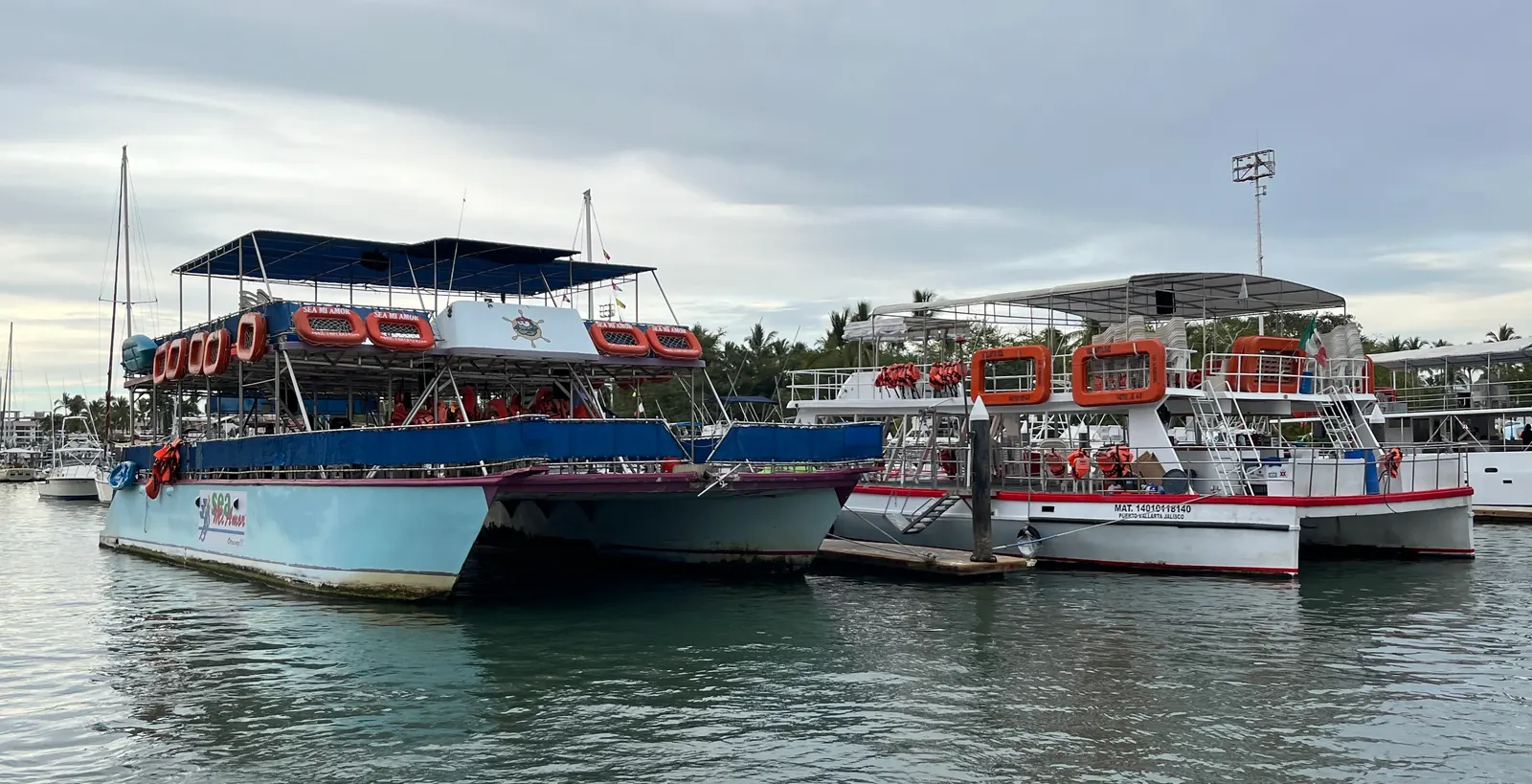
- Open-air tour boats moored at Puerto Vallarta — Another Believer, CC BY-SA 4.0, via Wikimedia Commons.
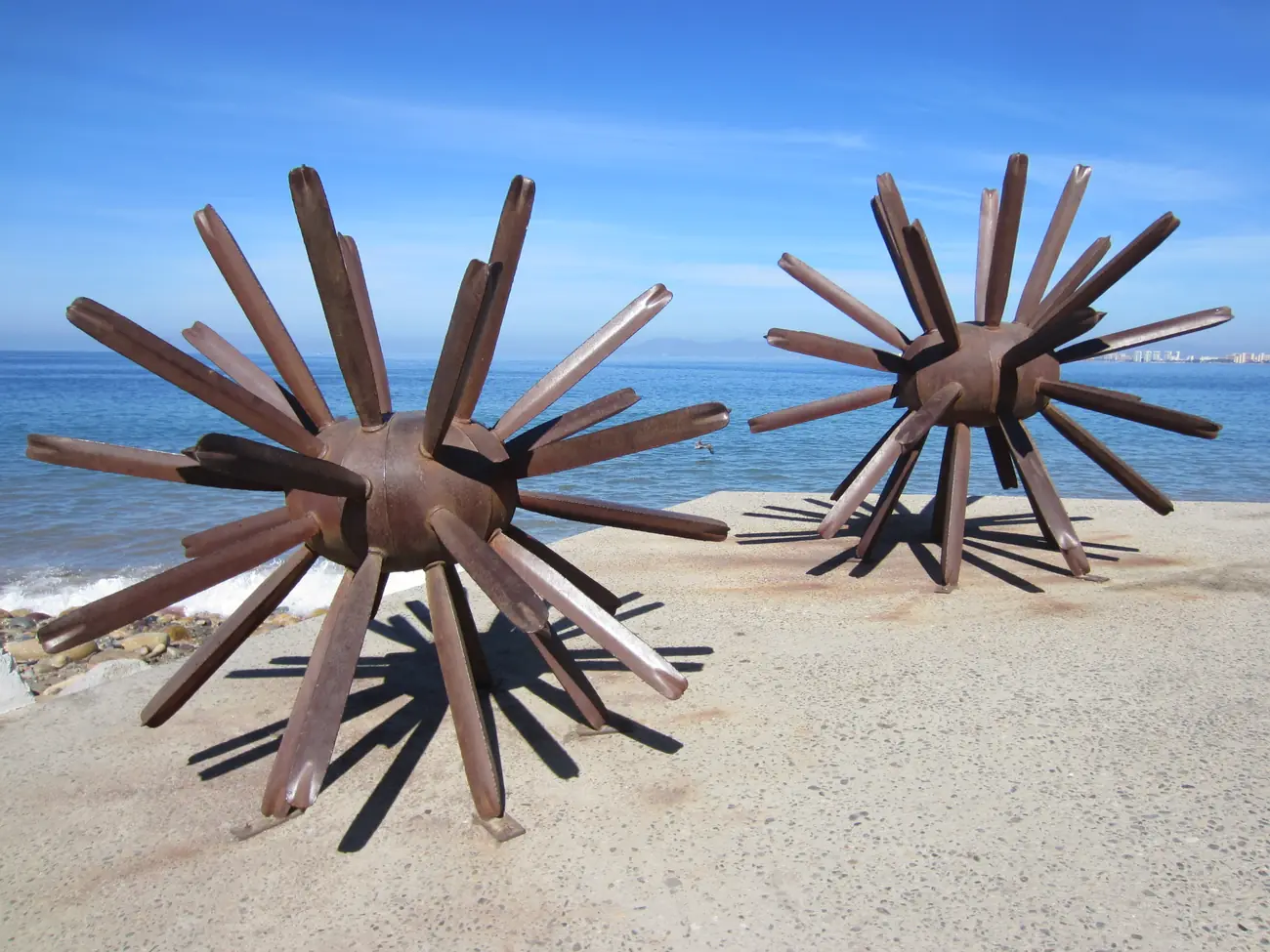
- “Erizados” sculptures on the Malecón — Another Believer, CC BY-SA 3.0, via Wikimedia Commons.
Change disclaimer. Checked August 29, 2026 against the US State Department Mexico travel advisory (Jalisco section), Visit Puerto Vallarta, Estero El Salado tour information and current port and transport guidance. Taxi fares are negotiated rather than posted, so the figures here are the going market rate, not a tariff, and peso equivalents move with the exchange rate. Berth assignments, shuttle and gate procedures, tour schedules, accessibility arrangements, traffic, security guidance and all-aboard times all change. This article is informational and is not a booking, a quote, a safety assurance, or a guarantee of availability or access. Where the State Department, the port, an operator or your cruise line differ from anything here, theirs governs.