Three things moved this autumn, and only one of them has a date attached. Royal Caribbean is rewriting its North America cancellation ladder on October 11, 2026, and the change removes the gentlest penalty band entirely. Carnival replaced its loyalty program on September 1. Norwegian's dining no-show fee, which gets written about as though it were new, has been in force since 2025.
Sources and facts checked: October 1, 2026 (America/New_York). Cancellation terms, loyalty rules and dining policies change. Nothing here is a substitute for written confirmation from the cruise line of the terms attached to your own reservation number.
The part with a deadline
From October 11, Royal Caribbean replaces its North America cancellation bands. The old length categories — 1–4 nights, 5–14 nights, 15 or more — become 1–4, 5–9, and 10 or more. And the 25% penalty tier disappears at every length that had one.
The effect is not a tidier table. It is that the first penalty you hit after your no-charge window closes is no longer 25%. It is 50%.
What the published schedule still says today
This is the ladder on Royal Caribbean's own cancellation FAQ as of October 1, 2026. Note the 25% band, which is the thing being removed.
| Cruise length | No charge | 25% band | 50% band | 75% band | No refund |
|---|---|---|---|---|---|
| 1–4 nights | No charge 75 days or more | — | 50% 74–61 days | 75% 60–31 days | 100% 30 days or fewer |
| 5–14 nights | No charge 90 days or more | 25% 89–75 days | 50% 74–61 days | 75% 60–31 days | 100% 30 days or fewer |
| 15+ nights | No charge 120 days or more | 25% 119–75 days | 50% 74–61 days | 75% 60–31 days | 100% 30 days or fewer |
What it becomes on October 11
| Cruise length | No charge | First penalty | Then | No refund |
|---|---|---|---|---|
| 1–4 nights unchanged | No charge 75 days or more | 50% 74–61 days | 75% 60–31 days | 100% 30 days or fewer |
| 5–9 nights new band | No charge 90 days or more | 50% 89–61 days | 75% 60–31 days | 100% 30 days or fewer |
| 10+ nights new band | No charge 120 days or more | 50% 119–61 days | 75% 60–31 days | 100% 30 days or fewer |
Royal Caribbean's own public FAQ has not caught up yet. As of October 1, 2026 it still publishes the old ladder, 25% band included, for standard bookings. The only place the new structure appears on Royal's site is the carve-out described below. If you go looking for the October 11 table on the cruise line's website today, you will not find it — that is a lag in their publishing, not a sign the change was withdrawn.
The carve-out that is already live
One group of sailings moved early and is already governed by the new structure: reservations made on or after September 29, 2026 for Alaska, Hawaii, Transpacific, Panama Canal or Pacific Coastal sailings departing on or after April 11, 2028.
That list matters because it is longer than most coverage says. Hawaii and Panama Canal are in it. If you are booking either and assume the old 25% band still protects you, you are already wrong.
What a seven-night cancellation actually costs
Take a $4,000 booking on a seven-night sailing and imagine canceling 80 days before you sail — a month or so after final payment, which is exactly when real life tends to intervene.
- Under the published schedule today: 80 days sits in the 89–75 day band. The penalty is 25% — about $1,000.
- Under the October 11 structure: the 25% band no longer exists. 80 days sits inside the 89–61 day band. The penalty is 50% — about $2,000.
Same cruise, same cancellation date, twice the cost. That is the whole story of this change, and it is why the date is worth knowing even though the table is dull.

The question nobody has answered clearly
Does the October 11 structure reach a booking you already hold?
The honest answer is that the available sources disagree, and you should not assume either way.
- Royal Caribbean's trade email, as quoted by PAX, says: "Beginning October 11, 2026, these updates will apply to all new and existing sailings, for both individual and group bookings."
- Travel Market Report reports the change as applying to "all new bookings starting Oct. 11, 2026", with the September 29 Pacific sailings as the exception.
- Cruise Mummy reports that "existing bookings made prior to these dates will typically remain under the cancellation policy in effect at the time of booking."
Those are not the same claim. The wording in Royal Caribbean's own email is the root of it: it says new and existing sailings, not new and existing bookings. A sailing being covered by the new structure is not the same as an existing reservation's terms being rewritten — but the sentence does not rule that out either.
So do not book early to beat the deadline. You will see this advice elsewhere: reserve before October 11 to lock in the 25% band. It rests on exactly the point that is unresolved. If the new structure does reach existing bookings, a rushed reservation buys you nothing and commits a deposit you may not get back. Book because the cruise and the price are right. Then ask Royal Caribbean, in writing, which cancellation schedule is attached to your reservation number — and keep the reply.
Two smaller changes in the same announcement
- Ten-to-fourteen-night cruises get a longer no-charge window. They sit in the old 5–14 band, where the penalty-free period ended at 90 days. In the new 10+ band it ends at 120 days. Sailings of 15 nights or more were already at 120 days, so nothing moves for them on that axis. This is the one part of the change that is not simply worse for the guest.
- Third and fourth guest penalties will no longer be waived. The policy itself is not changing; the enforcement is. Royal Caribbean's reservation system will calculate and apply the penalty automatically, removing the discretion that previously let these be written off case by case. If you routinely book four to a cabin and drop to two, this will now cost you something.
Both apply to North America. Terms for European and other sailings can differ.
Carnival: status is now a spending number
Carnival Rewards replaced VIFP on September 1, 2026. The important structural change is that status is no longer a function of how many times you have sailed. It is a function of what you spend.
The program runs two separate balances, and conflating them is the easiest mistake to make. Rewards Points are what you redeem. Status Qualifying Stars are what determine your tier. You earn 3 Stars for every $1 of eligible Carnival spending, gratuities included, and 1 Star for every Casino Point earned.
| Tier | Status Qualifying Stars | What that means in spending |
|---|---|---|
| Red | On enrollment | The entry tier. You are in the program, not yet earning status benefits. |
| Gold | 10,000 Stars | Roughly $3,334 of eligible spending at 3 Stars per $1, before any casino earning. |
| Platinum | 50,000 Stars | Roughly $16,667 of eligible spending at the same rate. |
| Diamond | 100,000 Stars | Roughly $33,334 of eligible spending at the same rate. |
The first Status Qualifying Window runs from September 1, 2026 to December 31, 2028 — a 28-month stretch rather than the usual two years, which gives everyone a longer first run at it.
If you held VIFP status
These transition protections are widely and consistently reported, but they do not appear in Carnival's own launch release, so treat them as reported rather than official and confirm yours in your account:
- Diamond reached by August 31, 2026 is lifetime. No requalifying.
- Legacy Platinum is protected through December 31, 2028, with a 10,000-Star boost at the start of each Status Earning Window to help requalification.
- Lifetime Platinum, as a concept, is gone. Diamond keeps its permanence; Platinum now has an expiry date attached to it.
There is no conflict between the August 31 and September 1 dates, despite how some coverage reads: August 31 is the cutoff for qualifying under the old program, and September 1 is when the new one starts earning. They are consecutive, not contradictory.
When a perk is not an entitlement
Days after the Rewards launch, Carnival suspended several Platinum priority benefits — priority embarkation and debarkation, early stateroom access, priority luggage delivery — on the September 5, 2026 sailings of Carnival Sunshine and Carnival Vista. The reason was simply that too many Platinum members were onboard for the benefit to function.
Royal Caribbean does a version of the same thing. On some Oasis and Icon class sailings, Crown Lounge access during the 5 to 8 p.m. window is restricted to Diamond Plus and Pinnacle Club, with Diamond members retaining access at other times. This is not a change to Crown & Anchor and it is not specific to one ship — it is recurring, sailing-by-sailing demand management that varies week to week.
The practical tip: check your own sailing in the Royal Caribbean app, where the welcome-aboard banner carries the lounge arrangements for that voyage. Do not plan an evening around a lounge you have not confirmed is open to your tier that week.
Why the two behave differently
A loyalty benefit is conditional by design. It can depend on available space, how many elite guests are aboard, the ship's operating plan, terminal procedures, and whether the benefit is described as priority, preferred or guaranteed — three words that mean three different things.
A cancellation penalty is a financial term attached to your booking record. It should be traceable to your invoice and fare conditions, and it should not move without notice. That is precisely why the unresolved question above matters so much: it asks whether a financial term can be changed after the fact, which is a different kind of question from whether a lounge is busy.
Keep the two in separate mental columns. Mark every loyalty perk as capacity-sensitive unless the line confirms otherwise in writing. Treat every cancellation term as contractual and demand to see it.

The NCL dining clock, which is not new
This one appears in a lot of "what changed this autumn" coverage, including the first draft of this article. It did not change this autumn. It has been in Norwegian's published dining terms since 2025. It is here because it still costs people $10 they did not expect.
From NCL's own dining terms:
- A specialty restaurant holds your table for 15 minutes. After that the unclaimed reservation is canceled.
- A $10 per person fee applies if a reservation is not canceled or updated at least two hours before the scheduled time.
- NCL's own footnote on "updated" is the part people miss: it includes odd-numbered party sizes booking even-sized tables. A table for four held by three people is a reservation that needs updating, not just a rounding difference.
Manage it through the NCL app, by phone, at the onboard dining desk or through Guest Services — and do it the moment plans change, not when you are ashore with no signal.
One caveat worth having. Whether guests holding a dining package or sailing in a suite are exempt is reported inconsistently and is not addressed in NCL's published dining terms. If that describes you, ask NCL directly rather than relying on any article, including this one.
Devil's advocate: the lines have a case
Capacity controls are not inherently unreasonable. A priority queue stops being a priority queue when half the ship qualifies for it, and restricting a lounge for three hours may protect the experience for the tiers that were promised it while preserving access at every other hour.
A simpler cancellation ladder is genuinely easier to understand than overlapping bands, and the 10-to-14-night change gives those guests a longer penalty-free window than they had.
The objection is not simplification. It is the size of the jump — from 25% straight to 50% — and whether guests get enough notice to decide with it. The counterargument lands hardest when you booked specifically for a priority benefit, when you are traveling solo and absorb the whole penalty yourself rather than splitting it, when your group carries medical, caregiving or school-calendar uncertainty, or when you need an accessible cabin, transfer or excursion that is not confirmed yet.
What to do now, if you hold a booking
- Download your current invoice and fare conditions. Not a screenshot of an old promotion — the live document.
- Ask Royal Caribbean in writing which cancellation schedule is attached to your reservation number, and whether October 11 changes it. This is the single most valuable email you can send this week.
- Separate conditional perks from contractual terms in your own notes, and mark every loyalty benefit capacity-sensitive until confirmed.
- Record the specifics: ship, itinerary, market of residence, cabin category, number of nights. The band you fall into depends on them.
- Recalculate your exposure including non-refundable deposits, third- and fourth-guest charges, flights, hotels, excursions and insurance. The cruise fare is rarely the whole number.
- Set two alerts: one for final payment, one for the first day a penalty applies. Under the new structure the second one is worth a lot more than it used to be.
- Check your Carnival Rewards account for Stars, tier and legacy protection, and query anything that looks wrong now rather than in 2028.
- Save every revised confirmation. A new invoice quietly replaces the document you were relying on.
Verify before you pay
- Get the fare rules in writing from the cruise line, not from a summary.
- Confirm whether each loyalty perk is guaranteed, capacity-controlled or sailing-specific.
- Check every percentage, date and deadline against the operator's live terms before you act on it.
- Ask Carnival to confirm your Stars, tier and legacy protection.
- Ask Royal Caribbean which cancellation table applies to your reservation.
- Ask NCL about dining-package and suite treatment if either applies to you.
- Confirm the separate rules for airfare, hotels, excursions, spa bookings and insurance.
- Keep the invoice, the payment receipt and the written confirmation together.
Common questions
What will a 7-night Royal Caribbean cruise cost me to cancel at 80 days?
Under the schedule Royal Caribbean publishes today, 80 days out sits in the 89-to-75-day band and costs 25% of the total price. Under the structure taking effect October 11, the 25% band is gone and 80 days sits inside a 50% band. On a $4,000 booking that is the difference between roughly $1,000 and roughly $2,000.
Does the October 11 change apply to a booking I already made?
This is not settled, and you should not assume either answer. Royal Caribbean's own trade email says the updates will apply to all new and existing sailings from October 11, while two trade outlets report that existing bookings keep the terms in force when they were made. Those are different claims. Ask Royal Caribbean to confirm in writing which schedule is attached to your reservation number.
Should I book before October 11 to lock in the gentler terms?
Not on the strength of this change alone. Whether a pre-October-11 booking is protected is exactly the point that is unresolved, so booking early to secure the 25% band may buy you nothing. Book because the cruise and the price are right, not to beat a deadline whose effect on existing reservations nobody has confirmed.
Is the 1-to-4-night cancellation schedule changing?
No. Short cruises keep the same ladder: no charge at 75 days or more, 50% from 74 to 61 days, 75% from 60 to 31 days, and no refund inside 30 days. The restructuring affects cruises of five nights and longer.
Can Carnival remove a Platinum benefit permanently?
Nothing about the September 5, 2026 sailings suggests that. Carnival suspended several Platinum priority benefits on two specific sailings because of unusually high Platinum numbers onboard. That is a sailing-level operational decision, not a change to the tier.
Is NCL's $10 dining no-show fee new?
No. It has been in NCL's published dining terms since 2025. It is included here because it still catches people out, not because it changed this autumn.
Are Carnival Rewards Points and Status Qualifying Stars the same thing?
No. Points are what you redeem. Stars are what determine your tier. Keep the two balances separate when you are working out what your spending is actually buying you.
Sources
- Royal Caribbean — Booking, cancellation and refund policy (official FAQ)
- PAX — Royal Caribbean tightens cancellation rules starting Oct. 11 (quotes the trade email)
- Travel Market Report — Royal Caribbean makes canceling a cruise more expensive
- Cruise Mummy — Royal Caribbean simplifies cancellation policy with new penalty structure
- Carnival Cruise Line — Carnival Rewards launch release, September 1, 2026
- Seatrade Cruise News — Carnival Rewards launches with spending-based status
- Cruise Mummy — Carnival Rewards launches with major loyalty changes
- Norwegian Cruise Line — Dining terms and conditions (official)
- Cruise Industry News — NCL introduces no-show fee for specialty restaurants
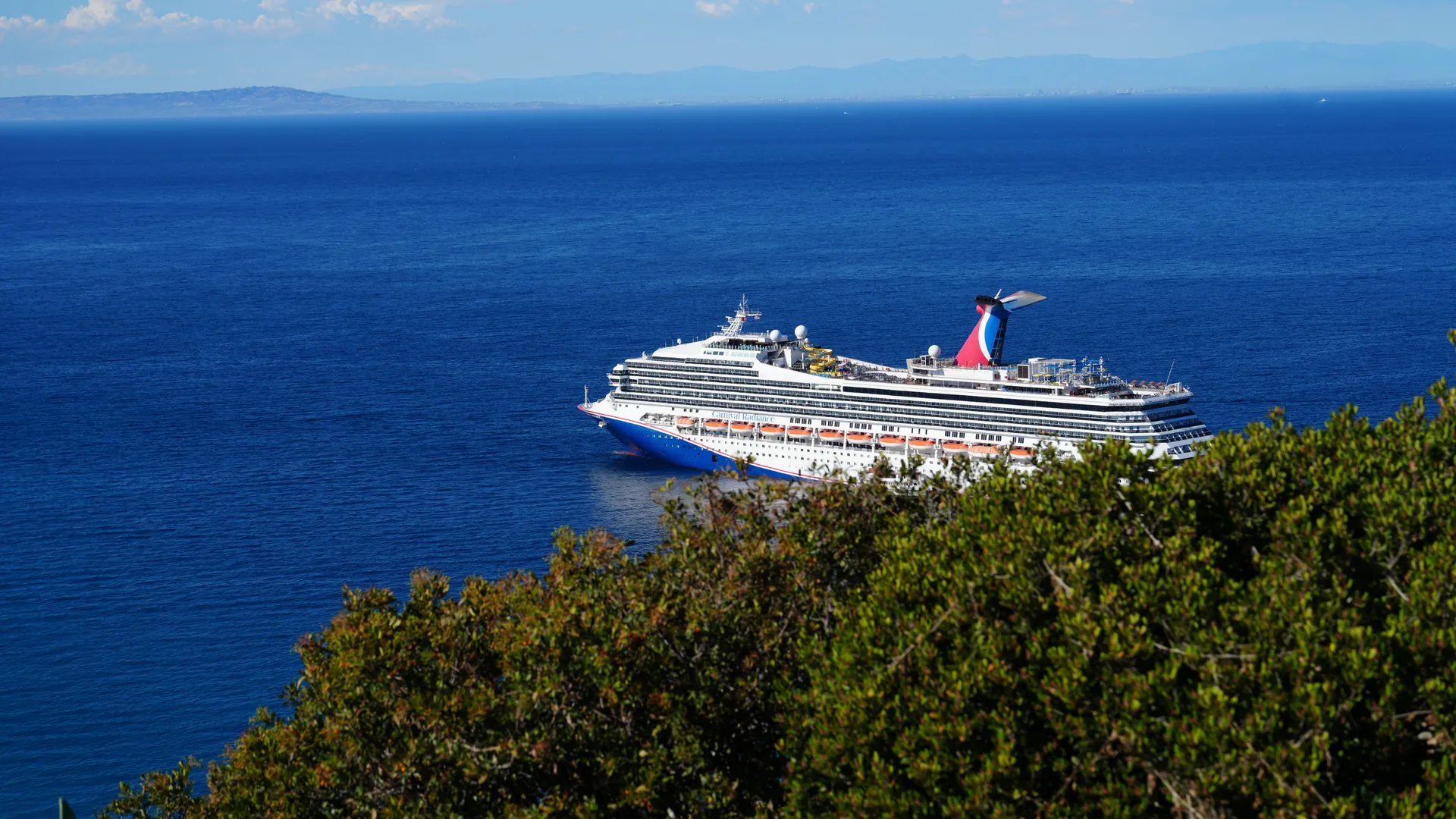
Photographs. A cruise ship under way in open water — Aleksandr Poklad, Pexels · Two ships alongside at a sunny port — Muhammed Gündüz, Pexels · A laid restaurant table — Alfie Binne, Pexels Cropped and resized for the web; not otherwise altered. Neither the photographers nor the licensors endorse this article, and the photographs are illustrative rather than depictions of any line named here.
This article is general information, not legal, financial or medical advice. OTGG is an independent travel advisor; this article contains no affiliate links. Cruise line policies, fares, loyalty benefits, deposit schedules and cancellation terms change without notice, and the terms attached to your own reservation govern. Verify every figure with the operator or an accredited travel advisor before booking, paying or canceling.























