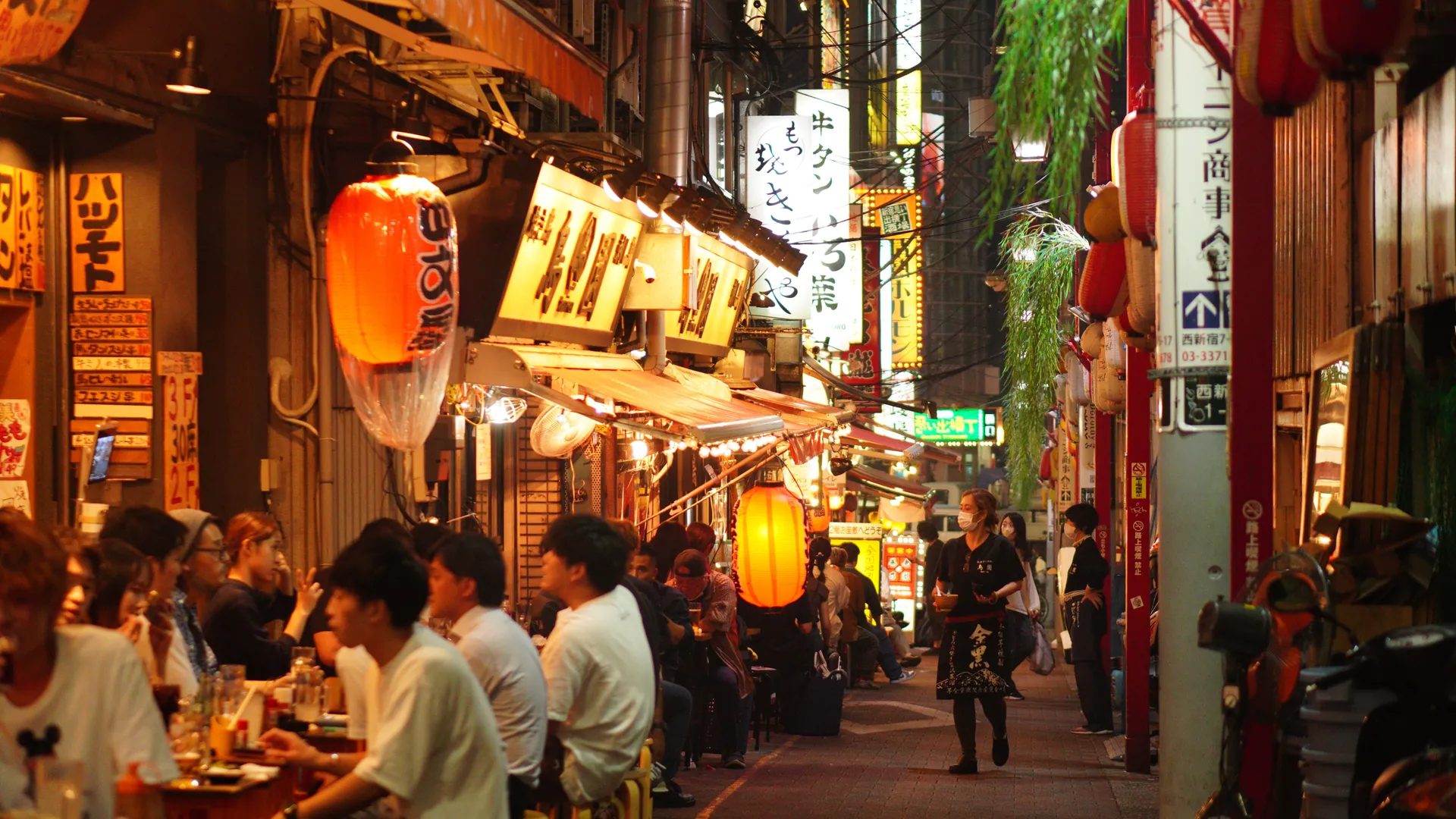
Tokyo is a strong choice for LGBTQ+ travelers who want nightlife, food, design, history, and a cruise connection in the same trip. The city’s best-known queer district is Shinjuku Ni-chōme, but treating it as a single bar strip misses the point.
Sources and facts checked: October 7, 2026 (America/New_York). Venue hours, event calendars, hotel policies, transit accessibility and cruise terminal arrangements change. Check and verify with the venue, operator or cruise line before you travel.
Ni-chōme is a compact neighborhood of small, highly individual venues. Many are upstairs, seat only a handful of guests, use Japanese as their first language, and protect customer privacy carefully. Plan with curiosity rather than expectations.
Why Tokyo belongs on your Japan itinerary
The International LGBTQ+ Travel Association describes Japan as a generally safe destination for LGBTQ+ travelers while also noting conservative social norms.
State the legal position precisely, because it is the thing visitors most often get wrong: same-sex marriage is not recognized nationwide in Japan. Some municipalities and prefectures issue partnership certificates, which carry limited legal effect and do not provide the same rights as marriage. Legal recognition and day-to-day social practice should not be treated as interchangeable, and a welcoming nightlife district does not answer every legal or social question.
Japan National Tourism Organization takes a similarly practical approach. Its LGBTQ+ guide highlights Tokyo, Shinjuku Ni-chōme, Tokyo Pride — still widely known as Tokyo Rainbow Pride — and LGBTQ+ communities in cities including Osaka, Kyoto, Fukuoka, and Sapporo.
For travelers, the takeaway is simple:
- Expect courtesy, but do not assume universal familiarity.
- Keep public affection understated, as you would in many parts of Japan.
- Protect other people’s privacy.
- Check current entry, identification, and local policy information before departure.
- Ask specific questions when booking hotels, tours, venues, and cruise transfers.
Tokyo can feel easy to navigate. It is still a large city with different rules in different settings.
Understanding Shinjuku Ni-chōme
It is a neighborhood, not one nightlife venue
Ni-chōme is widely described by IGLTA and JNTO as the center of Tokyo’s LGBTQ+ nightlife. Published estimates vary from hundreds of bars and clubs to more than 300 venues, so treat the scale as an approximate description rather than a precise count.
The district’s character comes from its building-by-building layout. A single multi-tenant building may contain several tiny bars, each with a different clientele, tone, and entry system. Some venues are obvious from the street. Others sit behind an unmarked door on an upper floor.
Venue names and operating models change. JNTO has previously identified venues including Aiiro Café Bar, Arty Farty, Campy! Bar, Goldfinger, Dorabune, Adezakura, and FTM Bois Bar, but do not treat any listing as current without checking the venue directly.
Small does not mean unfriendly
Some bars are designed around regular customers and Japanese-language conversation. Others are more accustomed to international visitors. A small room can become uncomfortable if a group arrives loudly, blocks the entrance, or treats the space like a sightseeing exhibit.
Use a quiet approach:
- Greet the staff.
- Check whether visitors who do not speak Japanese are welcome.
- Ask about the pricing system before ordering.
- Follow any photography restrictions.
- Leave politely if the venue is not a fit.
Useful phrases include:
- こんばんは こんばんは, Konbanwa: Good evening.
- はじめてです はじめてです, Hajimete desu: It is my first time.
- 入ってもいいですか? 入ってもいいですか? Haitte mo ii desu ka?: May I come in?
- システムは? システムは? Shisutemu wa?: How does the pricing system work?
- ありがとうございます ありがとうございます, Arigatō gozaimasu: Thank you.
Do not assume that every venue accepts credit cards, speaks English, or welcomes walk-ins. Confirm directly.
Where to stay in Tokyo
Stay in Shinjuku for nightlife
Shinjuku is the most practical base if Ni-chōme is the main purpose of your visit. You can return to your hotel without building the evening around a long cross-city journey.
Choose a hotel with:
- A clearly published LGBTQ+ non-discrimination policy.
- A staffed front desk or reliable late-arrival process.
- Step-free access where required.
- A location that is easy to identify in Japanese for taxi or transfer use.
- A confirmed policy for luggage storage before check-in or after check-out.
Do not assume that a hotel’s location near Ni-chōme means the surrounding route is step-free or quiet at night. Ask for written confirmation of the exact room, entrance, elevator, and bathroom features you need.
Choose Shibuya or Harajuku for Pride and daytime Tokyo
Shibuya and Harajuku work well if your priority is Tokyo Pride — the event still commonly called Tokyo Rainbow Pride — plus Yoyogi Park, shopping, museums, and daytime sightseeing. They are also useful for travelers who want a wider cultural itinerary rather than a nightlife-first stay.
Tokyo Pride 2026 took place on June 6–7, 2026 at Yoyogi Park, with the parade on June 7, stepping off at noon and covering roughly 3 km through Shibuya and Harajuku. Those dates have passed; use them as a reference point for scale and timing rather than as a current calendar.
One naming note worth knowing before you search for it. The organizing NPO rebranded the event from Tokyo Rainbow Pride to Tokyo Pride for 2026, aligning it with global Pride Month. The event had historically been held in April and moved to June as part of that change. Many secondary sources, and plenty of people, still call it Tokyo Rainbow Pride — and the organizing body remains NPO Tokyo Rainbow Pride — so both names will find it. The current official public-facing name is Tokyo Pride.
The official event site should be your source for the next edition’s parade, festival, registration, accessibility, and venue information. The schedule, route and format change by year.
Consider Yokohama for a cruise departure
If your cruise documents show Yokohama, staying in Yokohama can reduce embarkation-day stress. Staying in central Tokyo gives you more nightlife and sightseeing options but adds a transfer between the city and port.
Yokohama has multiple cruise facilities, including Osanbashi Passenger Terminal, Daikoku Pier Cruise Terminal, and Shinko Pier Cruise Terminal. The City of Yokohama confirms that the terminals serve different ship sizes and operating needs. Your cruise line’s final documents, not a generic itinerary listing, must determine the terminal.
Tokyo’s cruise connection
The 2027 Japan cruise season makes Tokyo especially timely for travelers combining a land stay with a voyage. Princess has announced a major 2027 Japan program using the Tokyo region, with departures described as Tokyo or Yokohama depending on the ship and itinerary. Exact ship, date, itinerary, and terminal information remains subject to change. Check and verify with the venue or operator.
Other cruise lines are also deploying ships in Japan and the wider Asia-Pacific region, but schedules and homeports vary by line. Confirm the booked ship directly before arranging hotels, transfers, or post-cruise travel.
The key planning distinction is:
- Tokyo International Cruise Terminal: Located in the Aomi/Odaiba area of Tokyo.
- Yokohama terminals: Located separately from Tokyo and potentially several miles away by road or rail.
- “Tokyo/Yokohama” itinerary language: Often describes the Tokyo-region market rather than one universal terminal.
JNTO publishes access guidance for Osanbashi from Haneda, Narita, and Tokyo hotels. Transport fares, routes, and timetables can change, so recheck the current official guidance and your transfer provider before paying.
Beyond Ni-chōme
Tokyo is not only a nightlife destination.
Build in time for:
- Yoyogi Park and Harajuku, the Pride 2026 venue and its surrounding district.
- Shibuya’s queer-friendly cultural and nightlife spaces.
- Pride House Tokyo, subject to current opening arrangements. Check and verify with the venue or operator.
- LGBTQ+ film, arts, and community events listed by current organizers.
- A day trip or onward cruise stay in Osaka, where Doyama is a major LGBTQ+ nightlife area.
- Kyoto, Fukuoka, or Sapporo if your Japan itinerary extends beyond Tokyo.
For travelers who prefer not to center a trip on bars, Tokyo offers a better balance than the district’s reputation suggests. Use Ni-chōme as one part of the itinerary, not the entire itinerary.
Devil’s Advocate: should you base your trip around Ni-chōme?
Maybe not.
Ni-chōme is compact, atmospheric, and culturally important. It can also be difficult for first-time visitors who want large venues, predictable menus, extensive English service, or a broad open-air street scene.
The smallest bars may not suit:
- Large groups.
- Travelers who need step-free access.
- Guests uncomfortable with Japanese-first conversation.
- Visitors who want a clearly posted menu and fixed pricing.
- Anyone expecting every venue to welcome casual photography.
A better strategy is to choose a hotel in Shinjuku or Shibuya, begin with a venue or event that confirms its visitor policy, and keep the rest of the evening flexible.
Verify before you pay
Before booking, confirm in writing:
- Your cruise line, ship, sailing date, and exact terminal.
- Whether the hotel is in Tokyo or Yokohama and how luggage storage works.
- The hotel’s specific accessibility features, not just an “accessible” label.
- The transfer provider’s pickup point, vehicle type, luggage allowance, and cancellation terms.
- Current venue name, address, language support, entry policy, pricing system, and photography rules.
- Tokyo Pride’s current dates, registration rules, locations, route and accessibility arrangements. Search under both Tokyo Pride and Tokyo Rainbow Pride.
- Any current identification or entry requirements relevant to your circumstances.
- A backup plan if a venue is closed, full, members-only, or Japanese-language-first.
Get written confirmation from the cruise line, terminal, hotel, transfer provider, event organizer and venue before you pay.
Frequently asked
Is Tokyo LGBTQ-friendly?
Tokyo is generally regarded by IGLTA and Japanese tourism guidance as welcoming and safe for LGBTQ+ visitors. Social norms remain more reserved than in some Western nightlife destinations, and legal equality should not be assumed from tourism messaging alone.
Do I need Japanese to visit Ni-chōme?
No, but basic Japanese phrases help. Some venues are comfortable with international visitors, while others primarily serve Japanese-speaking regulars. Confirm before entering and do not force an interaction.
Should I stay in Tokyo or Yokohama before a cruise?
Stay in Shinjuku or Shibuya for the strongest land-based LGBTQ+ itinerary. Consider Yokohama if your cruise embarks there and you prefer a simpler departure morning. Confirm the terminal first.
Is Ni-chōme accessible?
Accessibility varies by building and venue. Many small bars occupy upper floors or compact spaces, and venue-level access information is not consistent. Ask the specific venue and hotel for written confirmation rather than relying on neighborhood labels.
Sources and facts checked: October 7, 2026 (America/New_York). Official tourism, transit and event-organizer information were reviewed on the date shown.
Sources
- iglta.org — IGLTA: Japan LGBTQ+ Travel Guide ↗
- japan.travel — Japan National Tourism Organization: LGBT Friendly Japan ↗
- japan.travel — JNTO: Yokohama Cruise Port Access ↗
- city.yokohama.lg.jp — City of Yokohama: Cruise Terminal Information ↗
- pride.tokyo — Tokyo Pride ↗
- pridehouse.jp — Pride House Tokyo ↗
- nijiirodiversity.jp — Nijiiro Diversity: English Information ↗
- princess.com — Princess Cruises: 2027 Japan At a Glance ↗
- offthegridgetaways.com — OTGG: San Juan LGBTQ+ Guide ↗
- offthegridgetaways.com — OTGG: Amsterdam LGBTQ+ Guide ↗
- offthegridgetaways.com — OTGG: Palm Springs LGBTQ+ Guide ↗
Photographs. A lively dining alley in Shinjuku at night — Maheshwaran Shanmugam, Pexels Cropped and resized for the web; not otherwise altered. Neither the photographers nor the licensors endorse this article.
This article is general information, not medical, legal, financial or safety advice. OTGG is an independent travel advisor; this article contains no affiliate links. Cruise line and supplier policies, rates, promotions, inclusions, accessibility procedures and deposit schedules change — verify all details with the operator or an accredited travel advisor before booking or payment.
Adding Tokyo to a Japan cruise?
Tell me your dates and embarkation port. I will suggest the base, the transfer to the terminal and the nights that make Ni-chōme easy rather than rushed.
Begin the Journey






















