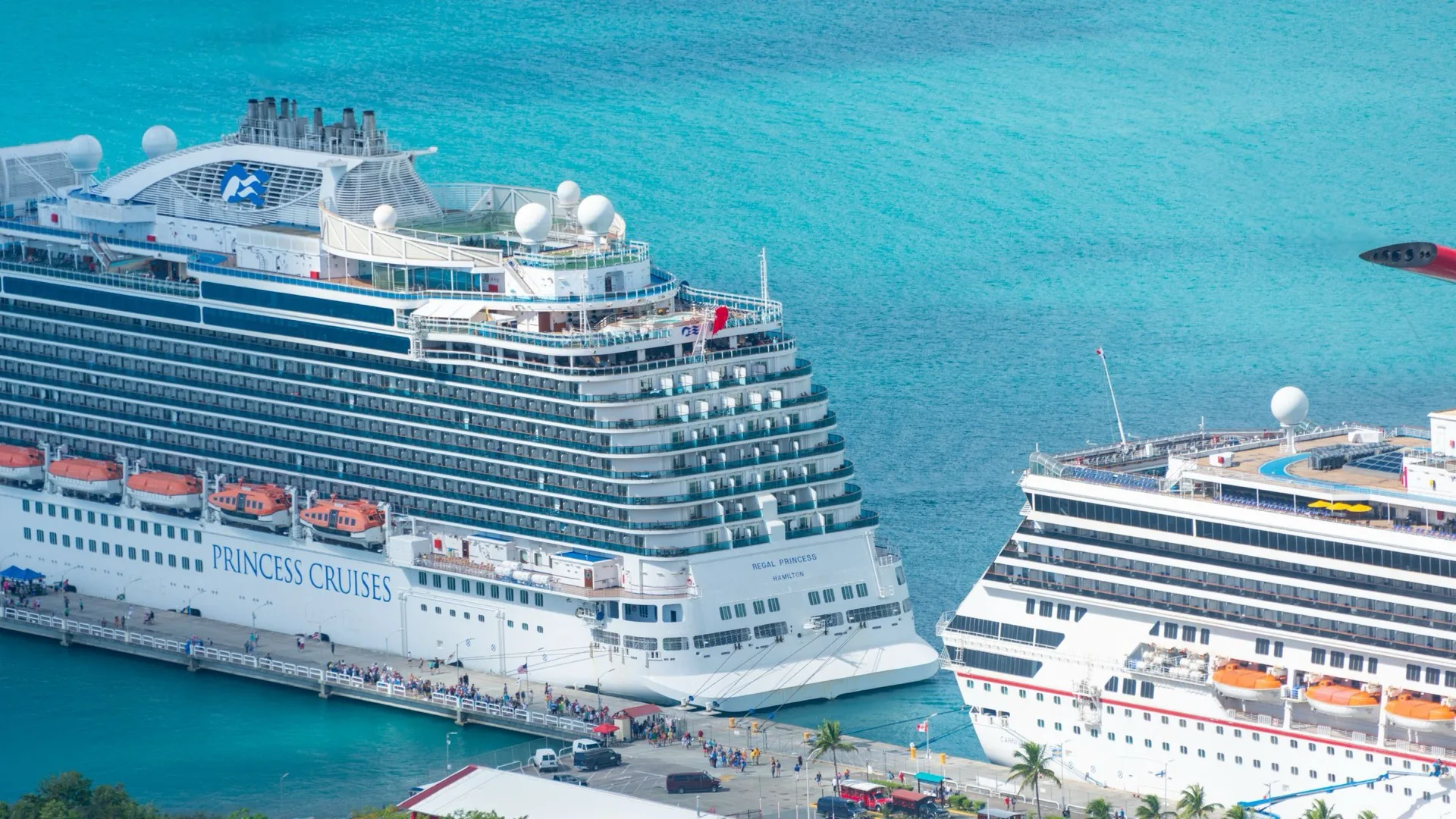
The month you book and the month you sail are different levers. Only one of them is mostly about price.
The booking window
| Window | Suits | What it gets you |
|---|---|---|
| 9 to 18 months out | Most travellers | Best cabin choice, dining times, accessible cabins and group space. Overlaps Wave Season. |
| 18 months or more | Peak and constrained sailings | Holidays, school breaks, Alaska summer, high-demand Mediterranean, and newly released deployments. |
| 60 to 90 days out | Genuinely flexible travellers only | Capacity-controlled discounting. You accept whatever ship, port and cabin remain. |
This is the whole article in one idea. Booking early buys choice; sailing off-peak buys price. They are not the same decision and they do not trade against each other. The cheapest time to book is rarely the same as the best time to secure the cabin you actually want — and on a constrained season like Alaska, waiting does not get you a discount, it gets you whatever is left.
What Wave Season is genuinely for
Wave Season runs January through March. Lines push future sailings with fare reductions, onboard credit, beverage or Wi-Fi packages, reduced deposits, cabin upgrades and second-guest offers. It is a real thing and it is worth using.
It is best understood as the season for choice and inclusions, not for the lowest possible number. Compare the final fare after taxes, port fees and gratuities, plus the actual value of any package to you specifically — not the discount percentage. A 30% reduction on a fare you would not otherwise pay is not a saving.
Cabin inventory disappears faster than the headline fare does. This is the part groups and multi-generational parties get wrong. Connecting cabins, accessible cabins and blocks of rooms near one another go long before the promotion ends. By the time the fare looks its best, the rooms that make the trip work may already be gone.

When to sail, region by region
Sailing month usually moves the number more than booking month does. These are demand patterns and trade-offs rather than price promises.
| Region | Softer demand | The trade-off | Check first |
|---|---|---|---|
| Caribbean | September, and to a lesser degree October | September carries the highest hurricane-season risk of the year. October is the more balanced trade. | Buy insurance that covers the specific risk, and read the exclusions before paying. |
| Alaska | Late May and mid-September | Cooler, shorter days and different wildlife conditions. The season is short, so inventory is genuinely finite. | If you need a balcony, an accessible cabin or a particular excursion, book early instead. |
| Mediterranean | Late October | Fewer ships remain in the region and some seasonal excursions run reduced schedules or stop. | Check that the things you are going for are still operating on your dates. |
A lower fare is not a better trip if the itinerary removes the reason you were going. Late October in the Mediterranean is excellent value right up until the excursion you booked the cruise for has stopped running for the season.
The last-minute trade, honestly
Last-minute generally means 60 to 90 days out, sometimes closer. These fares are capacity-controlled and unpredictable — they exist because a specific ship on a specific week has not filled, not because the line has decided to be generous.
They work if you can genuinely accept all of the following:
- Multiple departure ports, and the airfare to whichever one it turns out to be.
- Whichever ship and cabin category remains — often a guarantee cabin, location unknown.
- Limited dining times.
- Itinerary changes.
- Booking accessible equipment, transfers and excursions at short notice, if at all.
The fare is the part that goes down. Flights, hotels and excursions are the parts that go up as the date approaches, and they are frequently the larger number. Price the whole trip before congratulating yourself on the cabin.
Packages: before you sail, or once aboard?
Neither answer is always right, and the marketing on both sides is confident. Work out the per-day cost of any drinks, Wi-Fi, dining or spa package and compare it against what you would actually consume — including port days, when you are ashore and consuming nothing.
Pre-cruise pricing is usually discounted, which favours heavy users. Paying as you go usually favours light drinkers, short itineraries and port-heavy routes. Include gratuities and service charges on both sides of the comparison, because they are frequently applied to the package price too.
On repricing, and what can be verified
A common strategy is to book a refundable or adjustable fare early and monitor it until final payment. Whether that works depends entirely on your line and fare class, and the published terms are narrower than the folklore.
Virgin Voyages is the one line whose terms were read directly for this article. Its Best Price Guarantee has a 48-hour claim window from booking confirmation, an approved claim may be applied up to seven days before the voyage, and the match must be the same ship, sail date, stateroom category, fare class and guest count. If the booking is already fully paid, an approved difference comes back as Future Voyage Credit rather than cash. Widely repeated day-band rules beyond that could not be confirmed in Virgin's published terms, so they are not repeated here.
Get these in writing before you pay
- Is the deposit refundable, and by when?
- The final-payment date, and the date each cancellation band begins.
- The repricing policy for your exact fare class — and whether an adjustment comes back as fare reduction or future credit.
- Whether the promotion is new-bookings-only, which decides whether monitoring is even worth doing.
- Taxes, port fees, gratuities and service charges, as figures rather than "plus fees".
- The single-occupancy total as a number, if you travel alone.
- Accessible cabin dimensions, shower configuration and door clearance — confirmed, not assumed from a category name.
- For groups: cabin proximity, connecting configurations and dining arrangements.
Frequently asked
When is the best time to book a cruise?
For most travellers, 9 to 18 months before departure. That window gives you real choice of cabin, dining time, accessible accommodation and group space, and it overlaps Wave Season, when lines promote future sailings. Book earlier than that for holidays, Alaska summer and newly released deployments.
What is Wave Season and is it actually cheaper?
Wave Season runs January through March, when cruise lines promote future sailings with fare reductions, onboard credit, package inclusions, reduced deposits or cabin upgrades. It is reliably good for choice and perks. Whether it is cheapest depends on the total fare after taxes, fees and gratuities, not the headline percentage.
Are last-minute cruise deals actually cheaper?
Sometimes, and unreliably. Last-minute generally means 60 to 90 days out, it is capacity-controlled, and it works only if you can accept whichever ship, departure port and cabin category remain. Popular sailings rarely discount, and the airfare and hotel you now need may cost more than the fare you saved.
What is the cheapest time to sail the Caribbean?
September and October usually see the softest demand, after summer and before the winter holidays. September carries the highest hurricane-season risk of the year, so October is generally the more balanced trade between price and conditions. Neither is a guaranteed saving.
Should I buy drinks and Wi-Fi packages before sailing or onboard?
Work out the per-day cost either way and compare it with what you would actually consume. Pre-cruise pricing is often discounted, but a package only saves money if you use enough of it. Light drinkers and short itineraries frequently do better paying as they go.
Can I get a lower price after I have booked?
Sometimes, if your fare type permits repricing before final payment. Rules differ sharply by line and by fare class, and some adjustments arrive as future credit rather than money back. Get the policy in writing before you pay a deposit, and diarise your final-payment date.
What we verified, and what we would not. Virgin's Best Price Guarantee terms were read at source on 5 September 2026. No Wave Season percentage, no dollar figure and no claim that a given month is reliably cheapest appears anywhere above — those move by line, sailing and week, and a number here would be wrong within a fortnight. The regional guidance describes demand patterns and their trade-offs, not prices.
Sources
Off The Grid Getaways is an independent travel advisor affiliated with Nexion Travel Group. Fares, promotions, inventory, deposit schedules, final-payment dates and repricing rules are set by the cruise lines and change without notice. This article is general information, not a quote, and not financial or insurance advice. Photographs by Diego F. Parra and RDNE Stock project via Pexels, used under the Pexels licence and resized only.
Want the timing worked out for your sailing?
Tell me the region and roughly when, and I will tell you whether to book now for the cabin or wait for the week — and diarise your final-payment date so the decision is never made by a countdown timer.
Begin the Journey