An accessible shore day is not defined by a wheelchair symbol beside an excursion listing. It is defined by the entire chain working, from ship to pier to vehicle to restroom and back.
Sources and facts checked: September 22, 2026 (America/New_York). Excursion listings, vehicle availability, fort access and request deadlines change. Nothing here guarantees a tour, vehicle or site will work for a specific device — check and verify with the cruise line, operator or site in writing before you pay.
Start with the day you can actually enjoy
The chain looks like this:
- Ship to pier.
- Pier to vehicle.
- Vehicle boarding.
- Device storage or tie-down.
- Restroom access.
- Surface and slope.
- Heat and humidity.
- Return timing.
A tour can be described as “easy” and still involve a steep ramp, a transfer into a fixed seat, or a vehicle that cannot accommodate your device.
This guide focuses on three Caribbean calls where the right plan can make a meaningful difference: San Juan, St. Thomas and Cozumel.
Use the excursion labels as starting points, not guarantees. Confirm the details directly with the cruise line, port, taxi provider or excursion operator in writing.
San Juan: Keep the lower district simple
Old San Juan is close to several cruise piers, but “close” does not mean level. The historic district includes steep streets, uneven blue cobblestones, narrow sidewalks and wet surfaces that can become slippery.
The most practical accessible plan is usually:
- Leave the ship through the pier route confirmed for your sailing.
- Stay in the lower district near the piers and waterfront.
- Use a vehicle for the incline to Castillo San Cristóbal.
- Enter through the main entrance if the elevator and first-floor access are your priority.
The trolley question
Older San Juan guides frequently recommend the free city trolley for the hills. Current service has been intermittent, and you should not build the day around it without confirming that it is operating on your date and that the vehicle can accommodate your device.
If a free trolley is running, ask:
- Does it have a functioning lift or ramp?
- Can you remain in your wheelchair or scooter?
- Is there a combined passenger-and-device weight limit?
- Where does it stop near the fort?
- Is the return service reliable during your ship’s call?
Treat the trolley as a useful bonus, not your only transportation plan.
Castillo San Cristóbal: upper entrance versus practical entrance
The National Park Service confirms that Castillo San Cristóbal has accessible features, including an elevator from the main entrance area to the main plaza. It also states that the historic entrance is reached by a steep ramp and that upper levels use steep historic ramps. Some tunnels and narrow passages are not accessible. One notable quirk: the dungeon tunnel is described as accessible going in but not accessible coming back, because of the route's one-way configuration.
Read the NPS accessibility guidance before booking.
For NCL listing SJU_A2 or HAL listing 37741, ask the cruise line exactly where the accessible vehicle stops. If the listing references the upper or historic entrance, request written clarification about:
- The exact drop-off point.
- The slope from vehicle to entrance.
- Whether the vehicle can reach the entrance directly.
- Whether the guest remains in the mobility device.
- Which fort areas are included.
A taxi or accessible vehicle may be able to reduce the distance, but the upper entrance is not automatically the better option. If the elevator and main plaza matter most, ask to use the lower main entrance.
The NPS also notes that ride-hailing vehicles use designated drop-off points near Plaza Colón, followed by a walk to the fort entrance. Review the official directions and confirm the final route for your mobility needs.
Castillo San Felipe del Morro: a different accessibility profile
Many San Juan excursions bundle both forts, so do not assume El Morro's access mirrors San Cristóbal's. Per the NPS accessibility page:
- The sidewalk approaching the fort is level, with an accessible grade.
- Once inside, the main plaza (fifth level), bookstore, and theater are accessible.
- The sixth level requires steep ramps.
- Lower levels are not accessible at all.
- There is no parking directly at El Morro’s entrance — plan vehicle drop-off and pickup accordingly.
Read the NPS El Morro accessibility details and confirm which areas your excursion actually includes, since the accessible zones differ materially between the two forts.
Site-wide surface caution and advance contact
The NPS describes the surfaces throughout both forts as uneven and rugged, with ramps and staircases that are steep and sometimes narrow, and tunnels and narrow passages that may be dimly lit. Do not assume a wheelchair-accessible entrance guarantees smooth walking or rolling conditions inside.
The NPS directs visitors needing special accommodations to contact the Chief of Interpretation and Visitor Services at 787-729-6777 in advance of the visit. The phone number and accommodation procedures can change, so confirm them with the National Park Service. Add this call to your pre-trip checklist for any fort-based San Juan shore day.
St. Thomas: Choose the vehicle before the view
St. Thomas offers spectacular viewpoints, but the island’s hills and winding roads can turn a scenic outing into a transportation problem.
Carnival’s Easy St. Thomas Island Tour: Wheelchair Accessible is one of the clearer examples of an excursion designed around a lift-equipped vehicle. The official listing describes:
- A scenic island drive.
- Minimal walking.
- A lift or ramp.
- A step-free route.
- Capacity for up to two wheelchairs.
- A maximum combined guest-and-wheelchair weight of 400 pounds.
Review the official Carnival excursion listing.
The same listing states that guides cannot push wheelchairs. A companion may be necessary if you need physical assistance, and Carnival does not provide one-on-one personal care.
Do not book the standard “Easy St. Thomas” version and assume it is interchangeable with the wheelchair-accessible version. Carnival specifically separates the accessible tour from other easy tours.
Before paying, confirm:
- Your exact chair or scooter model.
- Device width, length, height and weight.
- Combined guest-and-device weight.
- Whether you remain seated in your device.
- Whether tie-downs are available.
- The number and length of photo stops.
- The amount of sun exposure.
- Whether the roads are likely to aggravate motion sensitivity.
Carnival’s general accessibility page explains that vehicles, ramps and lifts can vary by port and availability. The specific combined guest-and-device limits sit on the individual excursion listings rather than on that general page, and they differ from one excursion to the next — the Easy St. Thomas accessible tour states 400 pounds. Never carry a limit across from one excursion to another; read it off the listing you are actually booking.
Cozumel: Flat does not mean unlimited
Cozumel is often easier to navigate than hilly Caribbean ports, particularly around the main cruise areas. The challenge is not always the terrain. It is the limited supply of adapted vehicles.
NCL’s Accessible Mayan Experience, Tequila & Beach listings provide a useful example. The cruise line describes shorter distances, step-free routes, accessible restrooms and a vehicle with a ramp or lift where available. It also warns that accessible vehicles and spaces are extremely limited.
- CZM_A1 is intended for guests with limited mobility, cane or walker users, and companions.
- CZM_A2 is intended for guests fully dependent on a wheelchair or scooter.
Review the NCL CZM_A1 listing and the NCL CZM_A2 listing.
Book as early as practical. At reservation, provide the device’s:
- Width.
- Length.
- Height.
- Weight.
- Folding or dismantling details.
- Battery type, if powered.
Ask whether the specific vehicle assigned to your sailing can accommodate your device. “Ramp or lift where available” is not the same as a guaranteed lift-equipped vehicle.
Tulum is a different proposition
The standard NCL Tulum excursion involves a ferry, a motor coach, approximately one mile of walking and uneven rocky terrain at the ruins. The official listing warns that the ferry can be rough and that the site includes uneven limestone and loose stones.
Read the NCL Tulum description.
Tulum may be historically compelling, but it is not the sensible default for a guest who needs step-free routing, an adapted vehicle or reliable seating. Do not assume that a flat cruise pier makes a distant archaeological site accessible.
What to verify at each port
Ask for written confirmation from the relevant cruise line, port, transportation provider or excursion operator. Keep the response with your reservation documents.
San Juan
Verify:
- Whether the city trolley is operating.
- Whether it has a lift or ramp.
- Whether the vehicle can reach the requested fort entrance.
- Whether the historic upper entrance requires a steep ramp.
- Whether the lower entrance and elevator are available.
- How much uneven walking remains after vehicle drop-off.
- Which fort (San Cristóbal or El Morro) the excursion actually includes.
- For El Morro: where vehicle drop-off and pick-up occur, since there is no parking directly at the entrance, and how far you will travel along the level sidewalk approach.
- Whether you have contacted the NPS Chief of Interpretation and Visitor Services at 787-729-6777 for advance accommodation requests.
- Whether surface conditions (rough, uneven, narrow steep stairs) are workable for your device and energy plan.
St. Thomas
Verify:
- Lift or ramp type.
- Maximum combined weight.
- Maximum number of devices.
- Device dimensions and tie-down process.
- Whether you remain in your device.
- Companion requirements.
- Route length, shade and restroom access.
Cozumel
Verify:
- The exact vehicle assigned.
- Whether it has a lift or ramp.
- How many devices it can carry.
- Whether the device stays with you or goes into storage.
- Whether the route includes loose stone, sand, steps or beach access.
- Whether the operator can accommodate your device on the specific sailing date.
Plan around heat, humidity and terrain
Caribbean accessibility planning is also energy planning.
Build in:
- Shorter outings.
- Air-conditioned vehicle time.
- Shade stops.
- Water access.
- A realistic restroom plan.
- Time to recover before reboarding.
- A conservative return buffer.
Heat can increase fatigue, pain and medication sensitivity. Humidity can make a short incline feel substantially harder. Wet cobblestones, loose gravel and sand can affect wheels, walkers and balance.
Ask the operator how much time is spent outside the vehicle and whether every stop has seating. “Easy” is not a medical or functional measurement.
Tender ports deserve separate caution. A ship may restrict power wheelchairs and scooters on tenders unless roll-on capability exists. If a transfer requires steps or moving from a device to a tender seat, obtain written confirmation before booking.
Book early and send accurate dimensions
Your measurements are part of the booking, not an administrative footnote.
Measure the device at its widest and longest operating points, including:
- Armrests.
- Footrests.
- Baskets.
- Mirrors.
- Battery.
- Any detachable equipment.
If the device folds or dismantles, record both the assembled measurements and the weight of the heaviest piece.
For NCL guests these are two separate requests, on two different deadlines and through two different channels. The 45-day general accessibility or medical request goes through the Accessibility and Medical Request Form. Distilled water for CPAP equipment does not: NCL asks that you pre-request it at least four days before sailing through its Reservations Line, and if you miss that deadline you can still request it onboard at the Guest Services Desk. Four days, not fourteen — check and verify both with NCL when you book.
Do not rely on a phone call alone. Ask the cruise line to confirm the request in writing and connect it to your reservation.
Solo, group and multigenerational planning
Solo travelers often have less flexibility when transportation fails. There may be no companion available to steady a device, push a manual chair or manage a last-minute transfer.
A practical solo strategy is to choose:
- A cruise-line-operated accessible excursion.
- A short route near the pier.
- A docked port rather than a tender-dependent day.
- A vehicle with confirmed lift capacity.
- A plan that still works if one stop is removed.
For LGBTQ+ groups and multigenerational families, avoid making the entire party follow the most physically demanding version of the day. One guest may want a fort, another may prefer a café, and another may need a quiet, air-conditioned break.
Split the itinerary when necessary. Rejoin at a confirmed venue or return to the ship together. That is more inclusive than asking one traveler to endure terrain that was never workable.
OTGG’s related guides on coach-step versus adapted vehicles and cruise accessibility requests cover the documentation side in greater detail.
Devil’s Advocate: “Accessible” is not a guarantee
An accessible label can mean:
- A step-free route but no hands-on assistance.
- A lift-equipped vehicle with limited capacity.
- A route that works for a manual chair but not a large scooter.
- A restroom with a wide door but no changing facilities.
- A historic site with one accessible room and several inaccessible levels.
Cruise lines and local operators can also change vehicles, routes, schedules and port procedures. Weather, traffic, tides and maintenance can alter the plan after payment.
The honest standard is not “guaranteed access.” The honest standard is:
- You disclosed your exact needs.
- The supplier reviewed them.
- The supplier confirmed what is included.
- You understand what remains inaccessible or uncertain.
- You have an alternative.
When access fails
Have a lower-effort alternative ready before departure.
- San Juan: Stay near the lower district, choose a waterfront café or visit a confirmed accessible museum space rather than forcing a fort’s upper levels.
- St. Thomas: Ask whether the vehicle can provide a scenic drive without the highest viewpoint stop, or return to the pier area for a shorter outing.
- Cozumel: Choose a flat, vehicle-based cultural or waterfront experience instead of Tulum if ferry transfers and uneven ruins are not workable.
If the ship or operator cancels an accessible excursion, ask for the cancellation terms in writing. Do not accept a replacement tour until the new vehicle, route and device compatibility are confirmed.
Verify before you pay
- Is the port docked or tendered?
- Can your exact device go ashore?
- Is the vehicle lift- or ramp-equipped?
- Can you remain in your device during transport?
- Are your width, length, height and weight accepted?
- Is there a combined guest-and-device weight limit?
- Does the route include steps, steep ramps, cobblestones, gravel, sand or loose stone?
- Are restrooms accessible?
- Can guides push or assist, or must a companion do it?
- Have you received written confirmation from the cruise line or operator?
- Have you reconfirmed the vehicle and meeting point before arrival?
- Is there a realistic backup plan?
Frequently asked
Is the San Juan free trolley dependable for accessible travel?
Not without confirmation. Older guides mention it, but current service has been intermittent. Verify operation, lift availability and the route for your specific date.
Is Castillo San Cristóbal accessible?
Partially. The NPS identifies an elevator to the main plaza from the main entrance, while upper levels and the historic entrance involve steep ramps. Confirm which areas your device can reach.
Does “Easy St. Thomas” automatically mean lift-equipped?
No. Select the specifically wheelchair-accessible version and confirm the vehicle details in writing.
Can I take a scooter to Tulum from Cozumel?
Do not assume so. NCL’s standard Tulum listing describes a ferry, substantial walking and uneven terrain. Ask NCL directly about your device and requirements; the standard description is not an accessible-tour confirmation.
Should I book an independent accessible taxi?
Only after the provider confirms the vehicle, lift, dimensions, weight limit, route and return timing in writing. An accessible taxi is not automatically suitable for a cruise passenger with a firm all-aboard time.
Sources and facts checked: September 22, 2026 (America/New_York). National Park Service accessibility and directions pages for San Juan National Historic Site, Carnival’s accessible St. Thomas excursion and accessibility pages, and Norwegian Cruise Line’s Cozumel and Tulum excursion listings and accessibility request form were reviewed on the date shown. Vehicles, routes, weight limits and deadlines change — get written confirmation from the cruise line or operator before paying.
Sources
- National Park Service — NPS accessibility guidance ↗
- National Park Service — Official directions ↗
- Carnival Cruise Line — Official Carnival excursion listing ↗
- Norwegian Cruise Line — NCL CZM_A1 listing ↗
- Norwegian Cruise Line — NCL CZM_A2 listing ↗
- Norwegian Cruise Line — NCL Tulum description ↗
- Norwegian Cruise Line Holdings — Accessibility and Medical Request Form ↗
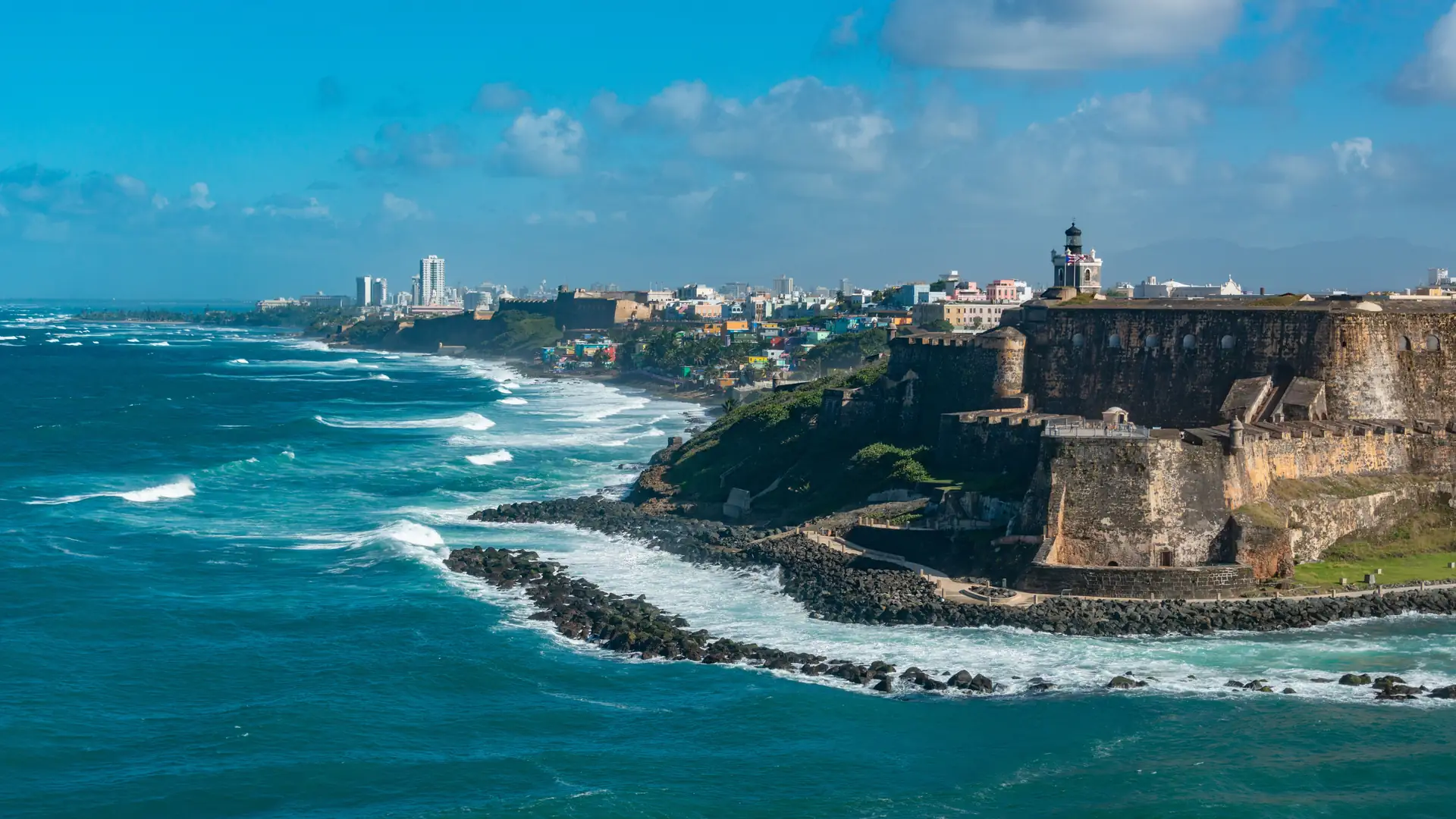
Photographs. Castillo San Felipe del Morro above the Atlantic in San Juan — Diego F. Parra, Pexels Cropped and resized for the web; not otherwise altered. Neither the photographers nor the licensors endorse this article.
This article is general information, not medical, physical-therapy, legal or safety advice. It does not determine whether a specific traveler can safely use a vehicle, ramp or site. OTGG is an independent travel advisor; this article contains no affiliate links. Cruise line policies, excursion vehicles and site access change — verify directly with the operator or an accredited travel advisor before booking or paying.
Planning a Caribbean sailing around a wheelchair or scooter?
Send me the device dimensions and weight and the sailing you are looking at. I will check each port call, put the vehicle and route questions to the line in writing, and build a Plan B for every shore day before you pay.
Begin the Journey






















