Paris works best when you treat Le Marais as an anchor, not a boundary. The historic LGBTQ+ district gives you queer visibility, walkable streets, cafés, culture, and nightlife close together. The wider city gives you more accommodation styles, quieter evenings, and easier access to attractions outside the center.
Sources and facts checked: October 7, 2026 (America/New_York). Venue hours, event calendars, hotel policies, transit accessibility and cruise terminal arrangements change. Check and verify with the venue, operator or cruise line before you travel.
That distinction matters if Paris is your pre-cruise stay before a Northern Europe sailing from Le Havre. It also matters if you are traveling solo, with a group, across generations, or with access needs. “LGBTQ+-friendly” and “inclusive” are useful starting points, not guarantees. Verify the details that affect your comfort before you pay.
Where to base yourself in Paris
Le Marais: best for the LGBTQ+ scene at your door
Le Marais spans parts of the 3rd and 4th arrondissements. Paris’s official tourism office identifies it as the city’s principal gay-friendly district, with much of the visible LGBTQ+ scene concentrated around streets including Rue des Archives and Rue Sainte-Croix-de-la-Bretonnerie. Paris je t’aime: The Marais – Paris gay
Choose Le Marais if you want to walk between cafés, restaurants, shops, galleries, historic buildings, and LGBTQ+ venues rather than organizing every evening around transport.
The tradeoff is atmosphere. Central streets can be busy and noisy, historic buildings may have small lifts or stairs, and some nightlife spaces occupy basements or older premises. Ask the property and venue for written, current details rather than relying on a listing badge.
A quieter central base: choose transport first
If you prefer a calmer hotel area, compare neighborhoods with a practical question: can you reach Le Marais and your main daytime plans without a route that creates unnecessary stairs, transfers, or latenight uncertainty?
Bastille, République, the 10th arrondissement, and parts of the 11th can work as alternatives, but do not assume that a short map distance means an easy journey. Check the exact hotel entrance, lift, sidewalk approach, nearest transport stop, and late-night return option.
For multigenerational groups, a quieter base can make more sense than placing everyone above a lively late-night street. For solo travelers, staying closer to the district may reduce the number of unfamiliar transfers after an evening out.
Beyond Paris: Nice and Marseille deserve their own trip
IGLTA’s France material identifies Paris as the country’s largest LGBTQ+ scene and names Nice and Marseille as important secondary destinations. IGLTA France guide Treat both as separate trips rather than substitutes for a Paris stay.
Nice brings a Mediterranean setting and its own event calendar. Marseille offers a different urban character and coastal context. Neither is a practical add-on if your primary purpose is a Paris-to-Le Havre cruise connection.
What to do beyond nightlife
Le Marais earns its reputation through community visibility, but you do not need to build your trip around bars and clubs.
Use the district for:
- Historic streets, courtyards, architecture, and people-watching.
- Museums, galleries, design shops, bookstores, and food stops.
- A slower daytime orientation before deciding whether nightlife fits your energy.
- A central base for walking toward the Seine, Hôtel de Ville, and other major sights.
Build in at least one non-nightlife day. Paris is more enjoyable when you leave room for a museum, market, river walk, long lunch, or simply an unplanned neighborhood wander. That also creates a better rhythm for travelers with different stamina levels.
For LGBTQ+ community context, check current programming from the LGBTQI+ Center of Paris and Île-de-France and local event organizers. Community resources can provide more current information than a static travel list, particularly when venues relocate, close, change hours, or alter their door policies.
Paris’s LGBTQ+ annual calendar
Paris has a substantial LGBTQ+ calendar, but dates and programs move. Check the event organizer first, then cross-check with the tourism office.
IGLTA’s France material lists recurring events that include a January LGBTQ+ cultural festival, Paris Pride, the Salon du livre lesbien, the Jerk Off queer arts festival, and the Existrans march. Dates, names, venues, and programs require a live check before booking.
Paris Pride is normally a late-June event, and 2026 showed how far that can move. The Marche des Fiertés LGBT+ Paris/Île-de-France was due on June 27, 2026, was canceled at the request of the Paris police prefecture during an extreme heat wave with temperatures near 40°C (104°F), and finally marched on October 3, 2026, from Place d’Italie to Place de la Bastille.
For 2027, take the march date and the surrounding Quinzaine des Fiertés program from the official Marche des Fiertés site before you book, and do not assume the late-June pattern will hold.
Access and mobility questions to ask
Le Marais is compact, but compact does not always mean step-free. Cobblestones, narrow pavements, historic buildings, basement rooms, and crowded evenings can change the practical experience.
Before booking accommodation, request written confirmation of:
- Step-free entry from the pavement to reception and the room.
- Lift dimensions, door width, and whether the lift reaches every relevant floor.
- Bathroom configuration, turning space, grab rails, and shower access.
- A quiet room away from street noise if sleep or sensory comfort matters.
- The closest accessible transport option and a realistic taxi alternative.
Before booking a tour or venue, ask whether the entrance is step-free, whether accessible toilets are available, how crowded the space becomes, and whether seating or an early-entry option exists.
Do not assume that a Metro route is fully accessible because a journey planner displays it. Verify each station and transfer for your travel date. If a step-free route cannot be confirmed, compare buses, taxis, and pre-arranged transfers instead.
If you use medication, mobility equipment, a CPAP device, or other health-related equipment, plan around your actual needs. Contact the accommodation or transport provider directly and obtain written confirmation. Consult a qualified medical professional for medical advice, diagnosis, or treatment decisions.
The Paris-to-Le Havre cruise connection
Paris is a natural land-side anchor for sailings that begin in Le Havre, but the transfer is longer than many first-time visitors expect.
SNCF Connect lists trains from Paris Saint-Lazare to Le Havre, with an average rail journey of approximately 2 hours 25 minutes and a fastest listed journey of approximately 2 hours 5 minutes. The route page also lists approximately 11 services per day, but schedules vary by date. SNCF Connect: Paris to Le Havre
The train arrives at Le Havre station, not inside the cruise terminal. You still need a local transfer, time for luggage, and the cruise line’s required arrival window. Ask the cruise operator or Le Havre port for written confirmation of the terminal address, transfer options, shuttle availability, and accessibility arrangements.
Why the day-before rule matters
Do not treat the average train time as a hotel-to-ship time. Your real sequence is:
- Check out of your Paris accommodation.
- Reach Paris Saint-Lazare with luggage.
- Travel to Le Havre.
- Transfer from the station to the terminal.
- Complete port and embarkation procedures.
For that reason, plan to sleep in Le Havre the night before embarkation whenever possible. A sameday Paris transfer may look efficient on paper, but one rail disruption, crowded station, delayed taxi, or mobility-related issue can remove your margin quickly.
If you must travel from Paris on embarkation day, choose a train that arrives substantially before the cruise line’s required check-in window and obtain written confirmation from the cruise operator that the plan is viable. Do not rely on the last available train.
Devil’s Advocate: Le Marais may not be your best base
Le Marais is the obvious choice, but obvious is not the same as optimal.
You may prefer another district if:
- You want quiet evenings and a larger, more modern hotel room.
- Your group needs reliable step-free access and generous bathroom space.
- Your itinerary focuses on attractions outside central Paris.
- You are traveling with older relatives or children who need a slower pace.
- Your cruise departure makes a Le Havre overnight more valuable than another night in the capital.
You can visit Le Marais without sleeping there. The stronger decision is the one that matches your priorities, not the one that wins a neighborhood popularity contest.
Verify before you pay
- Confirm the hotel’s inclusion policies and obtain written accessibility details.
- Verify the exact entrance, lift, bathroom, and room configuration.
- Check current LGBTQ+ events through the organizer rather than an old listing.
- Confirm whether a venue is operating, accepting walk-ins, and accessible on your date.
- Check the Paris–Le Havre train schedule for the exact travel date.
- Confirm the Le Havre terminal, ship transfer, arrival window, and luggage process in writing.
- Book a day-before cruise arrival unless the cruise operator confirms another plan.
- Recheck transport disruptions, strikes, weather warnings, and event-related closures before departure.
Frequently asked
Is Le Marais the only LGBTQ+ area in Paris?
No. It is the most established and visible LGBTQ+ district, but queer life extends beyond it. Use Le Marais as a starting point, then choose accommodation based on your full itinerary, mobility needs, and preferred pace.
Is Paris uniformly safe and welcoming for LGBTQ+ travelers?
No city should be described that way. Paris has a strong LGBTQ+ community and many welcoming businesses, but harassment, theft, crowding, and isolated anti-LGBTQ+ incidents can still occur. Stay aware, use current local guidance, and choose transport and venues that feel comfortable for you.
How many nights should I spend in Paris before a Le Havre cruise?
There is no universal number, but one night is the practical minimum if you are connecting to a cruise. Two or more nights give you recovery time, flexibility, and a better chance to enjoy Paris without turning the embarkation transfer into a high-stakes travel day.
Should I visit Nice or Marseille instead?
Visit them as separate French destinations. They have their own LGBTQ+ scenes and event calendars, but they are not efficient substitutes for Paris when your cruise begins in Le Havre.
Sources and facts checked: October 7, 2026 (America/New_York). Official tourism, transit and event-organizer information were reviewed on the date shown.
Sources
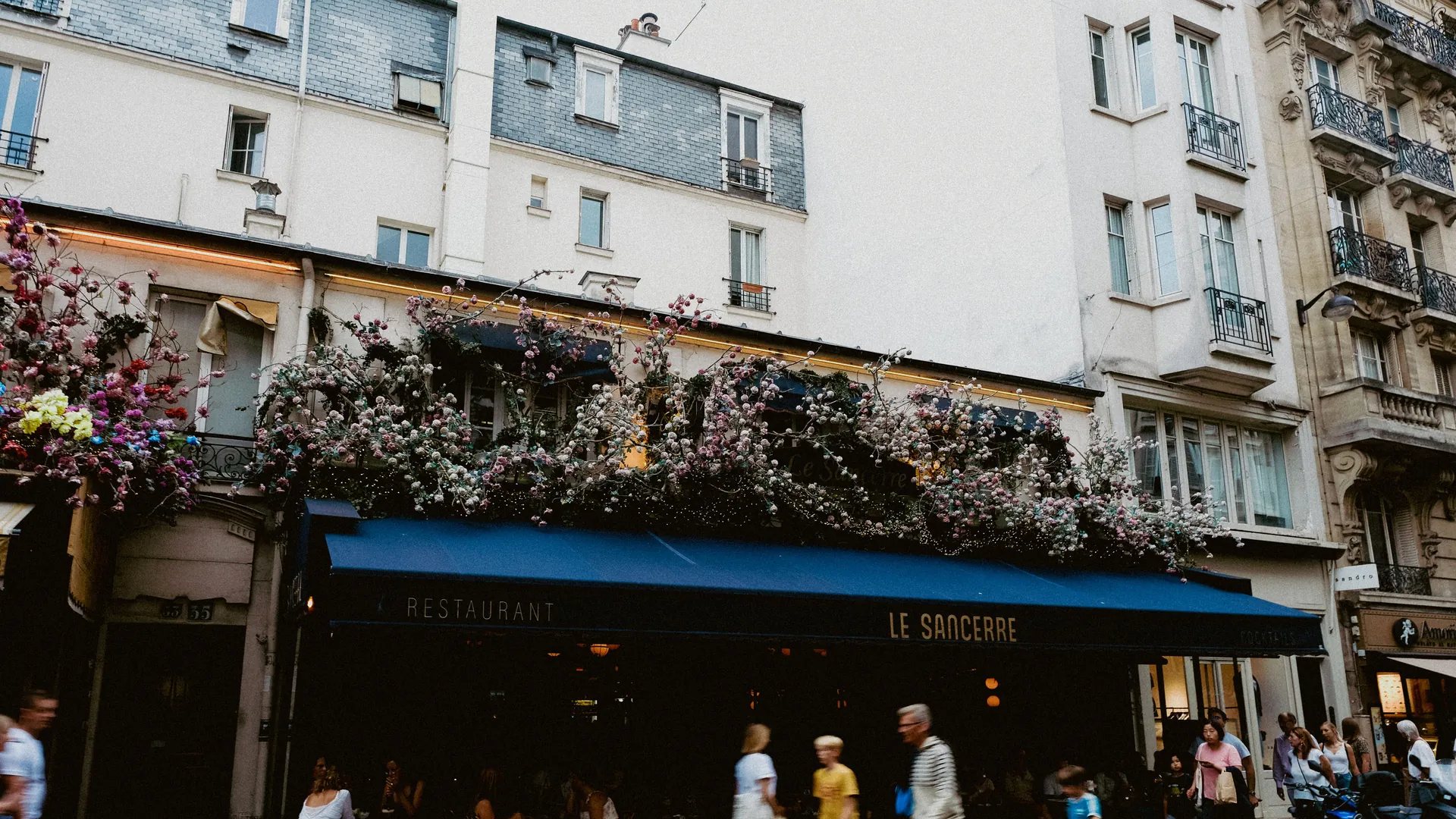
Photographs. A Paris restaurant street with a flowered facade — Mathias Reding, Pexels Cropped and resized for the web; not otherwise altered. Neither the photographers nor the licensors endorse this article.
This article is general information, not medical, legal, financial or safety advice. OTGG is an independent travel advisor; this article contains no affiliate links. Cruise line and supplier policies, rates, promotions, inclusions, accessibility procedures and deposit schedules change — verify all details with the operator or an accredited travel advisor before booking or payment.
Spending a few nights in Paris before a Le Havre sailing?
Tell me your dates and how you like to travel. I will suggest the base, the train and the buffer that get you to the ship without a rushed morning.
Begin the Journey






















