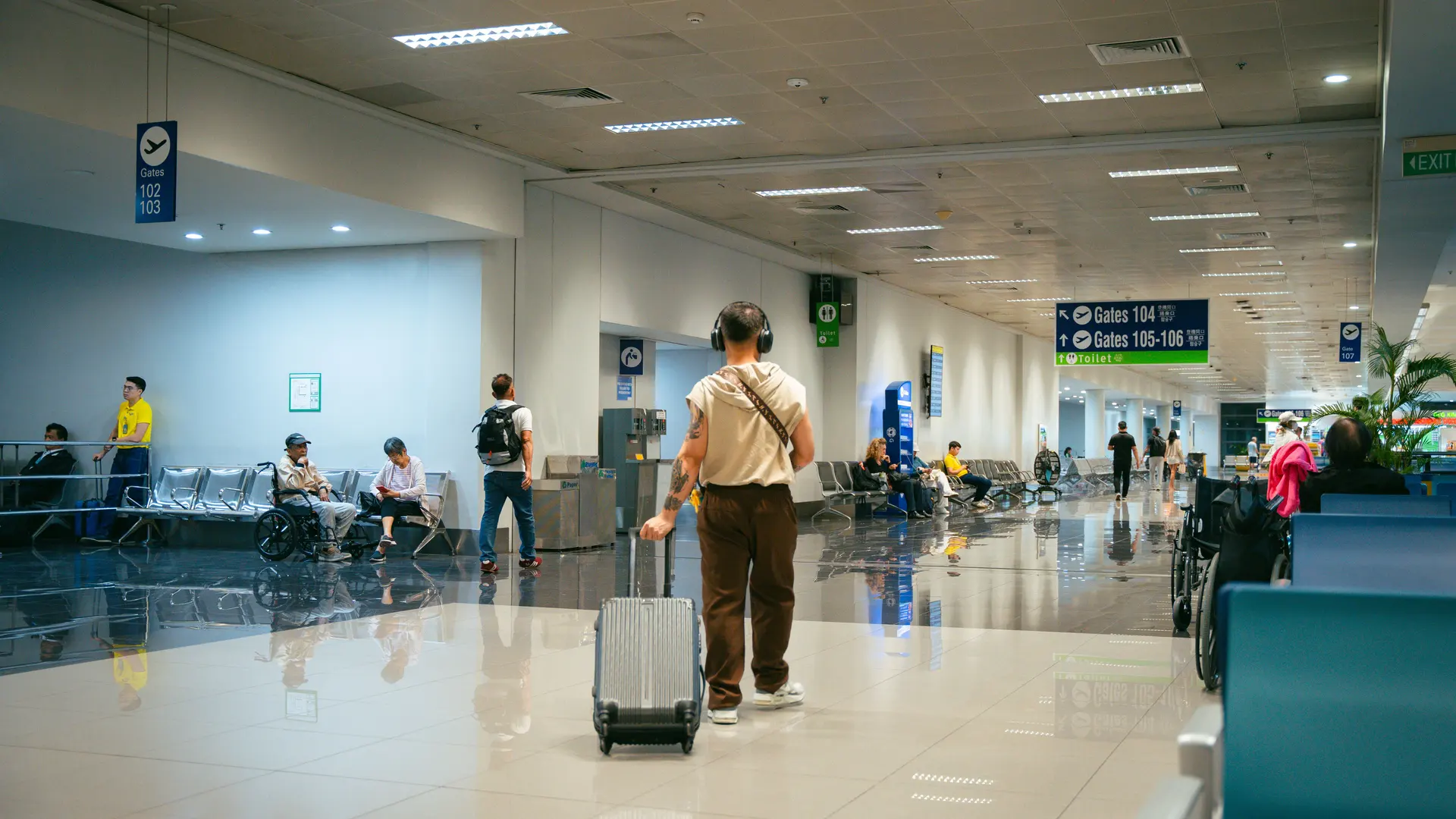
Flying to a cruise is not simply a matter of finding the earliest reasonable arrival. An accessible cruise begins with a chain of handoffs: home to airport, airport to aircraft, aircraft to baggage claim, airport to hotel or port, and terminal to ship.
Sources and facts checked: September 24, 2026 (America/New_York). Airline assistance procedures, device-handling rules and liability limits differ by carrier and route. Check and verify with the airline and the cruise line before you pay.
One weak link can turn a relaxing voyage into a race against a check-in cutoff. Plan the flight as carefully as the cabin.
Official rights versus practical planning
The U.S. Department of Transportation’s Airline Passengers with Disabilities Bill of Rights summarizes protections under the Air Carrier Access Act.
For flights operated by U.S. airlines, and flights to or from the United States operated by foreign airlines, travelers may have rights to:
- Dignified, nondiscriminatory treatment.
- Accessible information and airport facilities.
- Prompt wheelchair or guided assistance.
- Preboarding when additional time or assistance is needed.
- Transportation of assistive devices, subject to safety requirements.
- A Complaint Resolution Official, or CRO, when a disability-related problem occurs.
Those are legal protections. They are not a complete itinerary.
Planning advice — such as flying the day before, booking an accessible hotel, carrying printed records, or building a disruption fallback — reduces risk but does not create additional legal rights. Treat both categories seriously.

Fly the day before whenever possible
The most useful accessible-cruise flight strategy is simple: arrive in the embarkation city the day before the cruise.
A day-before arrival gives you time to manage:
- Flight delays or cancellations.
- Delayed wheelchair or scooter delivery.
- Slow baggage retrieval.
- Airport assistance delays.
- An accessible transfer that arrives late.
- Rest after a long journey.
- A hotel room that does not match its online description.
Same-day arrival can work, but it should be an exception rather than the default. Do not calculate from the aircraft’s scheduled landing time alone.
Same-day risk math
Use this formula before paying for a same-day flight:
Scheduled ship departure minus the cruise line’s actual terminal check-in or boarding cutoff minus airport-to-port transfer time minus baggage, assistance, and terminal time minus a disruption buffer equals the latest acceptable scheduled landing time.
Many cruise lines require check-in well before departure, and the cutoff can vary by ship, port, itinerary, nationality, and booking. Verify the specific rule in your cruise documents. Any deadline figure remains. Check and verify with the airline or cruise line.
If the calculation leaves only a narrow margin, choose the day-before option. Travel insurance may address some costs, but it cannot make a ship wait.
Understand what airport assistance covers
The DOT wheelchair and guided assistance page states that airlines must provide assistance through key parts of the airport when requested and when the traveler self-identifies.
Depending on your needs, assistance may include:
- Vehicle drop-off or terminal entrance to the gate.
- Security checkpoint navigation.
- Movement between connecting gates.
- Boarding and deplaning assistance.
- Access to ticket counters, baggage claim, and other key functional areas.
- Baggage assistance when a disability prevents you from carrying luggage.
Airport assistance is not the same as personal care. It does not replace a companion, caregiver, or medical professional.
Request assistance when booking and describe the actual help you need. “Wheelchair assistance” may not fully explain whether you can climb aircraft steps, walk to your seat, transfer independently, or remain seated during screening.
At the airport, identify yourself to airline staff even if assistance appears in your reservation. If the service fails, ask for a supervisor or the airline’s CRO.
Prepare for TSA screening
TSA screening still applies to every traveler and every item. The TSA Disabilities and Medical Conditions guidance explains that travelers may speak with a TSA officer about the best screening method.
Tell the officer before screening if you:
- Cannot stand or walk independently.
- Need to remain in your wheelchair or scooter.
- Use an insulin pump, glucose monitor, ostomy, catheter, implant, brace, or prosthesis.
- Carry medically necessary liquids, gels, aerosols, medications, or supplies.
- Need private screening.
TSA states that medically necessary liquids, gels, and aerosols may exceed the standard 3-1-1 limits in reasonable quantities for the flight, provided they are declared and separated for additional screening. These items are exempt from the 3.4-ounce and quart-bag limits, do not need to fit in the quartsize bag, and do not need to be in original packaging, though original labeled containers can speed screening. Examples include insulin, saline, prescription liquids, nebulizer fluids, and medical ice or gel packs. Keep them accessible rather than buried inside checked luggage.
TSA Cares can coordinate checkpoint assistance. The form is for screening support only. TSA specifically directs travelers to contact the airline for curb-to-aircraft assistance or in-flight help. If your flight is within 72 hours (. Check and verify with the airline or cruise line.), call TSA Cares rather than relying only on the online form.
Carry mobility-device and battery documents
Keep mobility-device information in your carry-on and in a cloud folder. Include:
- Manufacturer, model, dimensions, and weight.
- Battery type and manufacturer documentation.
- Photos of the device before handing it over.
- Instructions for disengaging freewheel mode or disconnecting power.
- Removable-part details, including joystick, cushion, or control panel.
- Airline confirmation of how the device will be accepted and returned.
The FAA PackSafe mobility-device guidance explains that battery rules depend on the device, battery type, protection, and whether the battery remains installed. Airlines may impose more restrictive procedures.
The FAA’s SAFO 23003 also emphasizes proper loading, restraint, and protection of battery-powered mobility aids. Do not assume the check-in agent knows the specifications of your equipment. Carry the documentation and confirm the process in writing with the operating airline.
This article intentionally does not repeat portable oxygen concentrator battery arithmetic. Review the separate equipment-specific rules for any respiratory device you carry.
Keep medications in your carry-on
Pack medications, essential medical supplies, and a reasonable backup in your cabin baggage. Keep medication labeled and organized so it can be identified during screening.
A clinician letter is practical planning support, not automatically a substitute for an airline or TSA rule. Ask your clinician to include:
- Your name and relevant condition.
- Medication names and dosages.
- Necessary equipment or supplies.
- Any handling, temperature, or timing considerations.
- Contact information for the prescribing office.
Do not place irreplaceable medication in checked luggage. If your medication requires refrigeration, confirm the airline, hotel, and cruise line’s current arrangements separately.
For Virgin Voyages guests, submit both the 14-day distilled-water request for CPAP and the 45-day general accessibility or medical request through the same Accessibility and Medical Request Form. Both figures are. Check and verify with the airline or cruise line. Obtain written confirmation rather than assuming form submission equals approval.
Build a document and contact file
Carry paper copies and digital backups of:
- Passport or other required travel identification.
- Cruise booking confirmation and reservation number.
- Airline confirmation and operating-carrier details.
- Cruise check-in confirmation.
- Accessible cabin confirmation.
- Hotel confirmation and accessibility notes.
- Accessible transfer confirmation.
- Mobility-device specifications.
- Medication list and clinician letter.
- Travel-insurance policy and emergency number.
- Cruise line accessibility contact.
- Airline CRO contact process.
- Emergency contact details.
Use the name exactly as it appears on your travel documents and reservations. A booking record, passport, and airline ticket answer to different systems; verify all three before departure.
Choose and verify the pre-cruise hotel
An online “accessible room” filter is not enough. Ask the hotel to confirm the exact features in writing:
- Step-free route from entrance to room.
- Roll-in shower or accessible tub, as required.
- Grab bars and shower seating.
- Door width and turning space.
- Bed height and clearance.
- Elevator access.
- Accessible parking or drop-off.
- Ability to receive, store, or charge approved equipment.
- Accessible transportation to the cruise terminal.
Confirm again 48 hours before arrival (. Check and verify with the airline or cruise line.). Ask the hotel to confirm that the specific room — not merely the room category — matches the request.
If you rent equipment, use the cruise line’s current approved or recommended vendor and obtain written confirmation of delivery, collection, device dimensions, and the handoff location. NCL, for example, directs guests toward approved mobility-equipment rental arrangements in its mobility accessibility guidance.
Use a 90-day accessibility review cycle
At 90 days before travel (. Check and verify with the airline or cruise line.), review the entire chain again:
- Airline assistance and operating carrier.
- Mobility-device acceptance and battery instructions.
- Cruise accessibility form and cabin assignment.
- Hotel room features.
- Accessible airport-to-hotel or airport-to-port transfer.
- Medication and equipment arrangements.
- Passport validity and entry requirements.
- Cruise check-in requirements.
Do not assume that a previous sailing’s approval carries forward. Policies, aircraft, ports, vendors, and forms change.
For comparison, official guidance varies. Virgin Voyages asks guests to submit accessibility information through its form; Royal Caribbean uses its Guest Special Needs process; and NCL publishes its own accessibility information. Use the current policy for your specific line, ship, region, and sailing.

Devil’s Advocate: the day-before night is not magic
A hotel night reduces risk, but it does not eliminate it.
You still need to confirm:
- The room is genuinely accessible.
- The hotel can accommodate your equipment.
- Your transfer has enough vehicle space.
- The cruise terminal accepts your arrival plan.
- Your airline will return your device at the gate when requested.
- The cruise line has recorded your accessibility needs.
A day-before arrival can also create extra cost, fatigue, medication-storage questions, and another hotel transfer. If you choose same-day flying, document why the schedule works and create a fallback before you pay.
Verify before you pay
- Confirm the cruise line’s actual check-in and terminal closure time. Check and verify with the airline or cruise line.
- Choose a day-before flight unless the same-day schedule has a defensible buffer.
- Confirm airport assistance with every airline and operating carrier.
- Confirm TSA screening needs separately from airline wheelchair service.
- Obtain written mobility-device and battery acceptance instructions.
- Keep medications and essential supplies in your carry-on.
- Carry a clinician letter and medication list.
- Confirm passport, booking, cruise check-in, and insurance records.
- Obtain written hotel accessibility confirmation.
- Obtain written transfer confirmation, including vehicle type and device capacity.
- Obtain written equipment-vendor confirmation if renting.
- Obtain written confirmation from the cruise line, port, transfer provider, hotel, equipment vendor, or excursion operator relevant to your itinerary.
- Reconfirm the complete plan 48 hours before hotel arrival. Check and verify with the airline or cruise line.
Frequently asked
Is flying the day before mandatory?
No. It is practical risk management, not a universal cruise-line rule. Same-day arrival can work when the schedule leaves substantial time for assistance, baggage, transportation, check-in, and disruption.
Does TSA Cares arrange wheelchair service from the curb?
No. TSA Cares supports checkpoint screening. Contact the airline for curb-to-gate, boarding, deplaning, and baggage-claim assistance.
Do I need a clinician letter to fly with medication?
Not always. TSA may screen medication and medically necessary liquids. A clinician letter can make explanations easier, particularly when supplies or equipment are unusual.
Does submitting a cruise accessibility form guarantee an accessible cabin or service?
No. Submit the form, confirm the cabin category, and request written confirmation from the cruise line. A phone conversation without a record is not a reliable final plan.
Can OTGG help coordinate this process?
Yes. Off The Grid Getaways (OTGG) provides accessible cruise pre-trip planning and concierge coordination, including flight timing, hotel and transfer questions, documentation organization, and written-confirmation follow-up. Contact OTGG through the Journal and planning team if you want help reviewing the complete pre-cruise chain.
Sources and facts checked: September 24, 2026 (America/New_York). Airline accessibility pages and cruise line pre-cruise guidance were reviewed on the date shown.
Sources
- transportation.gov — Airline Passengers with Disabilities Bill of Rights ↗
- transportation.gov — DOT wheelchair and guided assistance page ↗
- tsa.gov — TSA Disabilities and Medical Conditions guidance ↗
- tsa.gov — TSA Cares ↗
- faa.gov — FAA PackSafe mobility-device guidance ↗
- faa.gov — SAFO 23003 ↗
- virginvoyages.com — Accessibility and Medical Request Form ↗
- ncl.com — Mobility accessibility guidance ↗
- royalcaribbean.com — Guest Special Needs process; ↗
- ncl.com — Accessibility information ↗
Photographs. Passengers in a bright airport terminal — Kenneth Surillo, Pexels Cropped and resized for the web; not otherwise altered. Neither the photographers nor the licensors endorse this article.
This article is general information, not medical, accessibility or financial advice. OTGG is the travel-planning platform of Paolo Melendez, an independent travel advisor. This article contains no affiliate links. Policies, fares and accessibility arrangements change — verify with the cruise line, airline or an accredited travel advisor before booking or paying.
Flying in before an accessible sailing?
Tell me the route and the device. I will build the buffer properly, book the assistance on every leg, and make sure a delayed bag or a damaged chair does not end the trip.
Begin the Journey






















