## The upgrade trap
Sources and facts checked: September 28, 2026 (America/New_York). Airline seat specifications, assistance procedures and device-handling rules differ by carrier, aircraft and route. Check and verify with the airline before you pay.
Premium economy can be a smart comfort upgrade. It can give you more room, a quieter cabin, improved meals, and earlier boarding.
It is not, however, an accessibility plan.
That distinction matters if you use a wheelchair, scooter, walker, cane, or other mobility aid; need guided assistance; manage fatigue; require extra boarding time; or are coordinating travel for a family member.
A premium-economy ticket changes your seat and sometimes your airport priority. It does not automatically arrange wheelchair assistance, protect your mobility device, confirm an accessible hotel, or make a port transfer suitable for your needs.
Treat the cabin upgrade and the accessibility plan as two separate workstreams.
What premium economy actually improves
Premium economy varies by airline, aircraft, route, and fare rules. Review the exact flight rather than relying on the cabin name.
It commonly improves:
- Seat space: More legroom, a wider seat, greater recline, and sometimes a footrest or leg rest.
- Personal space: A smaller cabin, additional separation from economy, and occasional privacy panels or improved headrests.
- Meal service: Better meal presentation, upgraded menus, or additional beverage choices on some long-haul flights.
- Boarding priority: Earlier boarding or priority airport services may be included, depending on the airline and fare.
- Cabin environment: Fewer passengers and less foot traffic can make the flight feel calmer.
For examples of how benefits differ, compare the published features from Air Canada Premium Economy, American Airlines Premium Economy, and Cathay Pacific Premium Economy. Check and verify with the airline.
The key point: these are comfort features. They are not a substitute for formal accessibility services.

What premium economy does not solve
Airport assistance
Premium economy does not automatically add a wheelchair escort from the curb, parking area, check-in desk, or security checkpoint to your gate.
Request assistance directly from the airline. Use the airline’s accessibility process during booking or as early as possible. Official guidance is available through American Airlines Special Assistance, Delta Wheelchair Services, United Wheelchair Assistance, and Virgin Atlantic Special Assistance.
Boarding
Priority boarding is not the same as accessible boarding.
If you need extra time, help transferring to your seat, assistance with an aisle chair, or support stowing an accessibility device, tell the gate agent clearly. Under the U.S. Department of Transportation’s Airline Passengers with Disabilities Bill of Rights, passengers who identify as needing additional time or assistance may request preboarding; this is a request-based accommodation, not an absolute entitlement in every circumstance.
Do not assume that a premium-economy boarding group will communicate your needs.
Wheelchair storage
Your fare class does not guarantee cabin storage for a wheelchair or scooter. Aircraft dimensions, device size, battery type, crew procedures, and available storage affect what happens to your equipment.
Provide accurate measurements and equipment details to the airline. Ask how the device will be handled and where you should expect it on arrival. For more context, review the DOT’s assistive device guidance. Check and verify with the airline.
Hotels and airport access
Premium economy does not make an airport hotel accessible.
You still need to confirm the room configuration, bathroom, entrance route, elevator access, shuttle vehicle, and distance from the terminal. “Accessible room available” is not enough detail for every traveler.
Port transfers
If you are flying to a cruise, premium economy does not make the transfer from airport to hotel, hotel to port, or airport to port accessible.
Confirm the vehicle type, ramp or lift, wheelchair securement, luggage capacity, driver assistance, and pickup process directly with the transfer provider. If you are continuing to a cruise, the Door-to-Ship Journey is a useful reminder that every handoff needs its own plan.
The nonstop-versus-connection math
A nonstop economy flight can be the better accessibility choice than a premium-economy itinerary with a connection.
Compare the entire journey, not just the aircraft seat.
A connection can add:
- More terminal navigation.
- Another boarding process.
- More time waiting for a wheelchair or escort.
- Greater fatigue.
- More chances for a delayed, damaged, or misplaced mobility device.
- A second opportunity for a gate change or aircraft substitution.
- Connection risk if the first flight arrives late.
For an older traveler, a traveler managing fatigue, or anyone who finds large terminals physically demanding, the extra seat space may not outweigh the additional airport work.
Ask this question before paying for premium economy:
Will the better seat improve the total journey, or only the hours spent in the aircraft?
Request assistance correctly
Request airline assistance during booking whenever possible. Under DOT rules for the Air Carrier Access Act, airlines may require up to 48 hours’ advance notice for certain specific accommodations, such as transporting a power wheelchair on an aircraft with fewer than 60 seats, packaging batteries for assistive devices, providing an on-board wheelchair on some aircraft, and groups of ten or more travelers with disabilities; check and verify the current notice rules with the airline. If you do not provide the requested advance notice or complete any required early check-in, the airline must still provide the accommodation if it can do so by making reasonable efforts, without delaying the flight.
Use specific language. “Wheelchair assistance” can mean different things operationally, so describe what you can and cannot do.
Explain:
- Whether you can walk short distances.
- Whether you can climb aircraft stairs.
- Whether you can use a jet bridge.
- Whether you need an aisle chair to reach your seat.
- Whether you use a manual wheelchair, power wheelchair, scooter, walker, or other device.
- Whether you need help with luggage.
- Whether you need extra boarding time.
- Whether queue avoidance or a quieter process would help.
- Whether you need assistance making a connection.
Ask the airline to add the request to every flight segment, including connections and the return journey.
Then request written confirmation. Keep the confirmation number, service description, and airline contact details with your travel documents.
Airlines describe their assistance as support with boarding, stowing assistive devices, and moving through the airport; DOT and airline guidance generally distinguish those airport and aircraft-access functions from personal care such as feeding, toileting, bathing, or medication administration. Confirm the carrier's actual scope before paying.
Use TSA Cares for checkpoint support
TSA Cares is separate from airline wheelchair assistance.
In the United States, TSA Cares can answer screening questions and may coordinate a Passenger Support Specialist for help at the security checkpoint. TSA Cares recommends contacting them about 72 hours before travel for assistance through security. You can use the official TSA Cares form or call 1-855-787-2227.
TSA Cares does not arrange:
- Curb-to-counter assistance.
- Airline wheelchair escorts.
- Boarding.
- In-flight personal care.
- Transportation between terminals.
Those services must be addressed with the airline or airport service provider. TSA’s special assistance guidance explains the division of responsibility.
When premium economy is still worth it
Premium economy can be worth the additional cost when:
- The flight is nonstop.
- Sitting for a long period is difficult.
- You need additional legroom or seat width.
- A quieter cabin reduces sensory strain.
- You can use the airport independently or have confirmed assistance.
- The fare includes useful priority services you would otherwise purchase separately.
- The price difference is reasonable compared with the comfort gained.
- The airline has confirmed your accessibility arrangements in writing.
Think of premium economy as a comfort tool. It may reduce physical strain during the flight, but it does not remove the need for planning before departure and after arrival.
Build an accessibility-conscious airport strategy
Create a simple airport plan before travel.
- Arrive with enough time for assistance delays, check-in, security, and terminal changes.
- Confirm the location where airline assistance begins.
- Carry your assistance confirmation and equipment information.
- Ask staff to explain the route to the gate rather than assuming the shortest route is usable.
- Reconfirm your needs at check-in and again at the gate.
- Ask for preboarding if you need extra time or assistance.
- Keep medication, essential documents, chargers, and critical supplies in your personal carry-on.
- Photograph your mobility device before handing it over for loading.
- If the flight leaves early, consider an airport hotel the night before.
For the hotel, obtain written confirmation of the exact room and services you need. Confirm the accessible entrance, bathroom configuration, elevator route, restaurant access, shuttle lift or ramp, and distance to the terminal.
If equipment rental is involved, confirm delivery timing, device specifications, replacement procedures, and after-hours contact details in writing.
For connections, use one ticket and a generous layover
If a connection is required, book the itinerary on one ticket whenever possible.
A single-ticket itinerary gives the airline a clearer responsibility for the full journey and makes disruption handling more straightforward than separate tickets with separate reservations.
Choose a generous layover. The correct amount depends on the airport, terminal layout, immigration requirements, assistance needs, and whether you must retrieve or transfer a mobility device.
Do not select a connection because an app labels it “legal” or “efficient.” Ask the airline to confirm that the itinerary is workable with your requested assistance.
If the connection involves a transfer between terminals, ask for written confirmation of how the airline will assist you from one gate to the next.
Devil’s Advocate: the upgrade can still disappoint
Premium economy may be the wrong investment.
The seat may be better, but:
- The aircraft can change.
- The premium-economy cabin can differ by route.
- Priority boarding may not apply in the way you expect.
- A gate change can create a long or inaccessible route.
- Wheelchair assistance can be delayed.
- Mobility equipment can be damaged or returned later than expected.
- A hotel shuttle advertised as accessible may not fit your device.
- A transfer provider may send a vehicle that does not match the booking description.
No fare class guarantees a seamless experience.
Airlines, airports, hotels, and transport providers have different procedures. Confirm each service with the relevant operator, obtain written confirmation, and reconfirm close to departure. Written confirmation improves accountability; it does not eliminate operational risk.
Verify before you pay
Before purchasing premium economy, verify:
- The exact aircraft and premium-economy seat features.
- Whether the fare includes priority boarding, priority check-in, or baggage benefits.
- Whether the itinerary is nonstop or requires a connection.
- Whether the airline has recorded assistance for every segment.
- Your precise needs: luggage, boarding, queue support, connection assistance, and mobility-device handling.
- Whether you can board using stairs, a jet bridge, or an aisle chair.
- Your wheelchair or scooter dimensions, weight, battery type, and folding details.
- Written confirmation from the airline, including the assistance reference.
- TSA Cares arrangements, if checkpoint support would help.
- Written confirmation from the airport hotel, if staying overnight.
- Written confirmation from the transfer provider, including vehicle access and securement.
- If traveling to a cruise, written confirmation from the port or transfer operator where applicable.
- Your backup plan if assistance, equipment, or transportation fails.
For broader cruise planning, see OTGG’s Cruise Accessibility: Deadlines and the Paper Trail. Any deadline figure in that related article should also be checked against current supplier guidance before booking.
Frequently asked
Does premium economy include wheelchair assistance?
Not automatically. Request wheelchair or guided assistance directly from the airline, regardless of cabin class.
Does premium economy guarantee preboarding?
No. If you need extra time or assistance, identify yourself to the gate agent and request preboarding. DOT guidance explains the applicable passenger protections.
Is premium economy better than economy for a traveler with limited mobility?
Sometimes. The additional space may improve comfort, but a nonstop economy flight can be a better overall choice than premium economy with a connection.
How far in advance should I request assistance?
Request it during booking. Under DOT rules for the Air Carrier Access Act, airlines may require up to 48 hours’ notice for certain specific accommodations, such as transporting a power wheelchair on an aircraft with fewer than 60 seats, packaging batteries for assistive devices, providing an on-board wheelchair on some aircraft, and groups of ten or more travelers with disabilities; check and verify the current notice rules with the airline. If you miss that window, request it immediately anyway and self-identify at the airport, because the airline must still make reasonable efforts without delaying the flight.
Will assistance be available exactly as requested on every flight?
No airline guarantees that assistance will be available exactly as requested on every flight. Advance notice helps the airline plan, but staffing, aircraft changes, airport operations, and other conditions may affect the assistance provided.
What does TSA Cares handle?
TSA Cares supports questions and assistance at the security checkpoint. It does not replace airline wheelchair service, boarding assistance, or airport-to-hotel transportation.
Should I book an airport hotel?
Consider one for an early departure, long travel day, or difficult terminal access. Confirm the room, route, shuttle, and equipment needs in writing before paying.
Sources and facts checked: September 28, 2026 (America/New_York). Airline published accessibility and cabin information was reviewed on the date shown.
Sources
- aircanada.com — Air Canada Premium Economy, ↗
- aa.com — American Airlines Premium Economy, ↗
- flights.cathaypacific.com — Cathay Pacific Premium Economy ↗
- aa.com — American Airlines Special Assistance, ↗
- delta.com — Delta Wheelchair Services, ↗
- united.com — United Wheelchair Assistance, ↗
- help.virginatlantic.com — Virgin Atlantic Special Assistance ↗
- transportation.gov — Airline Passengers with Disabilities Bill of Rights, ↗
- transportation.gov — Assistive device guidance ↗
- tsa.gov — Official TSA Cares form ↗
- tsa.gov — Special assistance guidance ↗
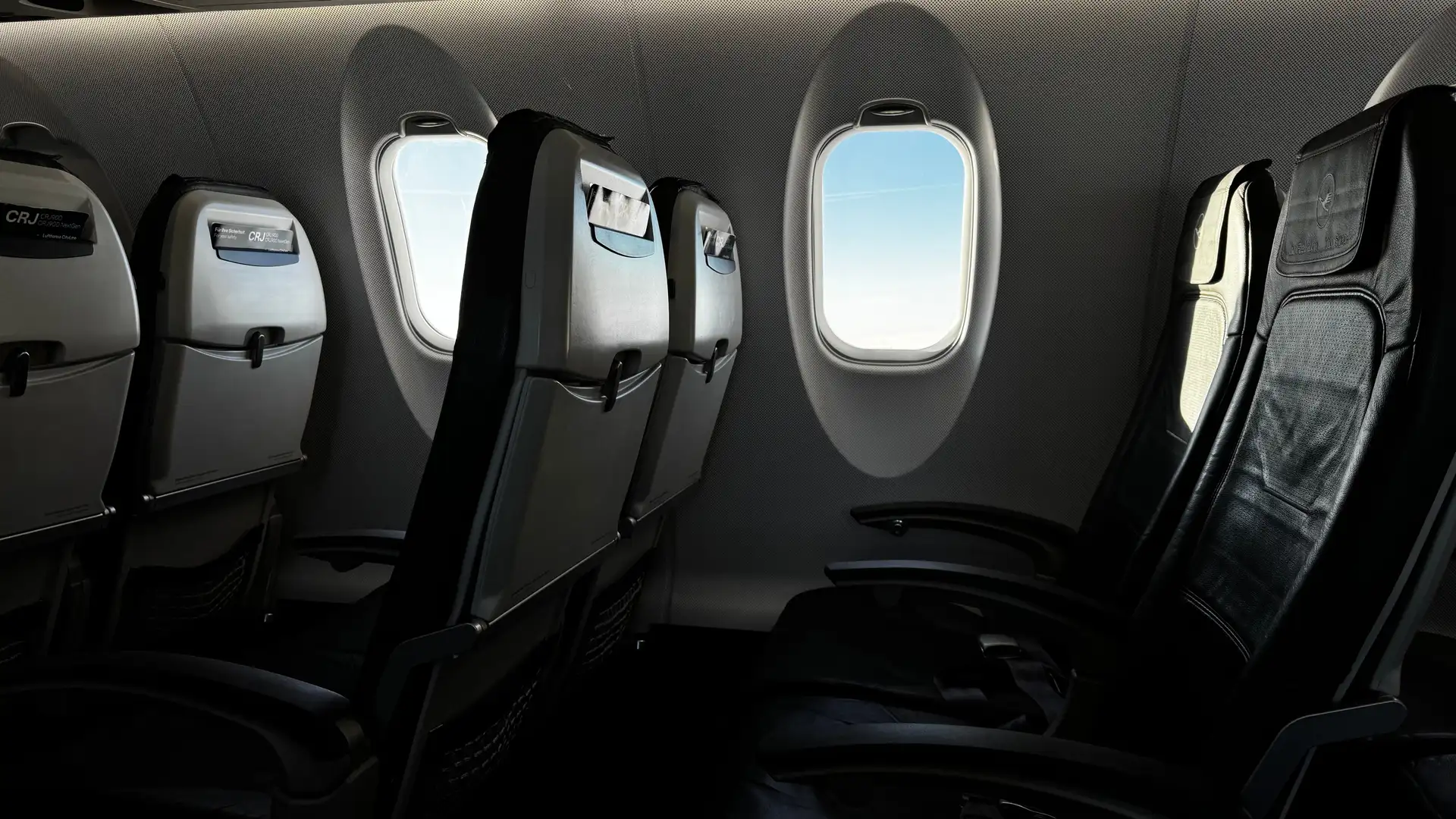
Photographs. The interior of an empty airplane cabin — Thomas, Pexels Cropped and resized for the web; not otherwise altered. Neither the photographers nor the licensors endorse this article.
This article is general information, not medical or accessibility advice. OTGG is the travel-planning platform of Paolo Melendez, an independent travel advisor. This article contains no affiliate links. Policies, fares and programme terms change — verify with the cruise line, airline or an accredited travel advisor before booking or paying.
About to spend the upgrade money on premium economy?
Tell me the route and what you actually need. I will tell you whether the upgrade solves it, or whether the same money is better spent on assistance, a hotel night or a different routing.
Begin the Journey






















