Mediterranean itineraries are being rewritten by three separate forces that get reported as one. There are voluntary agreements between cities and the cruise industry. There are contracted berthing rules a port authority actually enforces. And there is national law. They look identical in a headline and behave nothing alike, and the difference decides whether the port on your ticket is a plan or a promise.
Three ports, three kinds of rule
Checked on 7 September 2026 against each authority’s own material. The column that matters is the third one.
| Port | The limit | What kind of rule it is | What that means in practice |
|---|---|---|---|
| Palma de Mallorca | Three cruise ships a day, one of them over 5,000 lower berths; a daily average of 8,500 lower berths. | A memorandum of understanding between CLIA, the Balearic Government and Palma Town Hall. | Voluntary. It shapes scheduling. It does not bind a ship, and it does not count small vessels the way you would expect. |
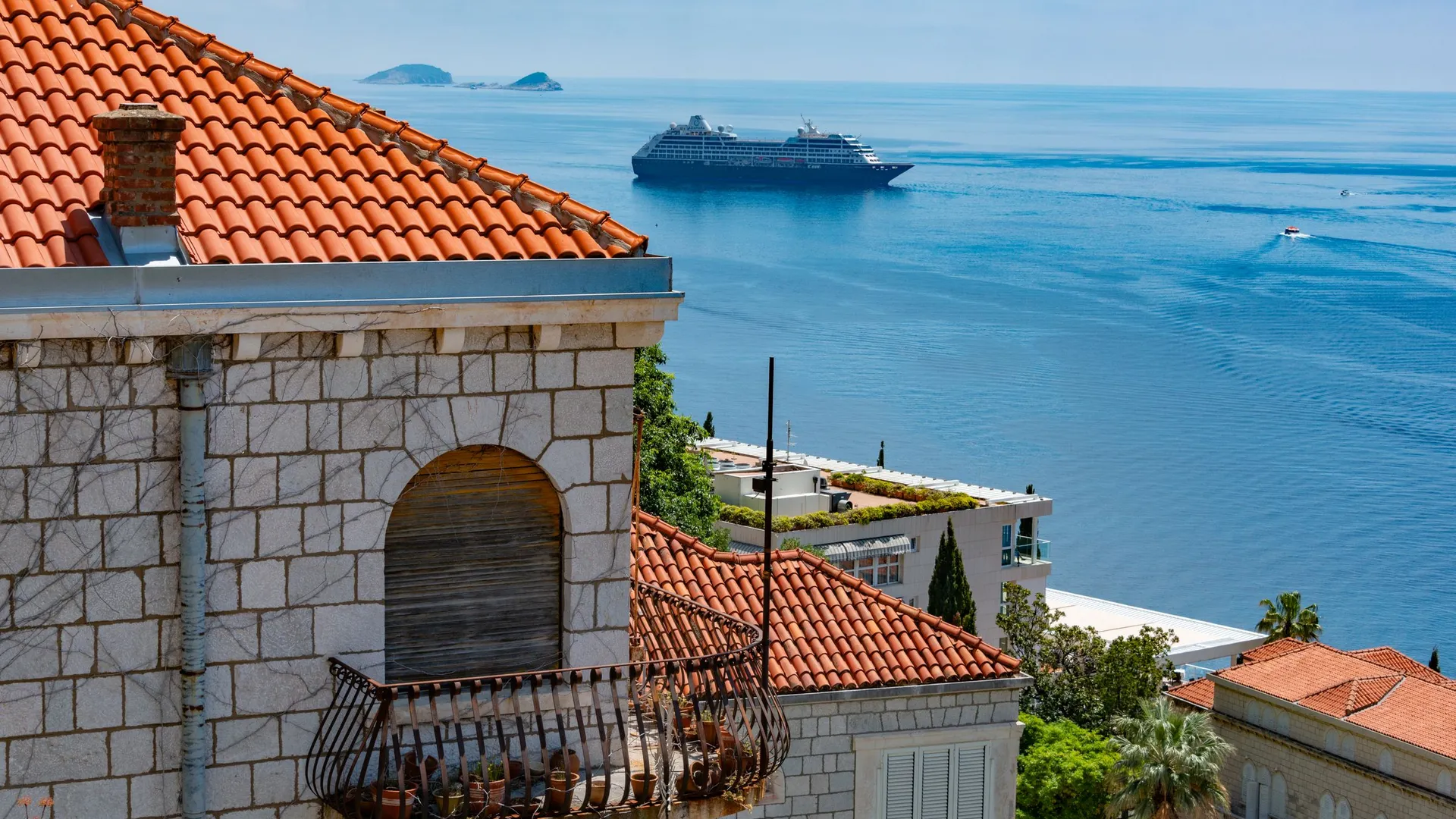
| Dubrovnik | Two cruise ships a day. Minimum stay of 8 hours up to 4,000 passengers, 12 hours above that. | Contracted berthing policy administered by the Dubrovnik Port Authority. | Binding on the berth. Ships that cannot get one anchor off Lokrum and tender, or the call moves. |
| Venice | No passenger ship over 25,000 GT or 180 metres through the Giudecca Canal and St Mark’s Basin. | Italian national law, in force since 1 August 2021. | Absolute. Large ships use Marghera on the mainland; some itineraries substitute another port entirely. |
This is the whole article in one idea. The strength of the rule predicts the behaviour of your itinerary. Venice’s ban never bends, so the substitution happens before you book and you can read it on the ticket. Dubrovnik’s policy binds the berth but not the demand, so it produces last-minute swaps. Palma’s agreement binds nobody, so it produces crowded Saturdays that break no rule at all.
Palma: a target that six ships walked through
The framework at Palma allows three cruise ships a day, only one of them carrying more than 5,000 lower berths, against a daily average of 8,500 lower berths. A renewed memorandum signed by the Balearic Government, Palma Town Hall and CLIA tightens the main-season average from 8,500 to 7,500 — but that applies from 2027 to 2029, not to the season you are booking now.
The word doing the work is memorandum. On the morning of 12 August 2026, six cruise ships were alongside at Palma simultaneously: La Belle des Océans, Costa Pacifica, World Traveller, Le Boréal, Ilma and Le Dumont-d’Urville.
Read the passenger counts before you call it a breach. Five of those six were small: 130 guests, 196, 264, 448, 184. The agreement was written to restrain mass tourism and it does not clearly reach expedition and luxury vessels at all. Palma’s three-ship day is a limit on a category, not on hulls in the harbour — so a quiet port day is not something the framework can promise you.
For 2026, treat it as a scheduling influence worth checking rather than a guarantee worth paying for. Saturdays and peak-season dates deserve the extra look.
Dubrovnik: fewer ships, longer days, tighter berths
Dubrovnik went the other way. Rather than capping heads, the city bought time. Ships carrying up to 4,000 passengers must stay at least eight hours; above 4,000, at least twelve. Two cruise ships a day. The arrangement came out of the former mayor approaching CLIA directly, and the reasoning was economic as much as environmental: four to six ships used to arrive together on a Thursday, Friday or Saturday and stay about four hours each, which is long enough to fill the Old Town and too short to eat lunch in it.
The Port of Dubrovnik expects 461 cruise calls and roughly 661,094 passengers across 2026, with more than 60,000 of those passing through Gruz as turnaround traffic across fourteen ships. That is a managed port running near its designed capacity — not a quiet one.
The cost of a two-ship day is that the third ship has to go somewhere. When Gruz is full, vessels anchor off Lokrum and tender, or the call moves — and the knock-on does not always land in Croatia.
Venice: the ban that never bends
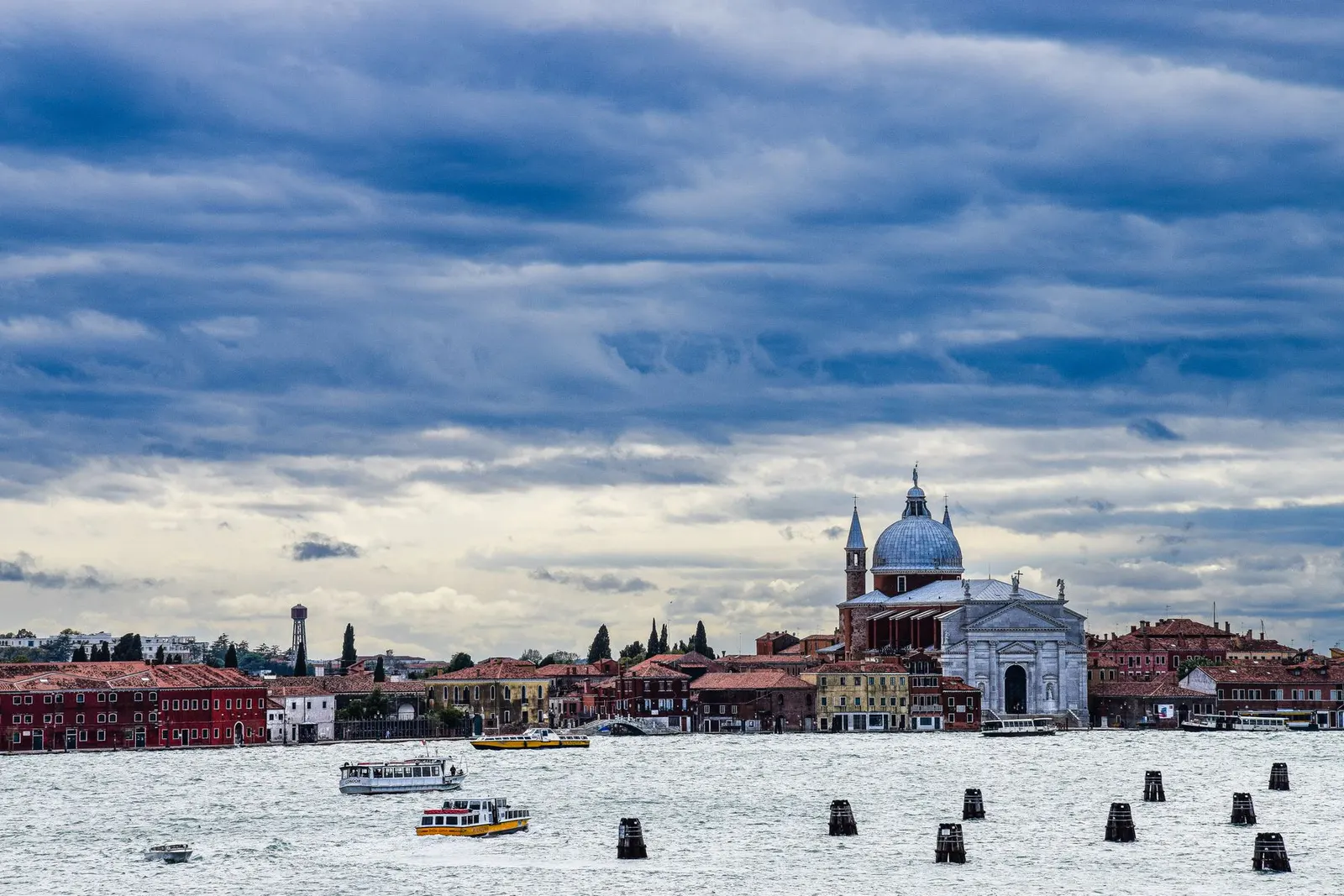
Italy closed the Giudecca Canal and the St Mark’s Basin to passenger ships above 25,000 gross tons or 180 metres in August 2021, and declared the waterways a national monument. There is no discretionary version of this rule and no berth to negotiate for.
The replacement is Marghera, on the mainland across the lagoon. A special commissioner — the president of the North Adriatic Sea Port System Authority — oversees the construction of up to five temporary moorings there for ships of 25,000 GT and above, while a permanent solution is still being designed. Temporary is the operative word: this is infrastructure in progress, not a finished port.
“Venice” on a cruise itinerary can mean at least four different places. Marghera and Fusina are in the lagoon area. Ravenna is roughly 150 km south. Trieste is about 160 km east and is routinely marketed as a Venice gateway. That is not a rounding error — it changes your transfer cost, your pre-cruise hotel, which airport you should fly into, and how much of Venice you will actually see.
Four sailings that were already redrawn
None of these are weather. Each was verified against the operator’s own communication or against reporting naming the cause.
| Ship and dates | What changed | Stated cause | What guests got |
|---|---|---|---|
| Celebrity Constellation 20 July and 21 September 2026 | Kotor replaced by Bar, Montenegro, 7:00 AM to 7:00 PM. Dubrovnik moved to the Monday. | A berth conflict at Dubrovnik, named as the cause in both letters. | Every excursion booked for Kotor still runs, from Bar. Celebrity cites the two ports’ proximity. |
| Norwegian Gem June and September 2026 sailings | Koper, Slovenia dropped. Zadar substituted on 14 June, Trieste on 28 June. | Port availability. Guests were notified on 20 May 2026. | NCL shore excursions booked for Koper were cancelled automatically with a full refund. |
| Legend of the Seas 25 July and 7 August 2026 | Naples skipped twice in two weeks. Marseille called instead. | An Italian Port Authority assessment of the pier. The 5,610-guest Icon-class ship fits one berth at Naples, and that berth was found unfit. | No stated fix date from either the line or the port. Naples remained on the published schedule through October. |
| Enchanted Princess and Sun Princess 2027 sailings | Istanbul removed. 22 May, 1 June and 4 July 2027 now embark at Athens; 14 September 2027 ends at Trieste, dropping Mykonos and Kusadasi and adding Dubrovnik, Split and Kotor. | Deployment: Piraeus availability, and commercial considerations around an Istanbul turnaround. | Princess has offered fare protection on selected affected sailings. Ask for it by name. |
The Celebrity letters are the most instructive document here, because there are two of them and they are identical. The same ship, the same Dubrovnik berth conflict, the same Kotor-for-Bar substitution — on 20 July and again on 21 September, two months apart. A berth conflict that recurs on that cycle is not an incident. It is what a two-ship day looks like from the deck of the third ship.
Read the fourth column as carefully as the second. Celebrity kept every Kotor excursion running from Bar because the two ports are close enough to make it work. Norwegian refunded Koper excursions in full and automatically. Royal Caribbean substituted a port and said nothing about compensation. Princess is offering fare protection on selected sailings — but you should expect to ask for it rather than be handed it.
What this does not cover
Three neighbouring subjects have their own articles, and repeating them here would only make both harder to find:
- Santorini’s cap and the Greek levies. The 8,000-passenger day, the change to counting ships at 100% of capacity, and the full fee table are in Santorini’s 8,000 cap and Greece’s 2026 levies.
- Cannes and Corfu. The Cannes tendering rules, the 6,000-a-day cap and the Corfu congestion swap are in Santorini, Corfu and the Riviera.
- What you are owed when a port is dropped. Four disruptions, and what each line actually paid, are in Cruise itinerary changes: what you are actually owed.
Devil’s advocate
It is easy to read all this as decline. It mostly is not. A capped port is a port that still has a working old town in it, and Dubrovnik’s twelve-hour minimum is a straightforwardly better day than the four-hour version it replaced. Venice’s ban moved the ships out of a waterway they should probably never have been in.
The genuine cost is not crowding. It is uncertainty — substitutions, longer transfers, fees that appear late, and less control over anything you booked yourself. That is a risk to price, not a reason to stay home. If a specific port is the whole reason you chose the sailing, that is the sailing to verify hardest and the one where a nonrefundable private tour is the worst idea.
Verify before you pay
- Pull the current itinerary from the cruise line’s own booking system, not a brochure or a third-party listing.
- Identify every tender port on the route, and confirm whether your ship anchors or berths at each.
- If the itinerary says Venice, find out which physical port that is, and price the transfer from it.
- Check the port authority’s published schedule for your date, not just the line’s.
- Keep independent excursions cancellable, and never book one to start at the ship’s advertised arrival time.
- Buy insurance early, and read what it excludes rather than what it advertises.
- Recheck the itinerary 30 to 60 days out, and again at online check-in. Both Celebrity letters landed inside that window.
Frequently asked
Is Palma’s three-ship limit legally binding?
No. It is a memorandum of understanding between CLIA, the Balearic Government and Palma Town Hall. Treat it as a strong scheduling target rather than a guarantee. On 12 August 2026 six cruise ships were alongside at Palma at the same time — five of them small luxury and expedition vessels, which is the gap in the agreement rather than a breach of it.
Does a longer minimum stay at Dubrovnik help me?
Usually yes. Eight hours for a ship up to 4,000 passengers and twelve above that were set to spread arrivals across the day rather than concentrate them in a four-hour wave. A longer call means a slower excursion, a real lunch, and a return to the ship that is not a sprint.
Does “Venice” on my itinerary mean I dock in Venice?
For a large ship, no. Anything over 25,000 GT or 180 metres has been barred from the Giudecca Canal and St Mark’s Basin since 1 August 2021. Check whether your call is Marghera, Fusina, Ravenna or Trieste, and price the transfer before you commit to a hotel or a flight.
Why do Adriatic itineraries keep changing?
Berth capacity, mostly. Dubrovnik runs a two-ship day, and when Gruz is full the knock-on lands somewhere else on the route — which is exactly what Celebrity told Constellation guests twice in two months. Add pier condition assessments, national law and deployment decisions and you have four different causes producing the same symptom.
If my port is swapped, do I get money back?
Cruise-line excursions for the dropped port are normally refunded, and port taxes are usually adjusted. Fare compensation is discretionary and often absent. An independent tour is between you and the operator. Our itinerary-disruption article works through what four lines actually paid.
Are smaller ships a way around all this?
Partly, and it cuts both ways. Small vessels slip through the Palma agreement and reach berths that big ships cannot. They also cost more per night, and a small ship still loses a call to weather or a pier assessment. Access is the thing you are buying, not immunity.
How I actually handle this
I check the port authority’s schedule alongside the line’s itinerary before anyone books anything private, and I treat a heavily managed port as a reason to keep the shore day flexible rather than a reason to avoid the sailing. For the Adriatic specifically, I assume the Dubrovnik berth is the constraint and plan the rest of the week so a swap costs you an afternoon rather than a deposit.
What we verified, and what will still change. Every limit, date and cause here was checked on 7 September 2026 against the authority or operator named in the sources. Berth allocations, fees, minimum stays, deployment plans and itineraries all change without notice, sometimes mid-season. This article quotes no fares. Recheck with the operator and the port before you pay.
Sources
- Majorca Daily Bulletin — Renewed agreement on cruise limits in Palma (28 June 2026)
- Majorca Daily Bulletin — Six cruise ships dock simultaneously in Palma despite three-ship limit (12 August 2026)
- Port of Dubrovnik — 2026 confirms the city’s status as a significant home-port destination
- Travel Weekly — Dubrovnik discards its reputation as ruined by overtourism
- Commissario Crociere Venezia — temporary moorings at Marghera
- Library of Congress — Italy: cruise ships banned from the Venice lagoon
- Celebrity Cruises — Celebrity Constellation guest letter, 20 July 2026 sailing (PDF)
- Celebrity Cruises — Celebrity Constellation guest letter, 21 September 2026 sailing (PDF)
- Cruise Hive — Norwegian Gem abruptly drops port from several Mediterranean itineraries
- Cruise Industry News — Royal Caribbean’s Legend skips second visit to Naples
- Cruise Critic — Princess Cruises removes Istanbul from multiple 2027 cruises
- Off The Grid Getaways — Santorini’s 8,000 cap and Greece’s 2026 levies
- Off The Grid Getaways — Santorini, Corfu and the Riviera: 2026 port restrictions
- Off The Grid Getaways — Cruise itinerary changes: what you are actually owed
Off The Grid Getaways is an independent travel advisor. Port authorities, municipalities and cruise lines set their own limits, fees, berth allocations and itineraries, and change them without notice. This article is general information as of 7 September 2026; it is not legal advice, not a quote, and not a guarantee that any port will be called. Photographs by Diego F. Parra and AXP Photography via Pexels, used under the Pexels licence and resized only.
Planning a Mediterranean sailing you would rather not have redrawn?
Tell me which ports are the reason you want the trip. I will check the berthing position before you book, and build the shore days so a substitution costs you an afternoon instead of a deposit.
Begin the Journey